How To Upgrade An Old PUF Sandwich Panel Production Line?
Publication Date: Oct 5, 2026
Upgrading an old PUF sandwich panel production line boosts operational efficiency, product consistency and energy efficiency while eliminating frequent equipment failures.
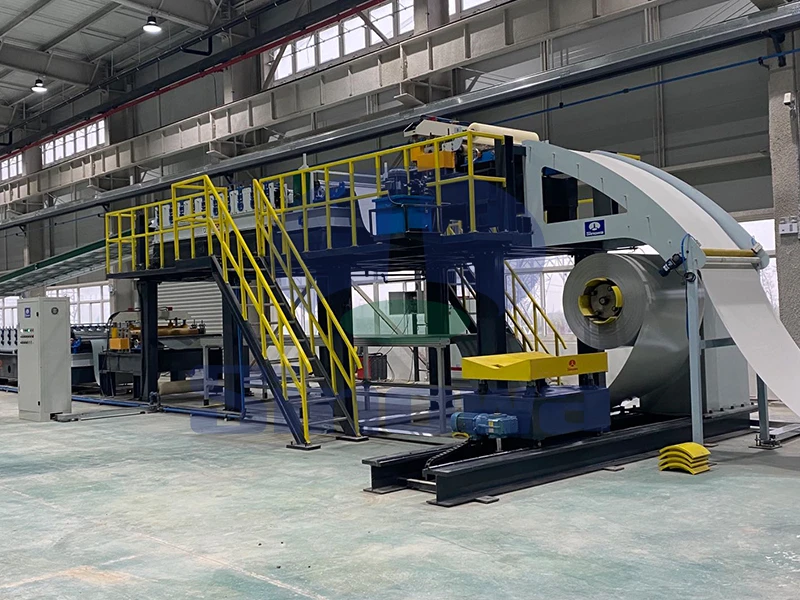
Before launching any upgrade work, conducting a comprehensive overall assessment of the existing PUF sandwich panel production line is the fundamental prerequisite for targeted renovation. Most aging production lines suffer from common drawbacks including outdated transmission structures, unstable foaming systems, low automation and high energy consumption after long-term continuous operation. Technicians need to inspect every core component and functional module of the line, covering raw material feeding units, PU foaming and mixing systems, rolling forming equipment, laminating pressing devices and final cutting and stacking systems. It is essential to record frequent fault points, production speed bottlenecks, defective product generation links and excessive energy consumption sections in detail. Meanwhile, evaluating the line’s current production capacity and product adaptability helps distinguish obsolete parts that need full replacement and functional modules that only require partial optimization and debugging. This systematic evaluation avoids blind investment, ensures all upgrade measures are problem-oriented, and lays a solid foundation for formulating a scientific and reasonable upgrade plan.
Optimizing the core PUF foaming and dosing system is the most critical step in upgrading an old sandwich panel production line, as foaming quality directly determines the thermal insulation performance and structural stability of finished panels. Old production lines are usually equipped with traditional fixed-rate dosing devices and simple mixing heads, which often cause uneven mixing of polyol and isocyanate materials, inconsistent foam density and local hollow defects in panels. The core upgrade measure is to replace the outdated manual dosing system with a precision automatic proportional dosing unit, which can realize real-time accurate matching of raw material ratios according to production parameters. In addition, renovating the foaming mixing head structure to enhance mixing uniformity and upgrade the constant-temperature heating system can effectively avoid material solidification and foaming failure caused by temperature fluctuations. This optimization significantly reduces the rate of defective products caused by foaming errors, improves the uniformity of PUF core layer density, and enhances the overall quality stability of sandwich panels during long-term continuous production.
Upgrading the mechanical transmission and forming system effectively solves the problems of low precision and unstable operation of old production lines. Long-term operation leads to wear of transmission gears, conveyor rollers and guide rails of old lines, resulting in inconsistent panel thickness, offset plate forming and jitter during material transmission. The main upgrade contents include replacing worn transmission components with high-precision wear-resistant parts and optimizing the structural layout of conveyor rollers to ensure flat and stable material conveying. For the rolling forming unit, adjusting the gap accuracy of forming rollers and upgrading the positioning structure can effectively improve the flatness and dimensional accuracy of metal surface plates. Moreover, optimizing the tension control system of the coil feeding section avoids plate deformation and wrinkling caused by unstable tension. These mechanical optimizations eliminate most operational jitter and positioning deviation problems, make the whole production process smoother, and greatly improve the dimensional consistency and surface finish of finished sandwich panels.
Intelligent control system renovation is a key measure to improve the automation level of aging PUF sandwich panel production lines. Most old lines rely on semi-manual control modes with scattered operation modules, requiring manual adjustment of parameters and frequent manual intervention in production, which leads to low production efficiency and large human error. The upgrade focuses on installing a unified PLC intelligent control system to integrate all functional modules of the production line including feeding, foaming, forming, pressing and cutting into one intelligent management platform. Operators can set and adjust production parameters through a touch screen interface, realizing automatic parameter matching and continuous operation of the whole line. In addition, adding real-time data monitoring modules can track production speed, material consumption and equipment operation status in real time, and automatically alarm for abnormal faults. This intelligent transformation reduces dependence on manual operation, unifies production parameter standards, and effectively improves production efficiency while reducing human-caused quality problems.
Energy-saving transformation of the production line helps reduce long-term operating costs and improve the environmental friendliness of equipment operation. Old PUF sandwich panel production lines generally have prominent energy waste problems, mainly reflected in high power consumption of outdated driving motors, low heat utilization rate of heating systems and unoptimized equipment standby energy consumption. The primary upgrade is to replace traditional high-power inefficient motors with energy-saving servo motors, which can automatically adjust power output according to production load and effectively reduce invalid power consumption. For the heating and curing system of foaming and laminating sections, upgrading heat preservation structures and optimizing heating circulation modes reduce heat loss and improve heat energy utilization efficiency. Meanwhile, optimizing the equipment standby and shutdown linkage function enables automatic low-energy standby or shutdown of idle equipment. These energy-saving upgrades do not affect production quality and speed, but significantly reduce daily energy consumption, lowering the long-term operational cost of the production line.
Upgrading the laminating and pressing system improves the bonding firmness and overall flatness of PUF sandwich panels. The pressing units of old production lines often have uneven pressure distribution and slow pressure response speed, resulting in insufficient bonding between the PUF core layer and metal plates, as well as bulging and uneven surface of finished panels. The main upgrade scheme is to optimize the pressure balance structure of the pressing equipment to ensure uniform pressure coverage on the entire panel surface during lamination. Upgrading the pressure sensing and adjusting device realizes real-time fine adjustment of pressing pressure according to panel thickness and production speed, avoiding insufficient or excessive pressing pressure. In addition, renovating the constant-temperature pressing environment ensures stable curing conditions during panel lamination, which helps enhance the bonding strength between the core material and surface plates. After the upgrade, the finished panels have tighter internal structures, stronger overall stability, and fewer quality defects such as delamination and bulging in subsequent use.
Optimizing the cutting and finishing system improves the dimensional accuracy and finished product appearance of sandwich panels. Old cutting equipment has the problems of single cutting mode, low precision and rough cutting sections, and is unable to adapt to diversified production demands. The upgrade work includes replacing old fixed-size cutting devices with high-precision servo cutting systems, which support flexible adjustment of cutting length and meet the production requirements of panels with different specifications. Upgrading the cutting blade material and optimizing the cutting operation parameters make the cutting section flat and smooth without burrs and deformation. Meanwhile, adding a finished product trimming and sorting module realizes automatic finishing of panel edges and preliminary classification of finished products. This optimization not only improves the dimensional accuracy and appearance quality of finished panels but also simplifies the post-processing process, saves manual finishing time and further improves the overall production efficiency of the line.
Safety protection system upgrade is an indispensable part of the old production line renovation, which effectively reduces operational risks and improves equipment safety stability. Aging production lines are usually equipped with simple safety protection devices, lacking perfect fault protection and emergency response mechanisms, and have potential safety hazards in high-speed operation and material processing. The upgrade mainly includes installing fully enclosed safety protection covers for high-speed operating parts to avoid accidental contact injuries, and adding emergency stop linkage devices at key operation positions to realize rapid shutdown of the whole line in case of abnormal conditions. In addition, upgrading the equipment overload protection and leakage prevention system can effectively avoid equipment damage and safety accidents caused by overload operation and circuit faults. Optimizing the early warning system for material blockage and equipment abrasion also helps eliminate potential faults in advance. The upgraded safety system provides comprehensive protection for equipment and operators, ensuring long-term safe and stable operation of the production line.
Staff skill training and standardized operation optimization ensure the full play of the upgraded production line’s performance. Newly upgraded equipment and intelligent systems have higher requirements for operators’ professional skills and operation specifications. Many production efficiency and quality problems after equipment upgrading stem from unskilled operation and non-standard parameter setting by staff. It is necessary to organize systematic professional training for front-line operators and maintenance personnel, covering the operation logic, parameter adjustment methods, daily maintenance points and common fault diagnosis solutions of the upgraded equipment. Meanwhile, formulating standardized production operation procedures and daily equipment maintenance systems helps unify staff operation behaviors and avoid operational errors caused by irregular operations. Regularly organizing skill assessment and technical communication activities can continuously improve the professional proficiency of the team, ensure that all upgraded functional modules are fully utilized, and maximize the upgrade effect of the production line.
Long-term daily maintenance and continuous optimization mechanism is the key to maintaining the stable high-efficiency operation of the upgraded PUF sandwich panel production line. Equipment upgrading is not a one-time renovation work, but requires long-term fine management to maintain optimal performance. It is necessary to establish a complete daily inspection and maintenance system, arranging special personnel to regularly check the operation status of key components such as foaming systems, transmission devices and control systems, and timely replace aging vulnerable parts. Recording daily production operation data and equipment fault information helps summarize operational rules and find potential optimization space. According to market product demand changes and equipment operation feedback, appropriately adjusting production parameters and optimizing partial equipment functions can keep the production line in a continuous upgraded state. Perfect post-upgrade management can effectively extend the service life of equipment, maintain stable production quality and efficiency, and create long-term stable production benefits for the production line.
Gallery of PUF Sandwich Panel Production Line
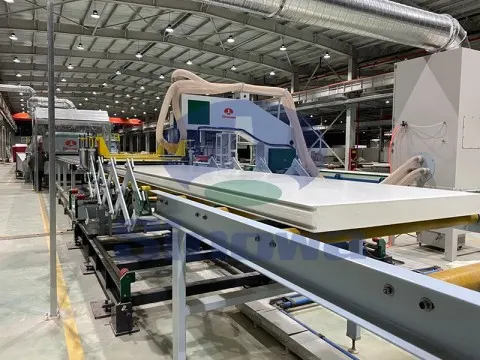
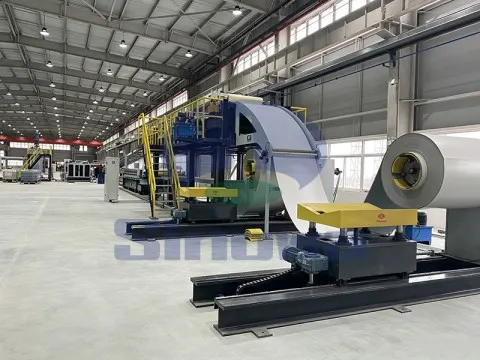
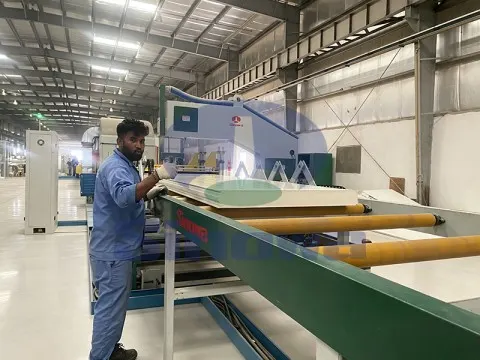
Tags: puf sandwich panel production line, puf sandwich panel production line manufacturer, puf sandwich panel production line supplier, china puf sandwich panel production line, puf sandwich panel production line for sale
-

A reliable PU sandwich panel production line serves as the core equipment for manufacturing high-performance building insulation panels. This professional PU sandwich panel line features automated feeding, foaming and molding processes to ensure consistent panel thickness and structural stability. The well-designed polyurethane sandwich panel production line effectively improves production efficiency while reducing material waste in daily operation. Each calibrated polyurethane sandwich panel line can adapt to different panel sizes to meet diverse construction needs. With precise temperature and pressure control, the advanced continuous PU sandwich panel line produces panels with excellent thermal insulation and weather resistance. Meanwhile, the optimized PIR sandwich panel production line upgrades the foaming formula to enhance fire resistance performance. The high-efficiency PIR sandwich panel line maintains stable operation during long-term mass production, delivering durable and high-quality sandwich panels for various architectural and industrial applications.
-

The phenolic panel production line realizes automated and continuous manufacturing of high-performance thermal insulation panels through streamlined and coordinated processing procedures.
-

Modern insulation panel manufacturing relies on professional automated equipment to ensure stable product quality and high production efficiency. The rock wool sandwich panel production line features precise material lamination and forming processes to produce rigid, heat-insulating building panels. Meanwhile, the mineral wool sandwich panel production line adopts optimized assembly procedures to fabricate lightweight, soundproof panels widely used in architectural enclosure and thermal preservation projects.