How To Maintain The PIR Sandwich Panel Production Line Daily?
Publication Date: Oct 6, 2026
Daily maintenance of PIR sandwich panel production lines is key to stable operation, consistent product quality and extended equipment service life. Scientific daily checks, cleaning, lubrication and parameter calibration can effectively reduce downtime and avoid frequent operational failures in long-term production.
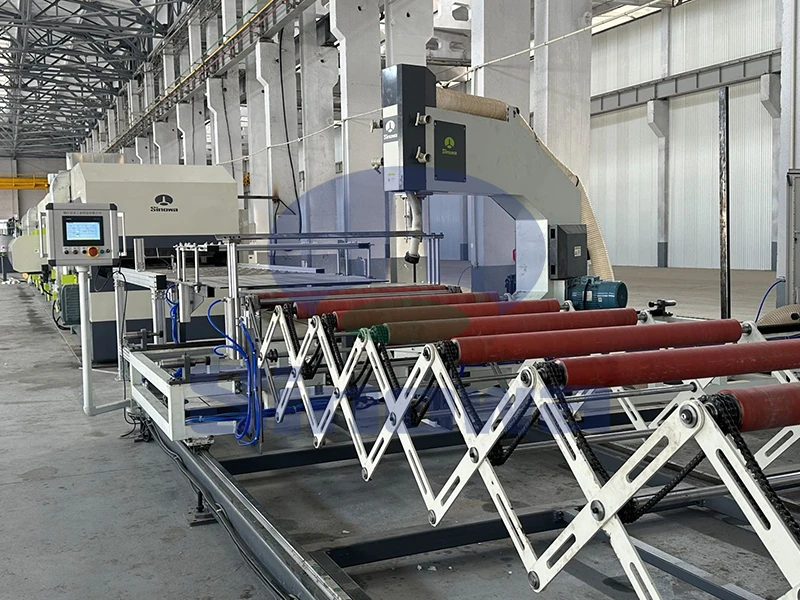
Pre-production daily inspection is the first core step to ensure the smooth operation of the PIR sandwich panel production line every day. Operators need to conduct a comprehensive visual and functional check of all equipment modules before starting the machine. First, inspect the unwinding unit to confirm the stability of raw material coil placement and the normal tension of the conveying structure, eliminating offset and loose problems that may affect subsequent forming. Then, check all mechanical fasteners including screws and bolts on rolling forming equipment to ensure no looseness or displacement caused by long-term vibration. It is also necessary to observe the surface of transmission parts such as conveyor rollers and chains to check for obvious wear, deformation or foreign material adhesion. Meanwhile, verify the basic operating state of the control system, confirm that the display screen operates normally and no abnormal alarm prompts exist, and ensure all functional buttons can respond sensitively. This systematic pre-start inspection can eliminate most potential hidden dangers at the initial stage and lay a foundation for safe and stable daily production.
Thorough daily cleaning of production equipment is essential to maintain the processing accuracy of PIR sandwich panels. During the daily production interval and after shutdown, operators need to clean residual PIR foam raw materials, metal debris and dust accumulated on each equipment unit in a timely manner. The pouring and foaming station is the key cleaning area, where residual cured foam materials in the mixing head and material delivery pipelines must be completely removed to prevent blockage that affects the uniform mixing and spraying of raw materials. For the laminating unit, clean the sticky attachments on the surface of the laminating belt and roller groups to avoid uneven panel surface or thickness deviation caused by foreign matters. The cutting and trimming unit also needs targeted cleaning to remove cutting scraps accumulated on the blade surface and equipment gaps. It is necessary to use soft cleaning tools and neutral cleaning supplies to avoid scratching precision equipment surfaces. Sustained standardized cleaning can effectively prevent material residue from corroding equipment and affecting product molding quality.
Regular daily lubrication and wear maintenance of moving parts directly affects the operational flexibility and service life of the production line. The PIR sandwich panel production line is equipped with a large number of dynamic operating components, which are prone to friction loss and aging after long-term high-frequency operation. Every day before production, operators need to check the lubrication status of key parts such as transmission chains, bearings, gear sets and roller rotating shafts. For parts with insufficient lubricating grease or dry friction signs, supplement professional high-temperature lubricants in a timely manner to reduce operational friction resistance. During the inspection, pay close attention to the wear degree of vulnerable parts, including cutting blades, conveyor belts and guide rails. If minor wear or deformation is found, record it in time and adjust the operating state appropriately; if severe wear affects operation accuracy, arrange replacement in a targeted manner. Scientific daily lubrication and wear inspection can reduce equipment failure rate, avoid abnormal noise and jamming during operation, and ensure the production line runs smoothly at a constant speed.
Daily detection and adjustment of hydraulic and pneumatic systems is crucial to maintain stable production parameters. The hydraulic and pneumatic systems provide power support for key processes such as laminating, pressing and cutting of PIR sandwich panels, and their operational stability determines product dimensional accuracy. Operators need to check the tightness of all hydraulic and pneumatic pipelines and joints every day to eliminate air leakage and oil leakage problems that cause pressure instability. Observe the hydraulic oil level and color, ensure the oil volume is within the normal range, and check for oil deterioration or impurity precipitation. In addition, test the sensitivity of pressure regulating valves and control switches to ensure that the system pressure can be adjusted stably according to production requirements. During operation, monitor the real-time pressure change of the system, avoid excessive or insufficient pressure leading to unqualified panel lamination and forming. Timely daily debugging and maintenance of hydraulic and pneumatic systems can maintain consistent production pressure and effectively guarantee the flatness and structural stability of finished panels.
Daily calibration and inspection of sensing and control components ensure accurate production parameter control. Modern PIR sandwich panel production lines rely on various precision sensors and control elements to realize automatic production, and the accuracy of these components directly determines product qualification rate. Every day before production startup, operators need to check temperature sensors, pressure sensors, thickness detection sensors and speed monitoring components to confirm their normal induction and data transmission functions. For temperature control components of the curing and heating module, verify the consistency between displayed temperature and actual temperature to avoid excessive temperature deviation affecting PIR foam curing effect and panel bonding strength. Calibrate the thickness detection system regularly every day to prevent data drift from causing unqualified panel thickness. Meanwhile, check the circuit connection of the automatic control system to ensure firm wiring and no poor contact. Daily fine calibration of precision components can avoid parameter deviation in the production process and maintain stable product quality.
Daily maintenance of raw material supply system avoids production interruption and material waste. The stable supply of PIR foam raw materials and base materials is the premise of continuous production, so daily inspection and maintenance of the material supply system cannot be ignored. Operators need to check the storage status of raw material tanks every day, confirm the residual amount of raw materials to avoid material shortage during continuous production, and check the sealing performance of the tank body to prevent raw materials from being affected by moisture and deteriorating. Inspect the material delivery pump and delivery pipeline to ensure smooth material transportation without blockage and stable material delivery speed. In addition, check the drying and dust removal device of the base material conveying link to ensure the surface of the base plate is clean and dry before processing, preventing impurities and moisture from affecting the bonding performance of PIR foam and base plate. Standard daily maintenance of the material supply system can ensure continuous and uniform feeding, avoid production pause caused by material supply failure, and reduce raw material waste and defective products.
Daily inspection and protection of electrical systems guarantees safe and stable equipment operation. The electrical system is the core power and control hub of the entire production line, and daily standardized maintenance can effectively prevent electrical faults and safety hazards. After daily startup and shutdown, operators need to check the operation status of the electrical cabinet, clean the dust accumulated in the cabinet to avoid dust accumulation causing poor heat dissipation and short circuit. Inspect the firmness of internal wiring terminals to prevent loose wiring from causing circuit failure and equipment shutdown. Check the working state of the motor and frequency converter during operation, observe whether there is abnormal heat generation, vibration or noise, and stop the machine for inspection immediately if abnormal conditions occur. In addition, test the sensitivity of emergency stop buttons and safety protection devices every day to ensure they can respond quickly in case of abnormal operation. Strict daily electrical system maintenance can eliminate potential safety hazards, ensure stable power supply and normal operation of automatic control functions.
Daily operational parameter recording and data sorting provides support for long-term equipment maintenance. Complete daily production data records are an important part of refined maintenance of PIR sandwich panel production lines. Operators need to truthfully record all key operational parameters during daily production, including production line operating speed, system pressure, curing temperature, raw material feeding ratio and finished product output. Meanwhile, record minor abnormal phenomena and adjustment measures of equipment during operation, as well as daily cleaning, lubrication and component inspection conditions. These recorded data can intuitively reflect the operating state of the equipment, help maintenance personnel grasp the aging rule and failure trend of the equipment, and provide accurate basis for subsequent regular maintenance and component replacement. Standardized daily data sorting can realize predictive maintenance of equipment, reduce blind maintenance work, and improve the overall maintenance efficiency and equipment stability of the production line.
Daily inspection and sorting of finished product output and stacking equipment ensures the final production link is smooth. The cutting, finishing and stacking unit is the final processing link of PIR sandwich panels, and its stable operation affects the integrity and yield of finished products. Every day, operators need to check the operating accuracy of the cutting equipment, confirm the sharpness of the cutting blade and the stability of the cutting size, and adjust the equipment in time if there is dimensional deviation or rough cutting edge. Inspect the operation of the finished product conveying and stacking mechanism to ensure flexible and stable operation without jamming, offset or scratch on the panel surface. Clean the sundries on the stacking platform every day to keep the platform flat and tidy, avoiding uneven placement causing panel deformation. In addition, check the buffer and limit devices of the stacking equipment to ensure effective protection of finished panels during stacking. Daily maintenance of the final production link can effectively reduce finished product damage and ensure neat and standardized product output.
Daily maintenance summary and hidden danger rectification form a closed-loop maintenance management mechanism. After completing daily production and all maintenance work, operators need to conduct a comprehensive summary of the day’s equipment operation and maintenance status. Sort out all inspected equipment problems, recorded abnormal conditions and completed maintenance operations, and classify minor and potential faults. For minor equipment problems that have been adjusted and repaired, confirm the repair effect to ensure no residual hidden dangers; for potential faults that cannot be solved on the same day, mark them clearly and report to the management and maintenance team in a timely manner to arrange targeted rectification. Meanwhile, sort and store maintenance tools and cleaning supplies to ensure complete tools and standardized placement for the next day’s production and maintenance. The daily summary and rectification mechanism can avoid the accumulation of equipment faults, form a continuous and standardized maintenance system, and effectively ensure the long-term stable and efficient operation of the PIR sandwich panel production line.
Gallery of PIR Sandwich Panel Production Line






Tags: pir sandwich panel production line, pir sandwich panel production line manufacturer, pir sandwich panel production line supplier, china pir sandwich panel production line, pir sandwich panel production line for sale
-

A reliable PU sandwich panel production line serves as the core equipment for manufacturing high-performance building insulation panels. This professional PU sandwich panel line features automated feeding, foaming and molding processes to ensure consistent panel thickness and structural stability. The well-designed polyurethane sandwich panel production line effectively improves production efficiency while reducing material waste in daily operation. Each calibrated polyurethane sandwich panel line can adapt to different panel sizes to meet diverse construction needs. With precise temperature and pressure control, the advanced continuous PU sandwich panel line produces panels with excellent thermal insulation and weather resistance. Meanwhile, the optimized PIR sandwich panel production line upgrades the foaming formula to enhance fire resistance performance. The high-efficiency PIR sandwich panel line maintains stable operation during long-term mass production, delivering durable and high-quality sandwich panels for various architectural and industrial applications.
-

The phenolic panel production line realizes automated and continuous manufacturing of high-performance thermal insulation panels through streamlined and coordinated processing procedures.
-

Modern insulation panel manufacturing relies on professional automated equipment to ensure stable product quality and high production efficiency. The rock wool sandwich panel production line features precise material lamination and forming processes to produce rigid, heat-insulating building panels. Meanwhile, the mineral wool sandwich panel production line adopts optimized assembly procedures to fabricate lightweight, soundproof panels widely used in architectural enclosure and thermal preservation projects.