How To Solve The Inaccurate Cutting Length Of The PUR Sandwich Panel Production Line?
Publication Date: Oct 5, 2026
Inaccurate cutting length is a common and troublesome issue in PUR sandwich panel production, causing product defects and material waste.
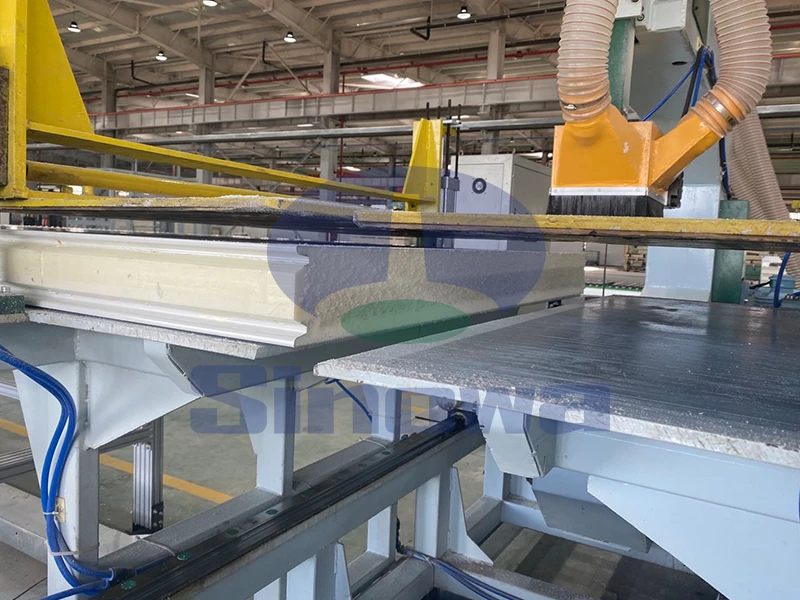
Encoder parameter deviation is one of the most primary factors leading to inconsistent cutting length in PUR sandwich panel production lines. The encoder serves as the core component for detecting panel conveying speed and displacement, converting mechanical movement into pulse signals for the control system to calculate cutting length. Long-term continuous operation often causes gradual parameter drift, while improper initial calibration also distorts pulse counting data. When the pulse coefficient fails to match the actual conveying distance, the system will calculate incorrect panel lengths and issue wrong cutting instructions. To resolve this problem, production operators need to conduct regular manual calibration by feeding a fixed length of panel materials, recording the corresponding encoder pulse values, and updating the length coefficient parameters in the human-machine interface in a timely manner to eliminate calculation deviations and restore basic cutting accuracy.
Asynchronous synchronization between the servo cutting system and the conveyor belt directly triggers dynamic cutting length errors in continuous production. Modern PUR sandwich panel lines adopt flying cutting technology that requires strict speed matching between the cutting tool and the running panel. Minor fluctuations in conveyor belt operating speed, caused by load changes or mechanical resistance, will create a speed difference with the servo cutter if the synchronization system responds slowly. This mismatch leads to either over-cutting or under-cutting of panels, especially obvious in high-speed continuous production batches. The effective solution is to optimize the PLC synchronization program to realize real-time speed tracking and dynamic compensation. Upgrading the floating-point arithmetic calculation mode instead of integer calculation can greatly reduce tiny cumulative errors generated during long-term cyclic cutting operations.
Mechanical wear and loose structural components gradually undermine the cutting stability of the entire production line and induce length inaccuracy. Long-term high-frequency operation causes wear on conveyor rollers, guide rails, and transmission gears, resulting in unsmooth material conveying and intermittent jitter of sandwich panels during movement. Meanwhile, loose fixing bolts of the cutting frame and aging of buffer parts will make the cutting tool deviate from the preset track during operation. These subtle mechanical changes do not cause obvious faults in a short time but form cumulative errors in mass production. Regular comprehensive mechanical inspection and maintenance are essential here, including tightening loose structural parts, replacing severely worn transmission components, and adjusting the horizontal balance of the cutting platform to ensure stable and linear panel conveying and cutting movements.
Unstable material tension and inconsistent raw material properties are easily overlooked factors affecting cutting length accuracy. PUR sandwich panels have flexible composite structures, and uneven tension control during the unwinding and conveying process will cause partial stretching or compression of panel blanks. When the tension is too tight, the panel is stretched during conveying and rebounds after cutting, resulting in shorter finished length; when the tension is loose, material accumulation causes longer cutting dimensions. In addition, slight differences in the density and flexibility of raw core materials and surface materials will change the actual conveying stroke under the same mechanical parameters. Optimizing the tension control system to maintain constant material tension throughout production and pre-testing material adaptability to adjust conveying parameters can effectively eliminate such material-related length errors.
Hydraulic and pneumatic system response delay leads to delayed cutting actions and dimensional deviation in PUR sandwich panel cutting. Most automated cutting lines rely on hydraulic or pneumatic power to drive the cutting tool’s lifting and cutting movements. After long-term use, internal pipeline blockage, seal aging, and pressure loss will slow down the system’s response speed. When the control system sends a cutting signal, the cutter cannot act in real time, and the panel continues to move forward, resulting in longer-than-standard finished products. Regular maintenance of the power system is required, including cleaning internal pipelines, replacing aging seals, and calibrating system pressure values to ensure rapid and consistent power response. Meanwhile, setting reasonable signal advance parameters can compensate for minor inherent response delays of the system.
Improper parameter setting and unreasonable speed matching in production operation cause frequent cutting length fluctuations. Many production failures stem from blind adjustment of line speed and cutting parameters by operators to pursue output improvement. Excessively high production speed exceeds the stable response range of the cutting system, making it impossible for the servo motor and control program to complete accurate positioning and cutting in place. In addition, mismatched parameter settings during product specification switching, such as unchanged cutting delay values and positioning parameters, will lead to adaptive errors for new panel sizes. Standardizing operation procedures is crucial; operators should match reasonable line speed and cutting parameters according to panel specifications, avoid over-speed operation, and reset and calibrate all relevant parameters uniformly after each product specification replacement.
Dust accumulation and sensor failure affect signal acquisition accuracy and further cause cutting length errors. The production environment of PUR sandwich panels generates fine dust and foam debris during foaming and cutting processes. These impurities easily adhere to the surface of encoders, photoelectric positioning sensors, and conveyor detection probes, blocking signal transmission and causing intermittent signal loss or deviation. The control system cannot obtain accurate real-time displacement data, thus miscalculating the cutting length. Establishing a regular cleaning and inspection mechanism is necessary to remove surface dust and debris from all detection sensors and signal components before daily production. Meanwhile, test the sensitivity of sensors regularly and replace aging and insensitive components in time to ensure stable and accurate signal acquisition.
Cumulative errors from long-term continuous operation affect the overall dimensional consistency of batch products. In the long-running state of the production line, tiny errors generated by mechanical operation, signal transmission, and parameter calculation will accumulate continuously with each cutting cycle. These negligible single errors will form obvious length deviations after hundreds or thousands of cutting operations, leading to inconsistent sizes of products in the later production stage. Setting up regular automatic error correction programs in the control system can realize periodic zero calibration and deviation compensation during non-stop production. Arranging manual sampling inspection and parameter correction every fixed production batch can also effectively eliminate cumulative errors and maintain long-term cutting accuracy stability.
Unreasonable equipment installation and foundation deformation cause basic structural errors in cutting positioning. The installation level and foundation stability of the production line determine the linearity of panel conveying and cutting. Long-term equipment operation and ground pressure changes may cause slight deformation of the production line foundation and tilt of the conveying and cutting platform. This makes the panel deviate laterally during conveying, and the cutting position shifts synchronously, resulting in unqualified length dimensions. Operators and maintenance personnel should regularly use precision measuring tools to detect the levelness and linearity of the production line, adjust the supporting feet of the equipment to correct platform tilt, and reinforce loose foundation parts to ensure the overall structural stability of the production line, eliminating basic structural cutting errors.
Lack of standardized daily maintenance and professional operation training leads to recurring cutting length accuracy problems. Most minor cutting errors are not caused by equipment faults but by irregular daily maintenance and unprofessional operation behaviors. Neglect of regular calibration, component inspection, and environmental cleaning will continuously amplify potential hidden troubles, while improper operation habits will damage parameter stability and mechanical accuracy. Establishing a complete equipment maintenance system, including daily cleaning, weekly calibration, and monthly mechanical inspection, can maintain the long-term stable operation of the production line. Meanwhile, strengthening professional skill training for operators to help them master parameter adjustment methods, fault judgment skills, and standardized operation specifications can fundamentally reduce human-induced cutting length errors and ensure stable and consistent product dimensional accuracy.
Gallery of PUR Sandwich Panel Production Line
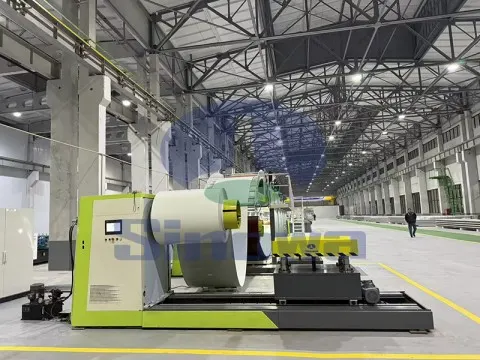
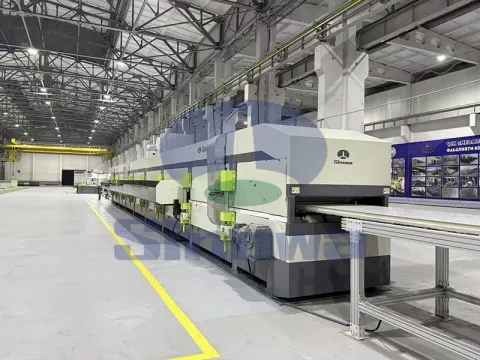
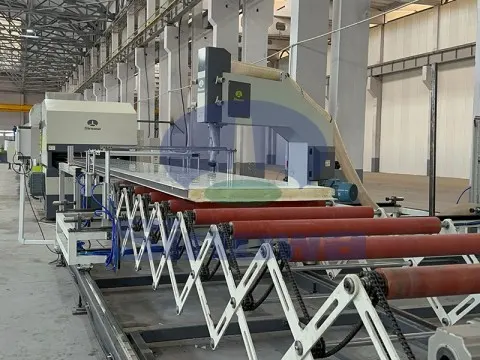
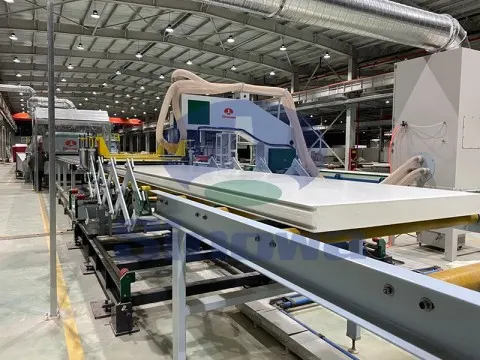
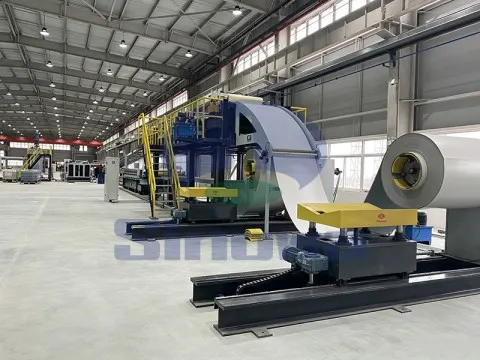
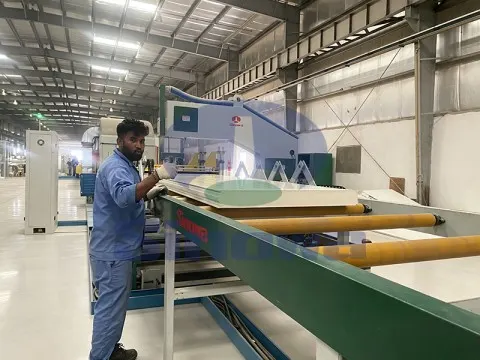
Tags: pur sandwich panel production line, pur sandwich panel production line manufacturer, pur sandwich panel production line supplier, china pur sandwich panel production line, pur sandwich panel production line for sale
-
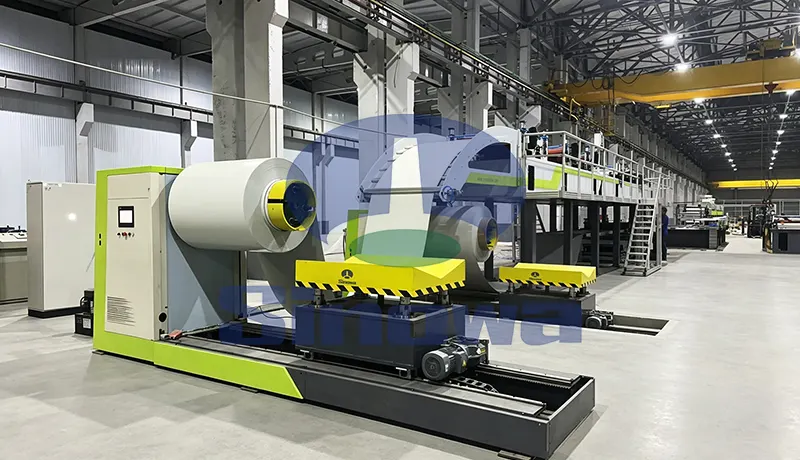
A reliable PU sandwich panel production line serves as the core equipment for manufacturing high-performance building insulation panels. This professional PU sandwich panel line features automated feeding, foaming and molding processes to ensure consistent panel thickness and structural stability. The well-designed polyurethane sandwich panel production line effectively improves production efficiency while reducing material waste in daily operation. Each calibrated polyurethane sandwich panel line can adapt to different panel sizes to meet diverse construction needs. With precise temperature and pressure control, the advanced continuous PU sandwich panel line produces panels with excellent thermal insulation and weather resistance. Meanwhile, the optimized PIR sandwich panel production line upgrades the foaming formula to enhance fire resistance performance. The high-efficiency PIR sandwich panel line maintains stable operation during long-term mass production, delivering durable and high-quality sandwich panels for various architectural and industrial applications.
-
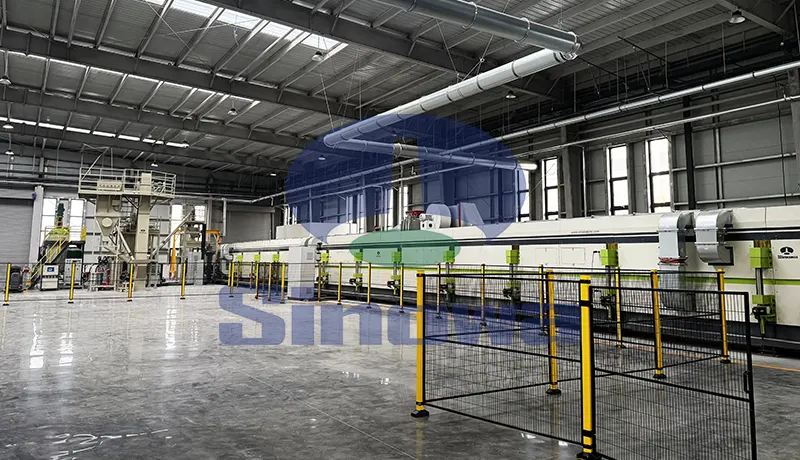
The phenolic panel production line realizes automated and continuous manufacturing of high-performance thermal insulation panels through streamlined and coordinated processing procedures.
-
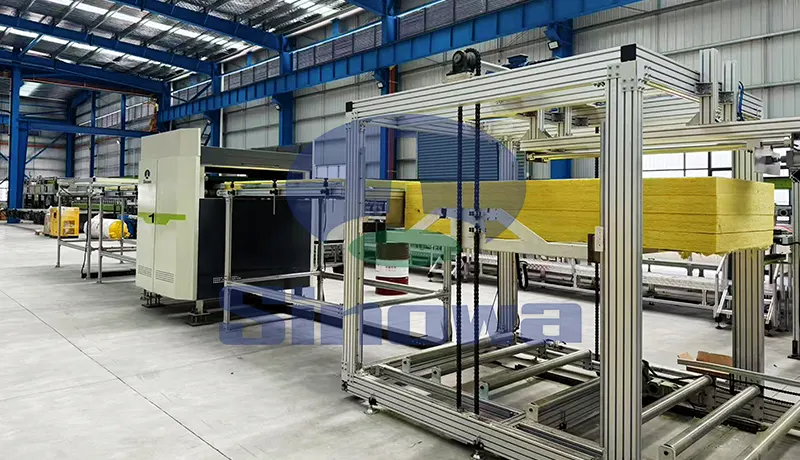
Modern insulation panel manufacturing relies on professional automated equipment to ensure stable product quality and high production efficiency. The rock wool sandwich panel production line features precise material lamination and forming processes to produce rigid, heat-insulating building panels. Meanwhile, the mineral wool sandwich panel production line adopts optimized assembly procedures to fabricate lightweight, soundproof panels widely used in architectural enclosure and thermal preservation projects.