How To Solve The Problem Of Panel Warping In The Polyurethane Sandwich Panel Line?
Publication Date: Sep 28, 2026
Panel warping is a common quality defect in polyurethane sandwich panel production, caused by material, equipment, process and environmental factors.
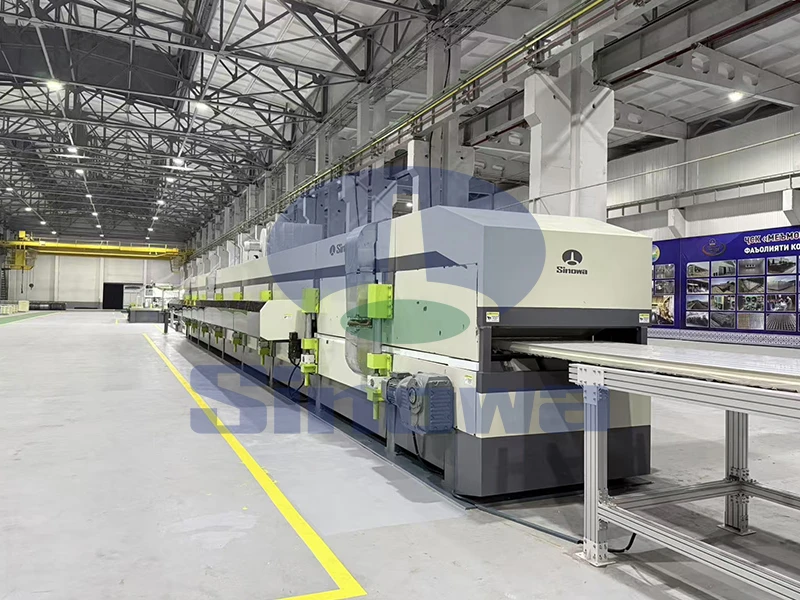
Material inconsistency stands as one of the primary triggers of panel warping in polyurethane sandwich panel lines. The polyurethane foam core relies on uniform raw material mixing and stable foaming reactions to form a balanced internal structure. Slight deviations in the proportion of polyol and isocyanate raw materials will lead to uneven foaming density across different panel areas, with some sections forming dense foam structures and others developing loose, porous layers. This uneven density distribution creates inconsistent internal stress inside the panel after curing, gradually bending and warping the panel surface. In addition, inconsistent flatness and thickness of metal surface skins will introduce external stress during the composite pressing process. Skins with subtle curvature or uneven hardness cannot fit closely with the foam core, resulting in unbalanced stress release after panel molding. To mitigate this issue, production staff need to maintain stable raw material ratio parameters at all times, conduct regular inspections of raw material uniformity, and strictly screen surface materials to ensure consistent texture and flatness of all incoming skins, laying a solid foundation for flat panel molding.
Unstable thermal control throughout the production process is another key factor inducing sandwich panel warping. Polyurethane foaming and curing are highly temperature-sensitive reactions, and temperature fluctuations in different production zones will directly disrupt the uniformity of foam molding. In the preheating, foaming, pressing and curing stages, inconsistent temperatures between the upper and lower production equipment surfaces cause asymmetric expansion and contraction between the metal skin and the foam core. The two materials have different thermal expansion coefficients; when heated unevenly, their deformation speeds and ranges fail to match, generating persistent shear stress inside the composite panel. Minor temperature differences during production will leave latent stress inside the panel, which is gradually released in the subsequent cooling process, leading to edge warping and surface arching. Effective solutions include implementing precise zoning temperature control for production equipment, calibrating heating systems regularly to eliminate local overheating or insufficient heating areas, and keeping the temperature difference between upper and lower equipment within a tiny range throughout the foaming and curing process to ensure synchronous thermal deformation of panel materials.
Improper pressure control in the pressing and composite molding process easily causes irreversible panel warping defects. The continuous pressing process requires stable and uniform pressure distribution to ensure tight bonding and balanced molding of the surface skin and foam core. Excessively high local pressure will compress partial foam core excessively, destroying its uniform cellular structure and causing permanent thickness differences on the panel surface. In contrast, insufficient overall pressure leads to incomplete fitting between the skin and core, forming weak bonding areas with inconsistent stress bearing capacity. Uneven pressure often occurs at the edge positions of the production line, where seal structures and mechanical extrusion create greater friction and compression on edge materials. This makes edge foam denser than the middle part, forming structural differences that trigger edge warping after panel cooling. Producers need to regularly debug pressing equipment to ensure uniform pressure output across the entire pressing area, adjust pressure parameters according to panel thickness specifications, and optimize edge seal structures to reduce excessive compression on edge foam materials.
Unreasonable curing process parameters will aggravate internal stress accumulation and panel warping. After composite molding, polyurethane sandwich panels require a stable curing environment to complete molecular stabilization and stress release. Hasty cutting and stacking before full curing will interrupt the material stabilization process, leaving massive unrelieved internal stress inside the panel. Inadequate curing time makes the foam core structure unstable, and the bonding force between the skin and core fails to reach the balanced state required for stable molding. Subsequent ambient temperature changes and external extrusion will prompt residual stress to release unevenly, resulting in panel bending and warping. Additionally, abrupt temperature changes in the curing workshop will cause inconsistent shrinkage speeds of the panel’s internal and external layers. Rapid surface cooling and slow internal cooling form shrinkage differences that deform the panel. Optimizing the curing process involves setting scientific curing time according to panel specifications, maintaining constant and stable curing workshop temperature, and avoiding premature cutting, transferring and stacking of newly molded panels to ensure thorough stress release and structural stabilization.
Thermal cycling and ambient temperature changes in the production and storage environment are important external causes of panel warping. Finished polyurethane sandwich panels are sensitive to temperature fluctuations after leaving the production line. Frequent alternation of high and low temperatures causes repeated thermal expansion and contraction of the metal surface skin, while the polyurethane foam core has a much weaker thermal deformation response. This mismatch in thermal deformation characteristics creates continuous shear force at the bonding interface of the two materials. After multiple thermal cycles, the tiny stress accumulates and eventually causes overall panel warping or local edge bending. Panels stored in open or poorly insulated workshops are more susceptible to such deformation, especially in seasons with large day and night temperature differences. To solve this problem, production and storage areas need to maintain relatively constant ambient temperature, avoid direct exposure of finished panels to strong sunlight or cold wind, and arrange finished product storage in closed, temperature-stable spaces to reduce the impact of thermal cycling on panel structural stability.
Equipment operation errors and mechanical vibration during continuous production can induce subtle panel warping defects. Long-term operation of production equipment may cause minor wear of conveyor belts, pressing rollers and transmission parts, leading to uneven operation accuracy. Slight jitter and vibration of equipment during panel transmission and molding will produce irregular external force on uncured panels, distorting the just-formed foam structure and bonding interface. These subtle structural distortions are not obvious in the short term but will gradually manifest as warping after panel curing and stress stabilization. In addition, inconsistent operating speed of front and rear production units will cause intermittent tension and extrusion on panels, disrupting the uniform forming state. Regular equipment maintenance and debugging are essential; producers need to check the operating stability of transmission and pressing components daily, replace worn parts in a timely manner, and calibrate equipment operating speed to ensure synchronous and stable operation of the entire production line, eliminating mechanical force-induced panel deformation.
Uneven material foaming reaction speed is a hidden cause of partial panel warping. The polyurethane foaming reaction is a continuous chemical process, and inconsistent reaction rates in different panel areas will lead to asynchronous molding and shrinkage. Local delayed foaming causes some areas of the foam core to form slowly, resulting in inconsistent density and hardness with fully foamed areas. After overall panel molding, the asynchronous shrinkage of different core areas during cooling generates internal tension and compression stress, pulling the panel to warp. Improper raw material stirring speed and time are the main reasons for uneven reaction speed; insufficient stirring leads to local raw material accumulation and incomplete mixing, while excessive stirring introduces air bubbles that affect foaming uniformity. Standardizing raw material pretreatment processes can effectively improve this problem, including controlling fixed stirring parameters, ensuring full and uniform mixing of raw materials, and avoiding raw material stratification and local concentration differences, so that the foaming reaction proceeds synchronously across the entire panel area.
Unscientific post-production stacking and handling methods will cause secondary warping of qualified panels. Many panels with flat and qualified molding quality deform due to improper post-processing operations. Uneven stacking ground, excessive stacking height, and staggered placement of panels will cause uneven bearing pressure on the panel surface. Long-term bearing of asymmetric pressure makes the panel produce permanent plastic deformation, forming obvious warping and bending. In addition, violent handling and uneven force during panel transportation and lifting will damage the stable internal stress balance of the panel, leading to local deformation. To avoid secondary warping, enterprises need to standardize finished panel management, ensure flat and solid stacking ground, control reasonable stacking height according to panel thickness, adopt flat and balanced lifting tools for handling, and prohibit arbitrary bending and extrusion of finished panels to maintain their flatness.
Defective bonding quality between surface skin and foam core will indirectly trigger panel warping deformation. The stable composite structure of sandwich panels depends on uniform and firm bonding between layers. Local missing glue, thin glue or uneven glue distribution will form weak bonding areas between the skin and core. These weak areas cannot effectively resist internal and external stress changes, resulting in inconsistent coordination of deformation between the skin and core. When affected by temperature changes or external pressure, the well-bonded areas and weak bonding areas produce different deformation degrees, leading to panel surface unevenness and warping. Insufficient glue coating uniformity and blocked glue supply pipelines are the main causes of poor bonding quality. Producers need to regularly clean and inspect glue supply systems, adjust glue coating parameters to ensure full and uniform glue coverage on the bonding surface, and check the bonding quality of finished panels in real time to eliminate incomplete bonding defects at the source.
Systematic process optimization and standardized production management are the fundamental solutions to long-term panel warping problems. Most warping defects are caused by the superposition of subtle non-standard operations in material preparation, equipment operation, production process and post-processing. Establishing a complete production parameter monitoring system enables real-time tracking and adjustment of temperature, pressure, speed and raw material ratio data in each production link to avoid parameter deviation accumulation. Formulating standardized operation procedures for all production posts enables staff to operate in strict accordance with process requirements and eliminate human-induced operation errors. Meanwhile, regular quality sampling and defect analysis can summarize the correlation between process parameters and warping problems, continuously optimize production processes, and form a closed-loop management mechanism from production to finished product storage, fundamentally improving the flatness and structural stability of polyurethane sandwich panels.
Gallery of Polyurethane Sandwich Panel Line






Tags: polyurethane sandwich panel line, polyurethane sandwich panel line manufacturer, polyurethane sandwich panel line supplier, china polyurethane sandwich panel line, polyurethane sandwich panel line for sale
-

A reliable PU sandwich panel production line serves as the core equipment for manufacturing high-performance building insulation panels. This professional PU sandwich panel line features automated feeding, foaming and molding processes to ensure consistent panel thickness and structural stability. The well-designed polyurethane sandwich panel production line effectively improves production efficiency while reducing material waste in daily operation. Each calibrated polyurethane sandwich panel line can adapt to different panel sizes to meet diverse construction needs. With precise temperature and pressure control, the advanced continuous PU sandwich panel line produces panels with excellent thermal insulation and weather resistance. Meanwhile, the optimized PIR sandwich panel production line upgrades the foaming formula to enhance fire resistance performance. The high-efficiency PIR sandwich panel line maintains stable operation during long-term mass production, delivering durable and high-quality sandwich panels for various architectural and industrial applications.
-

The phenolic panel production line realizes automated and continuous manufacturing of high-performance thermal insulation panels through streamlined and coordinated processing procedures.
-

Modern insulation panel manufacturing relies on professional automated equipment to ensure stable product quality and high production efficiency. The rock wool sandwich panel production line features precise material lamination and forming processes to produce rigid, heat-insulating building panels. Meanwhile, the mineral wool sandwich panel production line adopts optimized assembly procedures to fabricate lightweight, soundproof panels widely used in architectural enclosure and thermal preservation projects.