How To Improve The Production Efficiency Of The PUF Sandwich Panel Line?
Publication Date: Sep 28, 2026
Improving the production efficiency of PUF sandwich panel lines is critical for manufacturing optimization and output growth.
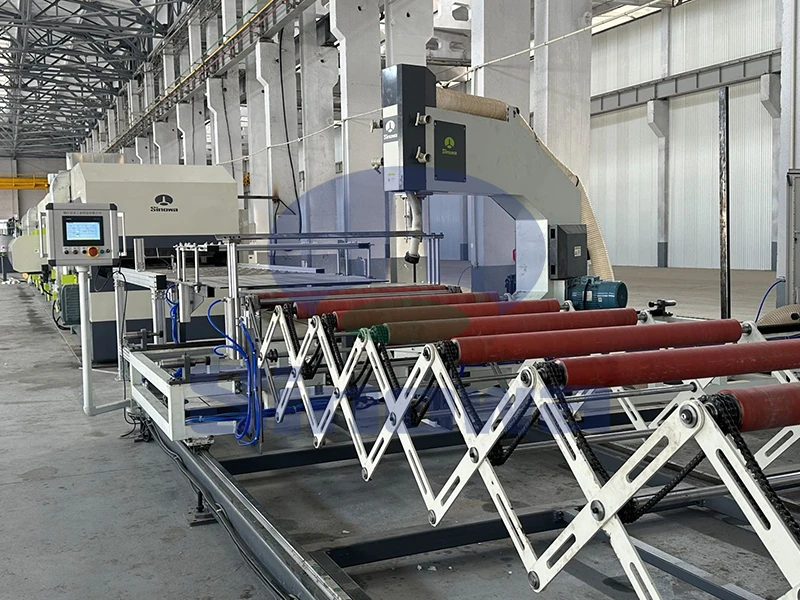
The foundation of efficient PUF sandwich panel lies in systematic equipment maintenance and regular performance calibration, which many production facilities overlook in daily operation. Long-term continuous operation leads to minor wear on mixing devices, conveyor belts and foaming modules, causing inconsistent running speed and intermittent production halts. Establishing a standardized daily, weekly and monthly maintenance system can effectively avoid unexpected equipment failures. Daily inspections focus on checking the operating status of key components and cleaning residual raw materials to prevent blockages. Weekly maintenance includes lubricating transmission parts and tightening loose structural components. Monthly calibration targets core foaming and mixing equipment to ensure stable operational precision. Regular maintenance reduces unplanned downtime significantly, maintains consistent production rhythm, and avoids time losses caused by emergency repairs, laying a stable foundation for sustained high-efficiency production of the whole line.
Optimizing raw material pretreatment and feeding management is another vital measure to elevate overall production efficiency of PUF sandwich panel manufacturing lines. Disordered material handling and insufficient pretreatment often cause production delays and material waste during formal processing. Manufacturers need to establish standardized material sorting and pretreatment procedures before production starts. All raw materials should be stored in classified areas with stable temperature and humidity to avoid quality deterioration that affects processing smoothness. Meanwhile, unified pretreatment such as raw material filtering and component homogenization can eliminate impurity interference and uneven material properties. Matching the feeding speed with the operating rhythm of subsequent production processes is also essential to prevent material accumulation or supply shortage. Scientific feeding management eliminates intermediate waiting links, ensures seamless connection between each production stage, and effectively improves the continuous operation efficiency of the production line.
Upgrading intelligent control systems plays an irreplaceable role in improving the operational efficiency of modern PUF sandwich panel production lines. Traditional production lines rely on manual parameter adjustment and experience-based operation, which leads to slow response speed and unstable processing accuracy. Equipping the production line with advanced centralized control systems and real-time monitoring sensors enables automatic adjustment of core production parameters including foaming temperature, mixing ratio and conveying speed. The intelligent system can collect and analyze production data in real time, automatically identify abnormal operating conditions and make timely fine-tuning. It also realizes synchronous linkage of all functional modules from feeding, foaming, pressing to cutting, avoiding speed mismatch between front and rear processes. Reducing manual intervention not only lowers human error rates but also simplifies operational procedures, greatly improving production stability and overall operational efficiency of the line.
Streamlining production processes and eliminating redundant operational links can effectively break efficiency bottlenecks in PUF sandwich panel manufacturing. Many production lines retain outdated segmented operation modes, involving repeated material handling, unnecessary inspection steps and redundant manual confirmation links that consume extra time and labor. Manufacturers need to sort out the whole production workflow, integrate interconnected independent processes, and realize one-stop continuous processing from raw material input to finished product output. Canceling repetitive intermediate inspection links and setting up key node quality monitoring can guarantee product quality without delaying production progress. Optimizing the process connection sequence also shortens the transmission distance of semi-finished products and reduces transit time loss. Simplified and standardized production processes make the production line operate more smoothly, effectively improving unit-time output and overall production efficiency.
Strengthening professional staff training and optimizing on-site operation management are key human factor guarantees for efficient production of PUF sandwich panel lines. Equipment operation and process adjustment rely heavily on the proficiency of operators, and unskilled operation will lead to slow production speed and frequent operational errors. Regular systematic professional training should be carried out for on-site staff, covering equipment operation specifications, process parameter adjustment skills, daily fault judgment and emergency disposal methods. Establishing standardized post operation guidelines enables operators to follow unified operational procedures and avoid random operation behaviors. Meanwhile, optimizing on-site staffing allocation according to production rhythm ensures reasonable manpower distribution in each production link, avoiding staff redundancy or manpower shortage. Improving the overall professional quality of the team can maximize the performance of production equipment and maintain long-term efficient operation of the production line.
Optimizing the foaming and curing process, as the core link of PUF sandwich panel production, can directly improve product yield and production efficiency. The foaming effect and curing quality determine product qualification rate and subsequent processing smoothness. Unreasonable process parameters often lead to uneven foaming, incomplete curing or excessive curing time, which not only reduces product quality but also causes production delays. By adjusting and optimizing key parameters such as foaming pressure, material mixing speed and constant-temperature curing time according to production conditions, manufacturers can ensure full and uniform foaming of PUF materials and complete curing in the shortest reasonable time. Eliminating unqualified products caused by improper process control reduces rework and scrap rate, saves raw materials and production time consumed by repeated processing. Stable and efficient core process operation effectively improves the effective output of the production line.
Introducing automatic auxiliary production equipment can greatly improve the overall automation level and operational efficiency of PUF sandwich panel manufacturing lines. Traditional production lines rely on manual work in finished product sorting, stacking and waste cleaning links, which cannot match the operating speed of front-end high-speed production, forming obvious efficiency bottlenecks. Equipping automatic cutting devices, intelligent stacking machines and online waste cleaning systems can realize unmanned operation of auxiliary links. Automatic cutting equipment ensures precise and rapid sizing of panels without manual measurement and adjustment. Intelligent stacking devices can orderly stack finished products at a consistent speed matching the production rhythm. Online waste cleaning equipment timely removes production residues to avoid equipment blockage. The full-process automatic coordination of main and auxiliary equipment eliminates speed mismatch between processes and realizes uninterrupted continuous production.
Establishing data-driven production management mechanisms helps continuously optimize the efficiency of PUF sandwich panel production lines. Modern efficient manufacturing relies on accurate production data analysis rather than empirical judgment. The production line’s intelligent system can record all operational data including equipment operating parameters, material consumption, production output and fault records in real time. Managers can sort and analyze these data regularly to identify hidden efficiency bottlenecks such as frequent parameter fluctuations, partial equipment low efficiency and unreasonable material consumption. Targeted optimization schemes can be formulated for existing problems to adjust process parameters and operation modes. Long-term data accumulation and regular optimization iteration can continuously eliminate inefficient links, realize refined production management, and steadily improve the overall production efficiency of the line.
Reasonable production plan scheduling and flexible production arrangement are important means to maximize the capacity of PUF sandwich panel lines. Blind and disorderly production arrangements often lead to frequent equipment start-stop, frequent process switching and low equipment utilization rate. Production managers need to formulate scientific production plans according to production tasks, equipment status and material supply conditions. Concentrating on producing products with similar specifications in batches reduces frequent parameter adjustment and equipment debugging time caused by frequent product switching. Arranging equipment maintenance and staff rest during production gaps avoids occupying effective production time. Reasonable scheduling ensures the production line maintains a stable and continuous operating state, improves equipment utilization rate and unit production efficiency, and avoids invalid resource and time waste.
Improving product quality control level reduces rework rate and indirectly boosts the comprehensive production efficiency of PUF sandwich panel lines. Quality defects such as uneven panel thickness, poor bonding and surface flaws will lead to product scrapping and secondary reprocessing, consuming a large amount of production time and raw materials. Building a full-process quality monitoring system to conduct real-time detection of key links including material mixing, foaming, pressing and forming can discover quality problems in the early production stage. Timely adjusting process parameters and operational methods according to monitoring results can effectively reduce defective products. Reducing rework and scrap means improving effective qualified product output per unit time, reducing invalid labor and material loss, and realizing dual improvement of production quality and operational efficiency of the whole production line.
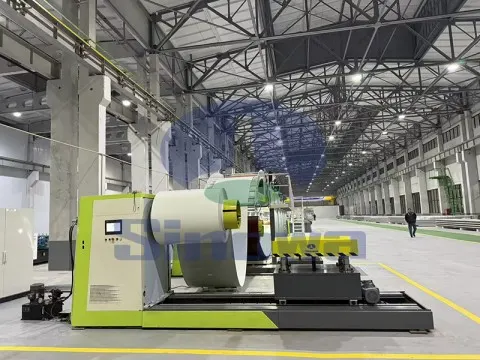
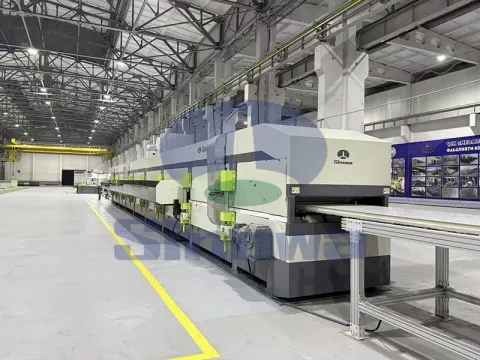
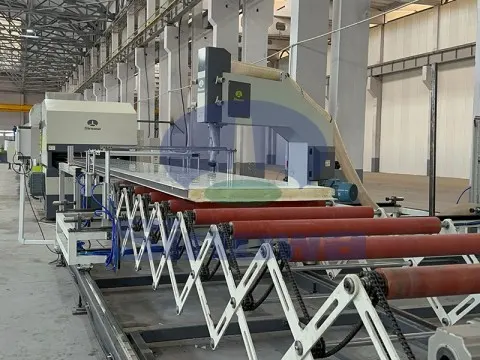
Gallery of PUF Sandwich Panel Production Line
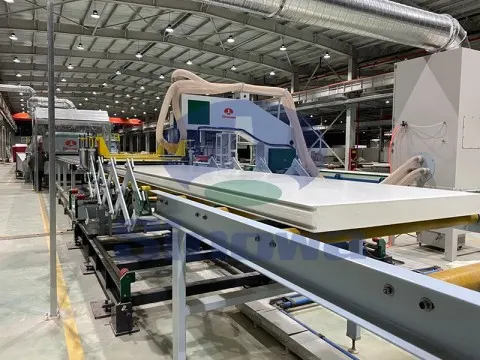
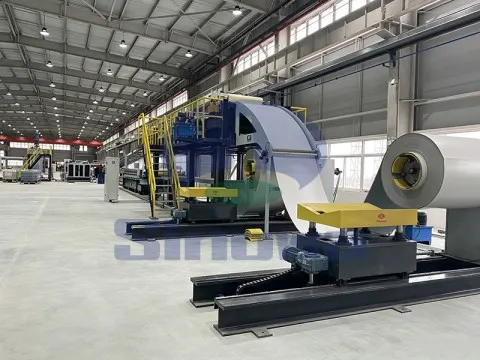
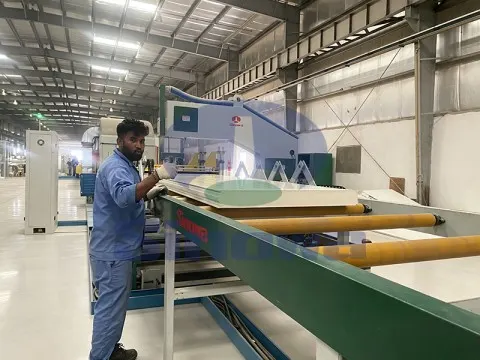
Tags: puf sandwich panel production line, puf sandwich panel production line manufacturer, puf sandwich panel production line supplier, china puf sandwich panel production line, puf sandwich panel production line for sale
-
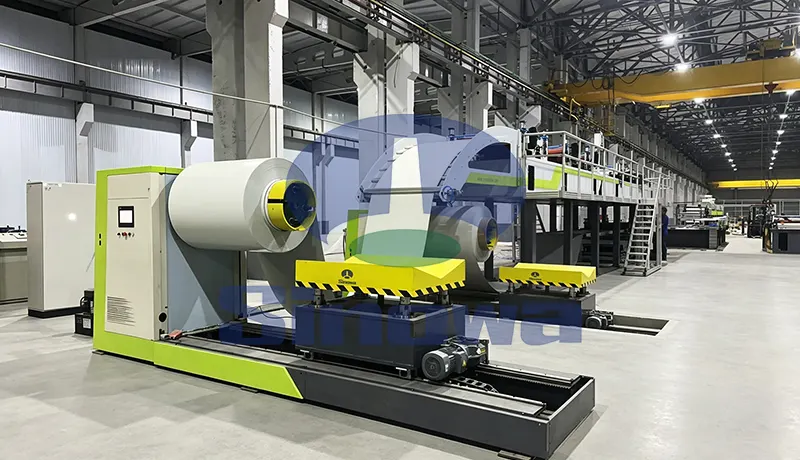
A reliable PU sandwich panel production line serves as the core equipment for manufacturing high-performance building insulation panels. This professional PU sandwich panel line features automated feeding, foaming and molding processes to ensure consistent panel thickness and structural stability. The well-designed polyurethane sandwich panel production line effectively improves production efficiency while reducing material waste in daily operation. Each calibrated polyurethane sandwich panel line can adapt to different panel sizes to meet diverse construction needs. With precise temperature and pressure control, the advanced continuous PU sandwich panel line produces panels with excellent thermal insulation and weather resistance. Meanwhile, the optimized PIR sandwich panel production line upgrades the foaming formula to enhance fire resistance performance. The high-efficiency PIR sandwich panel line maintains stable operation during long-term mass production, delivering durable and high-quality sandwich panels for various architectural and industrial applications.
-
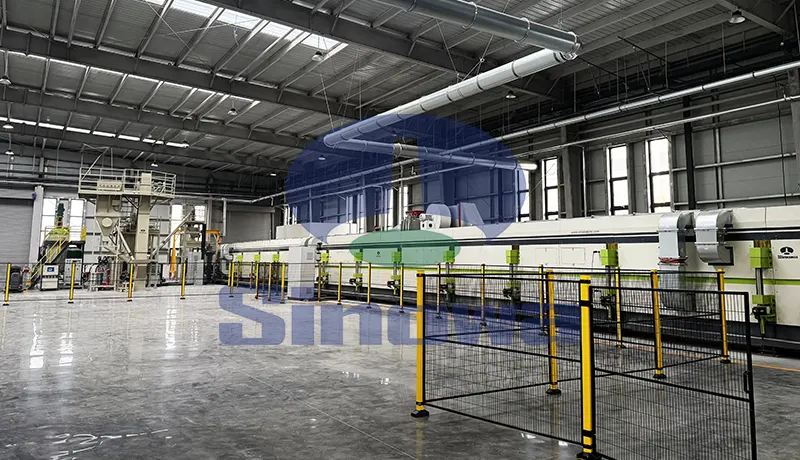
The phenolic panel production line realizes automated and continuous manufacturing of high-performance thermal insulation panels through streamlined and coordinated processing procedures.
-
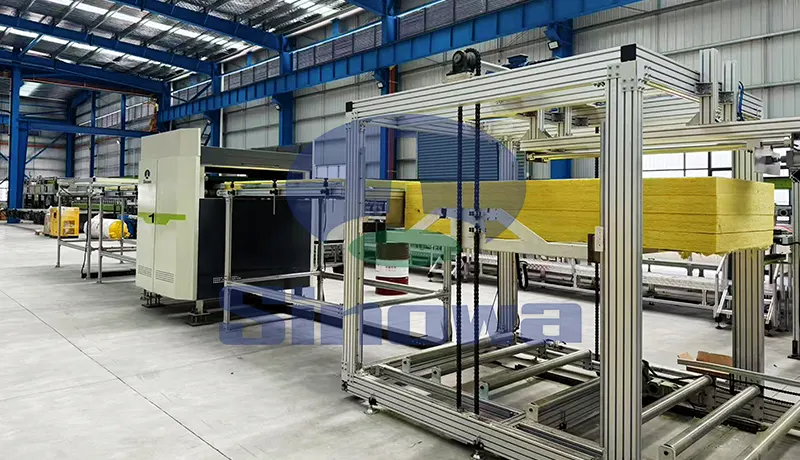
Modern insulation panel manufacturing relies on professional automated equipment to ensure stable product quality and high production efficiency. The rock wool sandwich panel production line features precise material lamination and forming processes to produce rigid, heat-insulating building panels. Meanwhile, the mineral wool sandwich panel production line adopts optimized assembly procedures to fabricate lightweight, soundproof panels widely used in architectural enclosure and thermal preservation projects.