How To Adjust The PUR Material Injection Volume Of The Sandwich Panel Manufacturing Line?
Publication Date: Sep 28, 2026
Adjusting PUR material injection volume is critical for high-quality sandwich panel production.
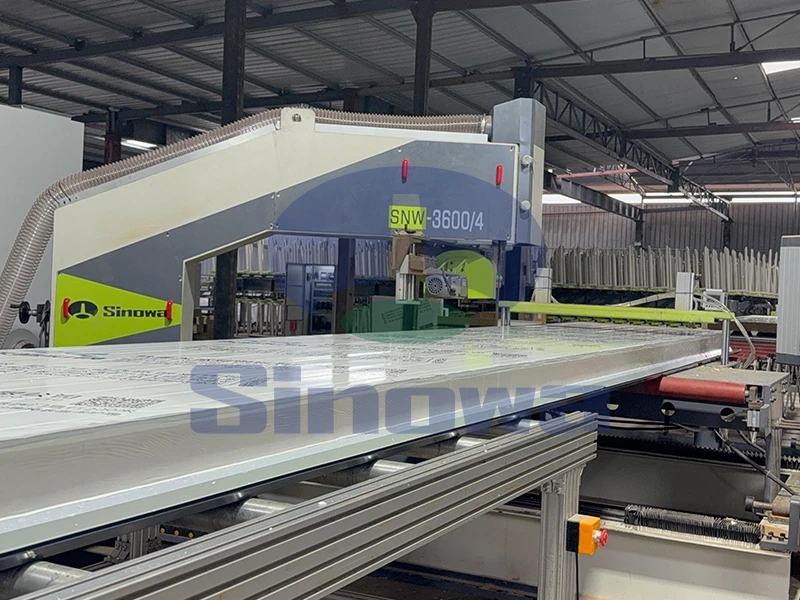
The adjustment of PUR injection volume starts with mastering the basic correlation between production line operating parameters and material filling demand, which lays the foundation for accurate and scientific volume setting. In continuous sandwich panel production, the required PUR injection volume is not fixed but dynamically matched with core production indicators including line running speed, panel width and core thickness. Faster conveyor line speeds mean shorter material filling and foaming time, requiring a corresponding increase in injection volume to ensure sufficient raw material supply. Wider and thicker sandwich panels need more PUR foam to fill the gap between upper and lower surface layers, otherwise hollow gaps and insufficient bonding will occur. Operators need to calculate the basic injection flow rate according to the actual production specifications, and reserve a small margin for material foaming expansion, which can effectively avoid the problem of incomplete filling caused by pure theoretical value setting. This basic parameter matching work is the primary step to realize stable injection volume control and prevent fundamental production defects.
Calibrating the precision of PUR metering pumps is an essential core step to adjust injection volume, as pump operation accuracy directly determines the stability of material output. Sandwich panel production lines adopt dual-pump metering systems for polyol and isocyanate, the two main PUR raw materials, and any deviation in pump delivery will lead to inaccurate total injection volume and unbalanced material ratio. Before formal adjustment, operators need to conduct static and dynamic calibration of metering pumps. Static calibration tests the single pump discharge volume within a fixed time under standby state to eliminate errors caused by pump body aging and pipeline resistance. Dynamic calibration simulates actual production line operating conditions to detect volume changes during continuous operation and correct flow deviation in real time. Long-term operation will cause slight wear of pump internal components, leading to gradual flow attenuation, so regular calibration can ensure that the actual injection volume is consistent with the set value and avoid volume fluctuation during mass production.
Reasonably adjusting the mixing head operating parameters helps optimize the uniformity and effective utilization of PUR injection volume, indirectly realizing precise volume control. The mixing head is the key component for raw material mixing and output, and its working pressure and nozzle state affect the actual filling effect of unit injection volume. Excessively low mixing pressure will cause incomplete raw material mixing, resulting in ineffective material waste and insufficient actual foam filling effect even if the injection volume meets the standard. Excessively high pressure will lead to excessive material ejection, causing local accumulation and panel bulging. In the adjustment process, operators need to match the mixing pressure with the set injection flow rate, ensuring that the mixed PUR material is evenly sprayed into the panel gap without splashing or residue. Meanwhile, keeping the mixing head nozzle unobstructed can avoid flow blockage, prevent local insufficient injection volume, and ensure consistent material output per unit time of the production line.
Production line running stability needs to be linked with PUR injection volume adjustment to adapt to dynamic production changes. In the actual production process, the conveyor line may have slight speed fluctuations due to mechanical vibration and load changes, which will mismatch the fixed injection volume with the line speed. When the line speed slows down, the original injection volume will cause excessive material accumulation, resulting in excessive foam density and panel surface bulging. When the line speed increases, the fixed volume cannot meet the rapid filling demand, forming hollow defects inside the panel. Therefore, the injection volume system needs to be linked with the line speed control system to realize synchronous dynamic adjustment. Operators should set a reasonable floating range of injection parameters according to the normal speed fluctuation range of the equipment, so that the injection volume can automatically increase or decrease with the line speed change, maintaining the balance between material supply and production rhythm in real time.
Environmental temperature and humidity factors cannot be ignored in PUR injection volume adjustment, as they affect material fluidity and foaming efficiency. PUR raw materials have obvious temperature sensitivity; low ambient temperature will increase material viscosity, reduce fluidity, and slow down the foaming reaction speed. Under this condition, the originally set injection volume cannot fully spread and fill the gap, so operators need to appropriately increase the injection volume and extend the material filling time. High temperature and high humidity environment will accelerate the foaming reaction of PUR materials, making the material expand rapidly in a short time. Excessive injection volume at this time will lead to excessive internal pressure of the panel, causing delamination and deformation. It is necessary to appropriately reduce the injection volume and adjust the material mixing ratio to adapt to the accelerated reaction rate. Timely adjusting injection parameters according to real-time environmental conditions can eliminate quality problems caused by material performance changes.
Judging and fine-tuning injection volume through finished panel quality inspection is an effective post-adjustment optimization method. After each parameter adjustment, operators need to sample and inspect the produced sandwich panels to verify the rationality of injection volume setting. For panels with local hollow cores, insufficient bonding strength and thin foam layers, it indicates that the injection volume is insufficient, and the overall flow rate needs to be increased appropriately while checking for uneven material spraying. For panels with surface bulges, excessive foam density and edge material overflow, it means the injection volume is too large, and the parameter value should be reduced step by step. Fine adjustment should follow the principle of small-amplitude multiple debugging, avoiding large-scale parameter changes that cause batch quality fluctuations. By combining production results with parameter adjustment, the injection volume can be continuously optimized to match the best production state.
Optimizing pipeline and valve group working status assists in stabilizing PUR injection volume and reducing adjustment errors. The material delivery pipeline and control valve group of the production line will have resistance changes after long-term operation, affecting the stability of material output. Pipeline aging, internal residue accumulation and valve jitter will lead to unstable instantaneous injection volume, even if the set parameters remain unchanged. Before adjusting the injection volume, operators need to check the smoothness of the delivery pipeline, clean residual cured materials in the pipeline regularly, and eliminate pipeline blockage problems. At the same time, test the opening and closing sensitivity of the control valve group to ensure that the valve opening can accurately respond to parameter setting instructions. Stable pipeline delivery and flexible valve control can minimize mechanical errors, making the injection volume adjustment more accurate and the production state more stable.
Matching PUR raw material characteristics with injection volume parameters is crucial to improve material utilization and product quality stability. Different batches of PUR raw materials have slight differences in viscosity, activity and foaming multiplier, which require targeted adjustment of injection volume. Raw materials with low viscosity and high foaming multiplier can fill the panel gap fully with a relatively small injection volume, and excessive volume will cause waste and panel deformation. Raw materials with high viscosity and low foaming multiplier require a moderate increase in injection volume to ensure complete filling and compact foam structure. Operators need to conduct small-scale trial production for new raw material batches, test the optimal injection volume parameters, and record the corresponding parameter matching data. This targeted adjustment method can avoid quality instability caused by raw material differences and realize personalized accurate control of injection volume.
Real-time data monitoring and parameter recording help standardize PUR injection volume adjustment and facilitate rapid troubleshooting. Modern sandwich panel production lines are equipped with intelligent data monitoring systems, which can record real-time data such as injection flow rate, mixing pressure, line speed and material consumption. Operators need to observe the monitoring data during production adjustment, track the fluctuation trend of injection volume, and find out abnormal parameter changes in time. After each effective adjustment, the optimal parameter values corresponding to different production specifications, environmental conditions and raw material states should be recorded completely. These historical data can be used as reference standards for subsequent production adjustment, avoiding repeated debugging work. Standardized data management makes injection volume adjustment more systematic and efficient, and effectively reduces the probability of defective products caused by parameter mismatch.
Regular equipment maintenance and parameter iteration ensure the long-term stability of PUR injection volume adjustment effect. Production equipment will have performance attenuation after long-term operation, including metering pump accuracy decline, mixing head wear and conveyor line speed error increase, which will affect the accuracy of injection volume parameters. Therefore, it is necessary to formulate a regular equipment maintenance plan, regularly calibrate precision components, replace worn parts, and eliminate potential equipment failures. Meanwhile, with the continuous upgrading of production processes and product specification optimization, the original injection volume parameters need to be iterated and updated timely. Combining regular maintenance with parameter optimization can keep the injection volume adjustment system in the best working state for a long time, ensure the long-term stable production of high-quality sandwich panels, and reduce production cost loss caused by parameter failure.
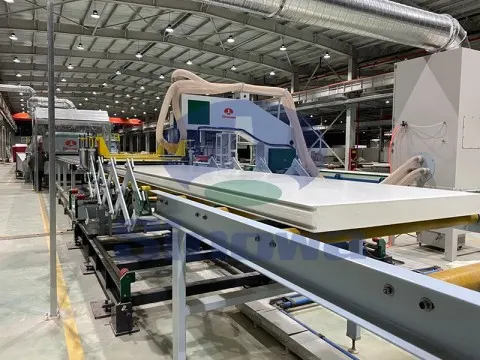
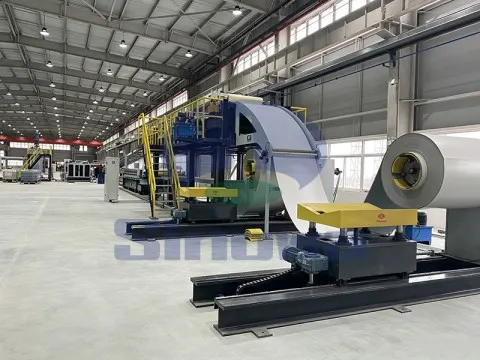
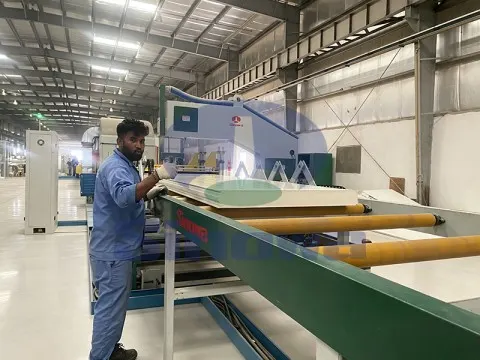
Gallery of PUR Sandwich Panel Manufacturing Line
Tags: pur sandwich panel manufacturing line, pur sandwich panel manufacturing line manufacturer, pur sandwich panel manufacturing line supplier, china pur sandwich panel manufacturing line, pur sandwich panel manufacturing line for sale
-
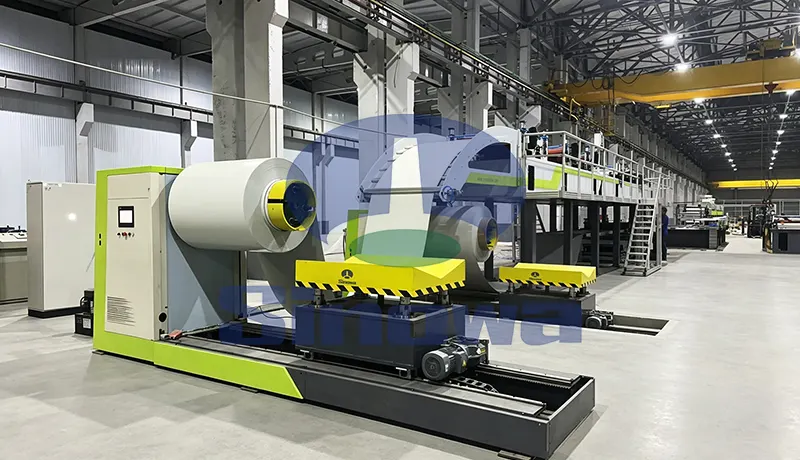
A reliable PU sandwich panel production line serves as the core equipment for manufacturing high-performance building insulation panels. This professional PU sandwich panel line features automated feeding, foaming and molding processes to ensure consistent panel thickness and structural stability. The well-designed polyurethane sandwich panel production line effectively improves production efficiency while reducing material waste in daily operation. Each calibrated polyurethane sandwich panel line can adapt to different panel sizes to meet diverse construction needs. With precise temperature and pressure control, the advanced continuous PU sandwich panel line produces panels with excellent thermal insulation and weather resistance. Meanwhile, the optimized PIR sandwich panel production line upgrades the foaming formula to enhance fire resistance performance. The high-efficiency PIR sandwich panel line maintains stable operation during long-term mass production, delivering durable and high-quality sandwich panels for various architectural and industrial applications.
-
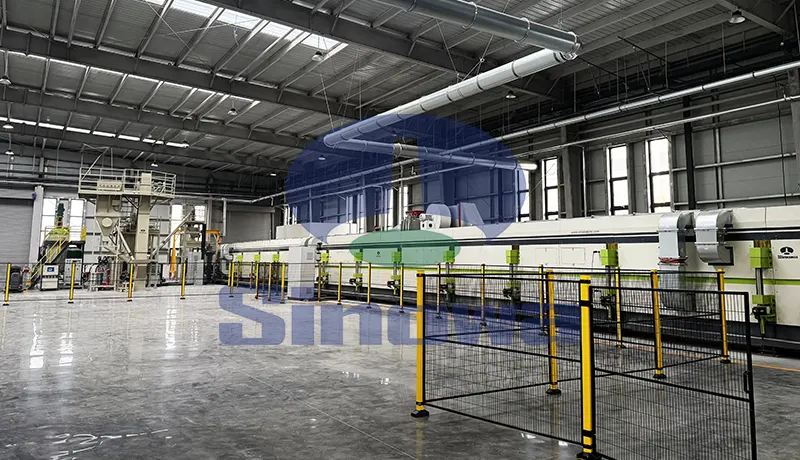
The phenolic panel production line realizes automated and continuous manufacturing of high-performance thermal insulation panels through streamlined and coordinated processing procedures.
-
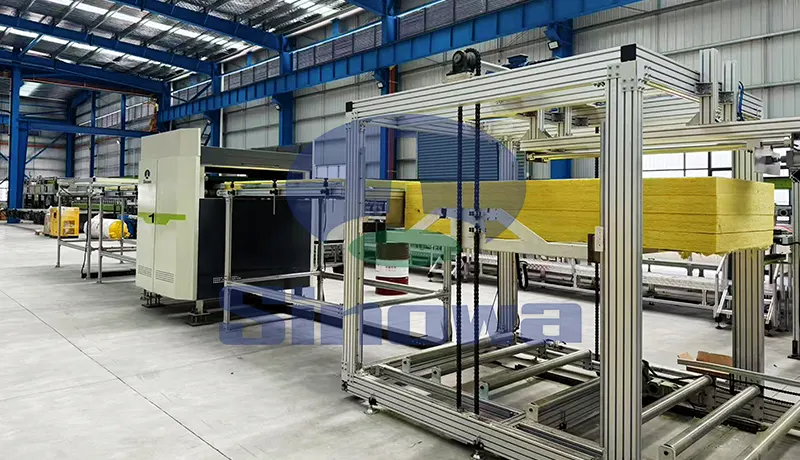
Modern insulation panel manufacturing relies on professional automated equipment to ensure stable product quality and high production efficiency. The rock wool sandwich panel production line features precise material lamination and forming processes to produce rigid, heat-insulating building panels. Meanwhile, the mineral wool sandwich panel production line adopts optimized assembly procedures to fabricate lightweight, soundproof panels widely used in architectural enclosure and thermal preservation projects.