Why Does The Rockwool Sandwich Panel Manufacturing Line Produce Panels With Weak Adhesion?
Publication Date: Oct 9, 2026
Weak adhesion between rockwool cores and metal skins is a common defect in sandwich panel production, caused by intertwined issues with raw materials, adhesive application, equipment operation, curing processes and production environment. These overlooked manufacturing flaws lead to unstable bonding strength and panel delamination risks.
Improper selection and quality fluctuation of adhesive materials are primary causes of weak bonding in rockwool sandwich panels. Most production lines adopt two-part polyurethane adhesives for lamination, and the inherent chemical properties of the adhesive directly determine the final bonding effect. When adhesives have inconsistent viscosity or poor component compatibility, they cannot form complete chemical cross-linking structures on the contact surface between rockwool and metal skins. In addition, expired adhesives or those stored in inappropriate environments will lose active chemical ingredients, reducing their adhesion activity significantly. Even minor quality deviations in adhesive batches will result in insufficient bonding tension, making the panel prone to peeling under slight external force. Many production operations fail to conduct pre-production adhesive performance testing, allowing unqualified adhesives to enter the production process and trigger universal weak adhesion problems.
Unstandardized adhesive coating operation is another key factor leading to poor panel adhesion in continuous production lines. Uniform and quantitative adhesive coverage is essential for tight lamination of rockwool sandwich panels, yet automated coating equipment often encounters uneven glue distribution during long-term operation. Excessively thin coating areas cannot fill the tiny gaps on the rough rockwool fiber surface, failing to form effective mechanical occlusion and chemical bonding. Conversely, partial over-coating will cause adhesive accumulation, which cannot fully cure in the follow-up process and forms soft adhesive layers that reduce overall bonding firmness. Moreover, unreasonable production line speed will disrupt the adhesive coating rhythm. Excessively fast operation shortens the glue spreading time, resulting in incomplete surface coverage, while intermittent line operation causes inconsistent coating thickness on panel surfaces, forming weak bonding areas locally.
Defective rockwool core material quality directly undermines the adhesion foundation of sandwich panels. Rockwool is a porous fibrous material with strong water absorption, and damp core materials are extremely harmful to lamination quality. Moisture remaining in rockwool fibers will isolate the adhesive from effective contact with the core structure, and water molecules will destroy the curing reaction of adhesives, leading to incomplete glue solidification. Besides, uneven density of rockwool cores causes inconsistent stress distribution during lamination. Loose fiber areas cannot lock the adhesive effectively, while over-dense areas prevent adhesive penetration into internal fibers. Impurities such as dust and mineral residues attached to the rockwool surface also form isolation layers, blocking the combination between adhesives and core materials and greatly weakening the interfacial bonding strength of panels.
Unreasonable lamination pressure control in production lines easily induces weak adhesion defects. The bonding process of rockwool sandwich panels relies on stable and uniform mechanical pressure to fit metal skins, adhesives and rockwool cores tightly. When the laminating equipment operates with insufficient pressure, tiny gaps remain between the three structural layers, making it impossible to form close interfacial bonding. Long-term equipment wear often leads to uneven pressure distribution across the entire panel width, resulting in partial tight bonding and partial loose bonding on the same panel. In contrast, excessive lamination pressure will crush the loose rockwool fiber structure, damage the original stress balance of the core material, and cause irreversible structural deformation. The deformed core cannot maintain stable bonding with metal skins, and hidden delamination problems will gradually appear after panel molding.
Inaccurate control of adhesive open time and curing time severely affects panel bonding firmness. Each type of structural adhesive has a fixed effective open time, which refers to the valid period from coating to complete fitting lamination. If the rockwool core and metal skin are not laminated within the effective open time, the adhesive surface will contact air and oxidize, losing bonding activity and forming a failed bonding interface. Meanwhile, the adhesive requires a specific curing cycle to complete chemical cross-linking and form high-strength bonding structures. Many production lines pursue output efficiency and prematurely move, stack or cut panels before adhesive curing is completed. External vibration and extrusion during the uncured stage will disrupt the forming bonding structure, leaving permanent weak adhesion defects inside the panels that cannot be repaired later.
Abnormal production environment temperature and humidity interfere with adhesive curing and bonding effects. The chemical reaction rate of adhesives is highly sensitive to ambient temperature. In low-temperature production environments, the molecular activity of adhesives decreases, the curing reaction slows down, and cross-linking reactions cannot be fully completed within the set process time, resulting in low bonding strength. In over-high temperature environments, the adhesive surface cures rapidly while the internal part remains uncured, forming a brittle surface bonding layer that is easy to peel. Excessively high air humidity will make water vapor adhere to metal skin surfaces and rockwool fibers, forming a thin water film. This water film isolates the adhesive from base materials, destroys the interfacial bonding effect, and causes local hollowing and weak adhesion of panels after molding.
Poor surface treatment of metal skins is easily overlooked but critical to weak adhesion problems. The metal skins used for sandwich panels often have residual oil stains, oxide layers and fine dust generated during rolling and processing. These surface contaminants form a stable isolation layer between the metal base and adhesive, preventing effective chemical combination and mechanical occlusion. In continuous production lines, the surface cleaning procedure is often simplified to improve efficiency, resulting in incomplete removal of surface impurities. In addition, overly smooth metal surface coating lacks microscopic roughness, making it difficult for the adhesive to form effective mechanical anchoring structures. The single dependence on chemical bonding without mechanical occlusion will greatly reduce the peel resistance of panels, leading to weak overall adhesion performance.
Unmatched production line operating parameters cause cumulative bonding defects in mass production. The lamination process of rockwool sandwich panels requires coordinated matching of multiple parameters including coating amount, line speed, lamination temperature and pressure. Single parameter adjustment without overall optimization will break the process balance. For example, increasing production line speed without synchronously adjusting adhesive coating volume and lamination pressure will lead to insufficient glue supply and incomplete pressing fitting. Long-term unsynchronized parameter operation will form batch weak adhesion problems. Besides, inconsistent parameter setting in different production batches leads to unstable panel bonding quality, with some products showing significantly reduced adhesion strength and poor overall consistency.
Equipment aging and daily maintenance deficiencies gradually trigger persistent weak adhesion issues. Long-term operation of automated production lines will cause wear of coating rollers, pressure rollers and transmission parts, resulting in reduced operation accuracy and unstable working state. Worn coating rollers cannot achieve uniform glue spreading, and deformed pressure rollers lead to uneven lamination pressure. In addition, residual cured adhesive and material debris inside the equipment will accumulate over time, interfering with normal equipment operation and polluting panel bonding interfaces. Lack of regular equipment calibration and cleaning makes process errors continue to accumulate, turning occasional weak adhesion defects into common batch problems, seriously affecting product quality stability.
Improper post-production handling and storage will aggravate potential weak adhesion defects of panels. Freshly produced rockwool sandwich panels are in the stage of continuous adhesive curing, and the internal bonding structure is not completely stable. Improper stacking modes such as excessive stacking height and uneven stress will cause internal dislocation of the uncured structural layer, damaging the preliminary bonding interface. Stacking panels in humid and ventilated environments makes rockwool cores absorb moisture again, which further erodes the weak bonding area. In addition, random handling and collision of finished products will produce external impact force, causing micro-delamination inside panels with insufficient bonding strength. These post-production irregular operations turn minor bonding defects into obvious weak adhesion failures, reducing the overall service performance of panels.
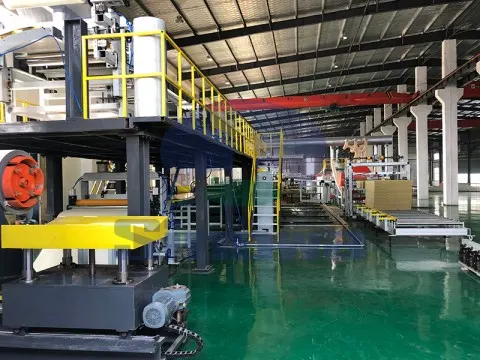
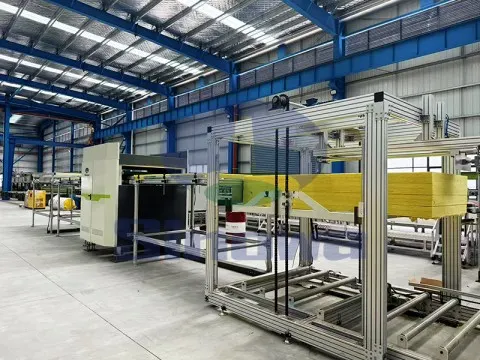
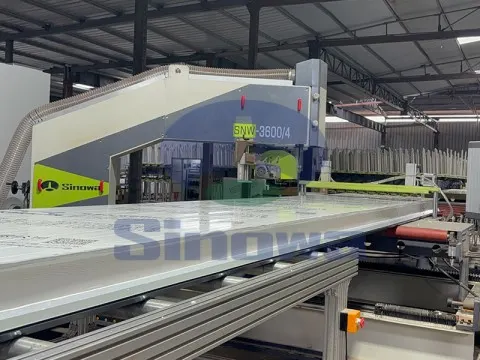
Gallery of Rockwool Sandwich Panel Manufacturing Line
Tags: rockwool sandwich panel manufacturing line, rockwool sandwich panel manufacturing line manufacturer, rockwool sandwich panel manufacturing line supplier, china rockwool sandwich panel manufacturing line, rockwool sandwich panel manufacturing line for sale
-
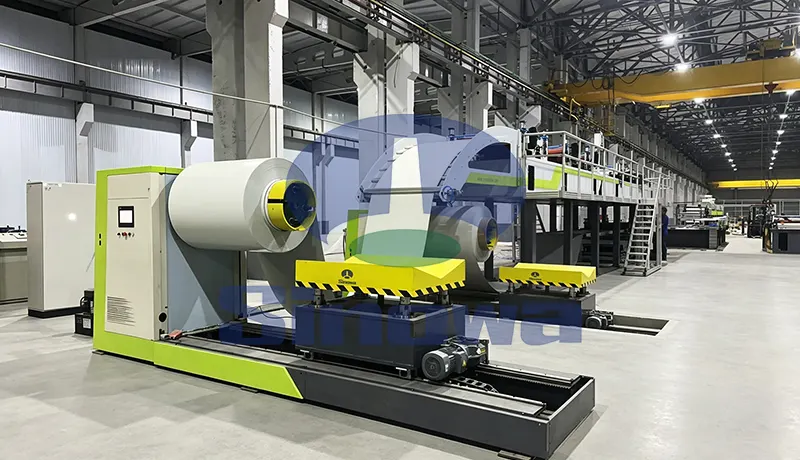
A reliable PU sandwich panel production line serves as the core equipment for manufacturing high-performance building insulation panels. This professional PU sandwich panel line features automated feeding, foaming and molding processes to ensure consistent panel thickness and structural stability. The well-designed polyurethane sandwich panel production line effectively improves production efficiency while reducing material waste in daily operation. Each calibrated polyurethane sandwich panel line can adapt to different panel sizes to meet diverse construction needs. With precise temperature and pressure control, the advanced continuous PU sandwich panel line produces panels with excellent thermal insulation and weather resistance. Meanwhile, the optimized PIR sandwich panel production line upgrades the foaming formula to enhance fire resistance performance. The high-efficiency PIR sandwich panel line maintains stable operation during long-term mass production, delivering durable and high-quality sandwich panels for various architectural and industrial applications.
-
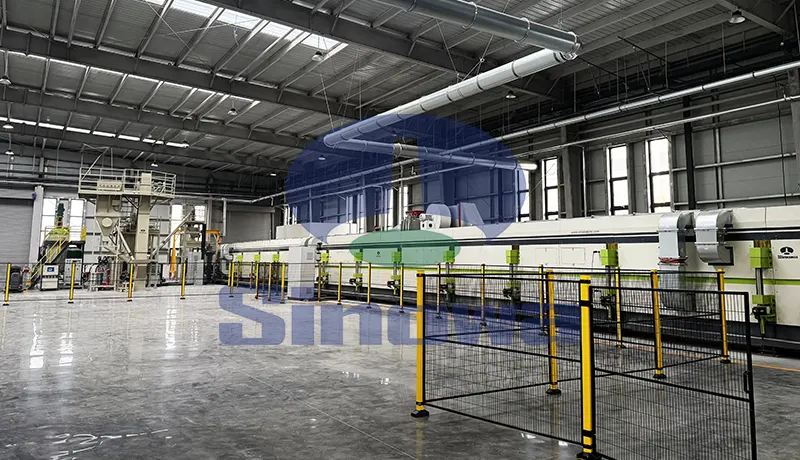
The phenolic panel production line realizes automated and continuous manufacturing of high-performance thermal insulation panels through streamlined and coordinated processing procedures.
-
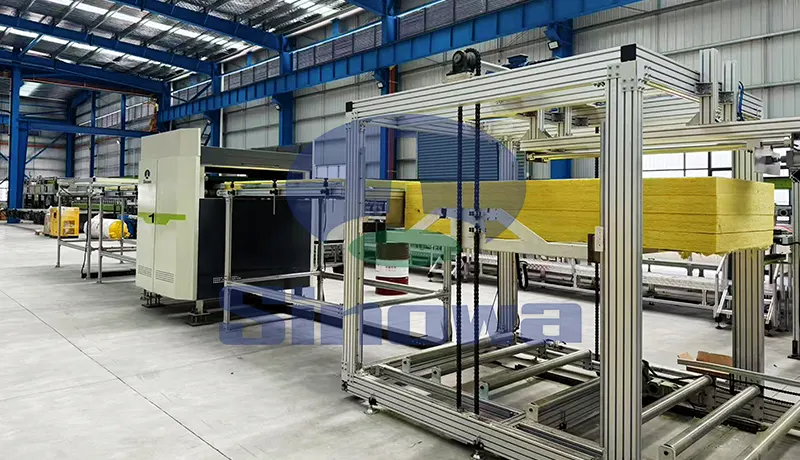
Modern insulation panel manufacturing relies on professional automated equipment to ensure stable product quality and high production efficiency. The rock wool sandwich panel production line features precise material lamination and forming processes to produce rigid, heat-insulating building panels. Meanwhile, the mineral wool sandwich panel production line adopts optimized assembly procedures to fabricate lightweight, soundproof panels widely used in architectural enclosure and thermal preservation projects.