How To Prevent Rockwool Core Sagging On The Continuous Rock Wool Sandwich Panel Production Line?
Publication Date: Nov 17, 2026
Optimize rockwool vertical fiber orientation, use uniform-density lamella strips, control synchronous belt pressure & speed, apply even glue coating, maintain stable curing temperature and side guiding to stop rockwool core sagging on continuous sandwich panel lines.
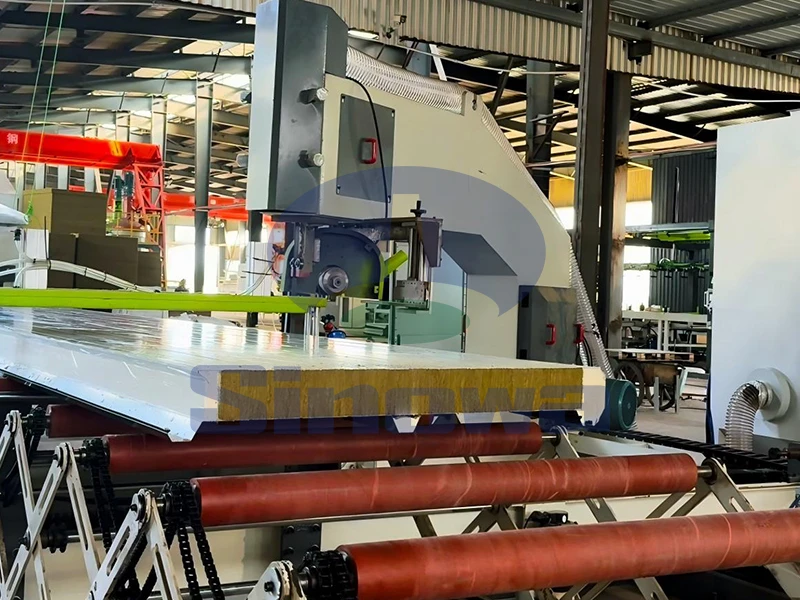
Sagging of rockwool core is one of the most persistent quality defects encountered during the operation of continuous rock wool sandwich panel production lines, and it can undermine the structural consistency and surface flatness of finished panels even when raw rockwool materials meet basic visual requirements. This defect usually manifests as uneven downward deformation of the rockwool layer between two facing sheets after the composite pressing stage, and it often becomes more obvious as panels move along cooling and conveying sections before final cutting. Many production teams tend to attribute sagging solely to the density of rockwool fibers, but the root causes usually interact across material preparation, fiber orientation control, pre-treatment processes, line speed matching, pressing parameters, adhesive distribution, support structure design, post-pressing cooling management, online inspection logic, and routine maintenance practices. If only a single adjustment such as increasing rockwool density is adopted, production costs will rise unnecessarily while the problem may still recur under fluctuating ambient humidity or variable line throughput. Effective prevention starts with establishing a holistic understanding of how rockwool’s inherent elasticity, binder curing state, and external mechanical loads interact throughout the continuous forming process, rather than relying on isolated corrective actions after defective panels have already been produced. Operators and technical staff need to observe sagging trends across different production batches and record subtle changes in working conditions, so that preventive measures can be calibrated steadily instead of being adjusted in an emergency response mode every time defects emerge.
Controlled fiber arrangement of incoming rockwool mats forms the foundational barrier against core sagging on continuous production lines, because randomly oriented fibers create inconsistent internal load-bearing capacity that cannot resist the shear and gravitational forces applied during composite forming. When rockwool is fed into the continuous line, loose fiber clusters and uneven stacking will create weak zones where the core is prone to collapse once sandwiched between upper and lower metal sheets. The feeding section should be configured to spread rockwool evenly across the full width of the panel without localized thick piles or thin gaps, and gentle directional alignment of fibers along the lengthwise direction of the panel helps distribute stress more uniformly as the assembly enters the pressing zone. Excessive agitation of rockwool fibers during transportation and spreading must be avoided, as violent disturbance breaks inter-fiber connections and reduces the inherent cohesive strength of the mat. It is also critical to maintain stable mat thickness before lamination; sudden fluctuations in mat thickness force the pressing system to apply uneven compression, which crushes some areas of the rockwool while leaving other sections under-supported. Operators should avoid feeding rockwool mats that have been compressed and stored improperly for long periods, since such mats lose natural resilience and fail to recover evenly once laid on the lower facing sheet. Small adjustments to the feeding roller speed and spreading baffle position can deliver measurable improvements, as these settings directly determine whether the rockwool core maintains uniform internal structure before bonding begins.
Uniform and controlled adhesive application is another decisive factor for preventing rockwool core sagging, because the adhesive forms continuous bonding points between rockwool fibers and the facing sheets, transferring load across the entire core layer and limiting free deformation of loose fibers. Too little adhesive creates sparse bonding points that cannot lock fibers in place, allowing the rockwool to shift and sag under its own weight after pressing. On the other hand, excessive adhesive will fill the gaps between rockwool fibers excessively, reduce the permeability of the core, slow down curing speed, and add extra weight that pulls the soft uncured core downward. The spraying or rolling system for adhesive must maintain consistent flow rate and coverage across the full width of the panel, eliminating streaks, blank areas, and localized over-coating. The timing of adhesive application also requires precise coordination with the line rhythm; adhesive needs to retain appropriate viscosity when it contacts the rockwool and facing materials, so that it wets fiber surfaces adequately without dripping or migrating downward through the porous core before pressing. Ambient temperature and air flow around the adhesive station should be stabilized to prevent premature skinning of the adhesive surface, which stops effective penetration into the rockwool fiber network. Regular cleaning of nozzles and distribution channels prevents blockages that cause uneven coating, and periodic verification of adhesive mixing ratios ensures the binder maintains designed curing characteristics throughout long production runs.
The coordination between line running speed and pressing temperature profile directly shapes the curing progress of adhesive and the stability of the rockwool core, and mismatched parameters are a frequent hidden trigger for sagging defects. When the line moves too quickly, the composite assembly passes through the pressing zone before the adhesive gains enough bonding strength, so the rockwool core remains soft and deforms under gravity after leaving the constrained pressing space. If the line speed is reduced excessively to extend heating time, over-curing of the adhesive at the surface may occur while deeper parts of the rockwool core still cure incompletely, creating internal stress that gradually releases in the form of core sagging during cooling. The heating sections inside the continuous press should establish a gradual temperature gradient rather than a single high-temperature zone; this allows heat to penetrate slowly from both facing sheets toward the middle of the rockwool core, promoting synchronous curing of adhesive throughout the whole core thickness. Pressure settings inside the press must also match the selected speed and temperature. Insufficient pressure fails to bring rockwool, adhesive and facing materials into close contact, while overly high pressure crushes the rockwool fiber structure permanently and destroys the stable internal framework that resists sagging. Technical teams need to carry out incremental parameter trials within a narrow range, recording sagging performance at each combination of speed, temperature and pressure to build a stable operating window suitable for the rockwool specification in use.
Supporting structures arranged before, inside and immediately after the pressing unit play an irreplaceable role in limiting rockwool core sagging, because the uncured sandwich assembly has very low rigidity and cannot support its own weight without continuous planar support. Many sagging cases take place in the transition zone right after the press, where the rigid constraint of pressing plates disappears while the adhesive has not yet developed full bonding strength. The conveying supports in this transition area should maintain continuous and even contact with the lower facing sheet, eliminating long unsupported spans that let the soft core bend downward. Support rollers or sliding plates need to be arranged with suitable spacing, and their surface height must be precisely leveled to avoid creating bending forces on the newly formed panel. The upper side of the panel should also receive light limiting guidance in the early post-pressing stage, not to apply heavy pressure, but to prevent upward warping that indirectly pulls the rockwool core into uneven deformation. All support components must remain clean and free of accumulated adhesive residue or rockwool debris, as raised deposits will create indentations and uneven stress distribution on the panel surface. Operators should inspect the level and smoothness of support surfaces every shift, and adjust any tilted or worn parts promptly, since minor misalignment of supports can accumulate into visible sagging defects over hundreds of continuous panels.
Moisture control for rockwool raw materials and the production environment is often overlooked, yet moisture changes alter the mechanical behavior of rockwool and adhesive in ways that encourage core sagging. Rockwool fibers absorb ambient moisture gradually, and high moisture content weakens the inter-fiber friction inside the mat while diluting the adhesive that contacts wet fiber surfaces. Damp rockwool becomes heavier and softer, and the binder mixed with moisture takes far longer to reach sufficient bonding strength, leaving the core vulnerable to sagging during the critical curing period. Raw rockwool storage areas should maintain steady humidity levels and good ventilation, and incoming rockwool mats should be protected from rain, ground moisture and condensation before being transferred to the production line. Dehumidification or air circulation systems near the feeding and pressing zones help reduce sudden humidity spikes that occur with changing weather conditions. It is not advisable to introduce high-temperature air drying directly onto rockwool mats at an excessively high rate, as rapid surface drying creates a dry outer shell while moisture remains trapped deep inside the core, leading to uneven curing and internal weak points. Regular moisture sampling of rockwool batches helps production staff anticipate performance shifts and adjust adhesive application or line speed proactively before sagging problems appear on finished panels.
The design and maintenance of the rockwool cutting and trimming unit before lamination also affect core stability and sagging risk on continuous lines. Irregular edges, jagged cuts and loose fiber burrs along the sides of rockwool mats create uneven side support when the core is enclosed by facing sheets. Loose fibers separated from the main mat tend to shift and gather in local areas, breaking the uniform load distribution across the panel width. Cutting tools must remain sharp and run at a matched speed with the rockwool feeding movement to produce clean, straight cut surfaces without tearing or pulling fibers apart. If cutting blades become dull, they drag and compress rockwool locally, forming dense compressed strips next to loose fiber sections, and these structural differences will deform at different rates after pressing. Trimming waste should be removed completely from the panel path, so that stray fiber fragments do not get trapped between the rockwool core and facing sheets. The side guiding devices for rockwool mats need to apply gentle, consistent positioning force without squeezing the mat, because heavy side squeezing compresses the core edges and creates residual stress that relaxes after pressing and causes edge sagging. Stable cutting quality ensures the rockwool core retains a uniform cross-section as it enters composite forming, removing a common source of inconsistent core performance in continuous production.
Real-time online monitoring of panel flatness and core condition allows early detection of sagging tendency before defects become severe, enabling small parameter corrections rather than large-scale rework of finished products. Monitoring points can be set after the pressing zone, after the cooling tunnel and before the final cutting station, tracking vertical displacement of the panel surface across multiple width positions. Minor downward deviation detected at the first monitoring point signals that the curing or support condition is not adequate, and technicians can adjust temperature, speed or adhesive flow in a timely manner. Monitoring systems should track trends over time instead of only checking individual panels, because sagging often develops gradually as components wear or raw material properties drift. Visual inspection by human operators remains a necessary complement to automated sensing, especially for subtle sagging that appears only after the panel has fully cooled. Inspection records should link sagging observations to corresponding production parameters and raw material batch information, forming a reference database for troubleshooting. It is important to avoid waiting until finished panels are stacked to judge core stability, since stacking pressure can mask sagging that will become visible after panels are separated and placed under normal service conditions.
Cooling management after the pressing stage is critical to lock in the cured structure of the rockwool core and prevent delayed sagging that develops long after panels leave the press. Immediately after pressing, the adhesive continues its curing reaction while the whole sandwich assembly holds elevated temperature. If cooling proceeds too quickly, thermal stress forms between the facing sheets and rockwool core, and differential shrinkage breaks some newly formed bonding connections between fibers and facings. Slow, uniform cooling inside a covered cooling tunnel allows bonding strength to continue developing steadily as temperature drops, so the rockwool core retains its fixed shape without gradual deformation. Air flow inside the cooling area must circulate evenly across the upper and lower surfaces of panels, avoiding concentrated cold air jets that chill one side faster than the other. Panels should stay fully supported throughout the cooling process, and sudden lifting, tilting or transferring operations during cooling must be minimized, because the core still has limited rigidity even after initial adhesive set. Stacking of warm panels too early is a common mistake; the weight of upper panels compresses the not-yet-stable rockwool core and creates permanent sagging indentations. Establishing a fixed cooling duration according to panel thickness and line conditions gives the adhesive enough time to reach stable final strength before panels are handled and stacked.
Long-term routine maintenance of all sections of the continuous line sustains stable operating conditions and reduces the chance of intermittent rockwool core sagging that comes from equipment drift. Worn drive chains, slipping feeding rollers and inconsistent motor speed output create unstable rockwool mat delivery, leading to variable mat thickness and fiber distribution into the pressing zone. Temperature sensors and pressure gauges require periodic calibration, because inaccurate readings can make operators rely on false parameter values while the actual pressing environment drifts away from the stable curing window. Seals and insulation around the pressing and heating sections need inspection to prevent heat leakage, which creates uneven temperature distribution across the panel width. Moving parts such as support rollers, guide plates and adhesive spray components should be cleaned and lubricated on a fixed schedule to prevent sticking, jitter and uneven movement. Even with well-written operating procedures, sagging risk will rise slowly as equipment degrades, so maintenance plans should align with production runtime rather than only responding to breakdown events. When sagging appears intermittently without obvious changes to raw materials or settings, equipment wear and calibration drift are the most likely causes. By combining disciplined maintenance with all the preventive measures covering fiber preparation, adhesive control, pressing coordination, support layout, moisture management and cooling regulation, production lines can achieve consistent rockwool sandwich panel quality and keep core sagging within a negligible range through long continuous operation cycles.
Tags: continuous rock wool sandwich panel production line, continuous rock wool sandwich panel production line manufacturer, continuous rock wool sandwich panel production line supplier, china continuous rock wool sandwich panel production line, continuous rock wool sandwich panel production line for sale
-
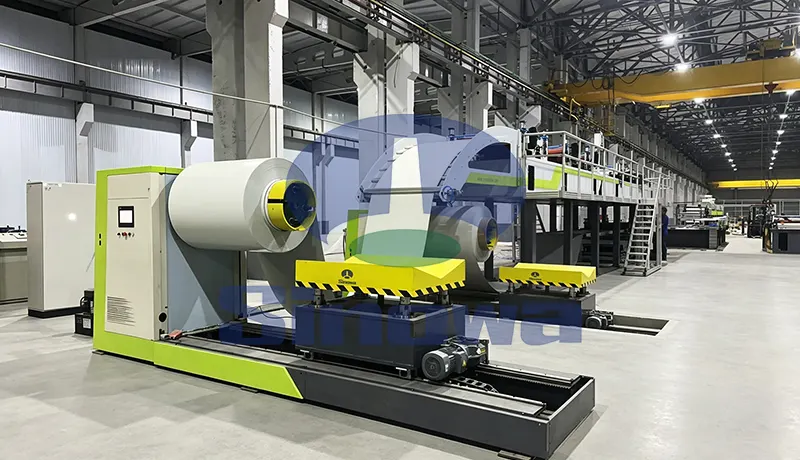
A reliable PU sandwich panel production line serves as the core equipment for manufacturing high-performance building insulation panels. This professional PU sandwich panel line features automated feeding, foaming and molding processes to ensure consistent panel thickness and structural stability. The well-designed polyurethane sandwich panel production line effectively improves production efficiency while reducing material waste in daily operation. Each calibrated polyurethane sandwich panel line can adapt to different panel sizes to meet diverse construction needs. With precise temperature and pressure control, the advanced continuous PU sandwich panel line produces panels with excellent thermal insulation and weather resistance. Meanwhile, the optimized PIR sandwich panel production line upgrades the foaming formula to enhance fire resistance performance. The high-efficiency PIR sandwich panel line maintains stable operation during long-term mass production, delivering durable and high-quality sandwich panels for various architectural and industrial applications.
-
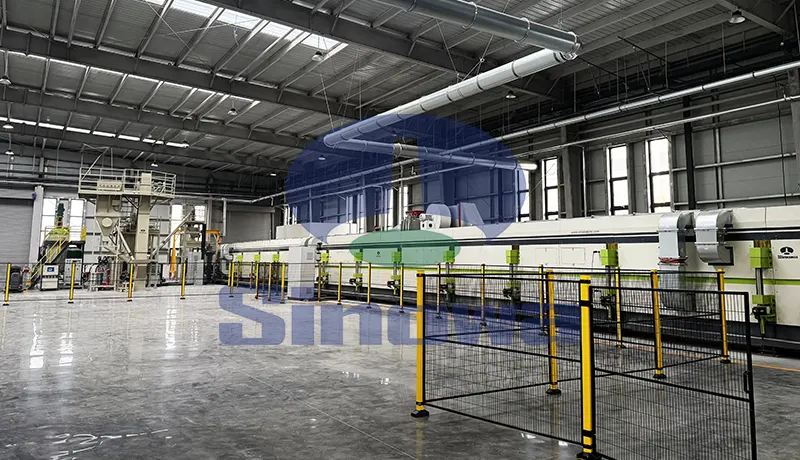
The phenolic panel production line realizes automated and continuous manufacturing of high-performance thermal insulation panels through streamlined and coordinated processing procedures.
-
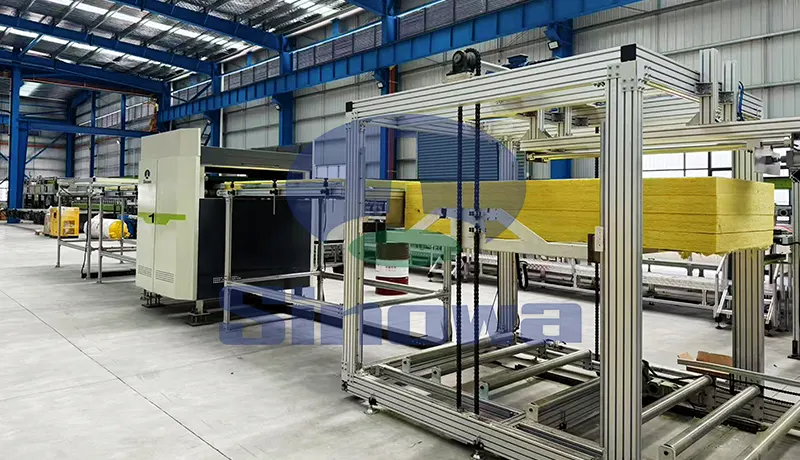
Modern insulation panel manufacturing relies on professional automated equipment to ensure stable product quality and high production efficiency. The rock wool sandwich panel production line features precise material lamination and forming processes to produce rigid, heat-insulating building panels. Meanwhile, the mineral wool sandwich panel production line adopts optimized assembly procedures to fabricate lightweight, soundproof panels widely used in architectural enclosure and thermal preservation projects.