How To Adjust The Pouring Rate Of The PUF Sandwich Panel Production Line?
Publication Date: Oct 28, 2026
Learn how to adjust pouring rate on a PUF sandwich panel line. Tune metering pump speed, match conveyor speed, stabilize raw material temperature, check foam spread, and make small incremental tweaks to avoid voids, bulges or uneven foam core density.
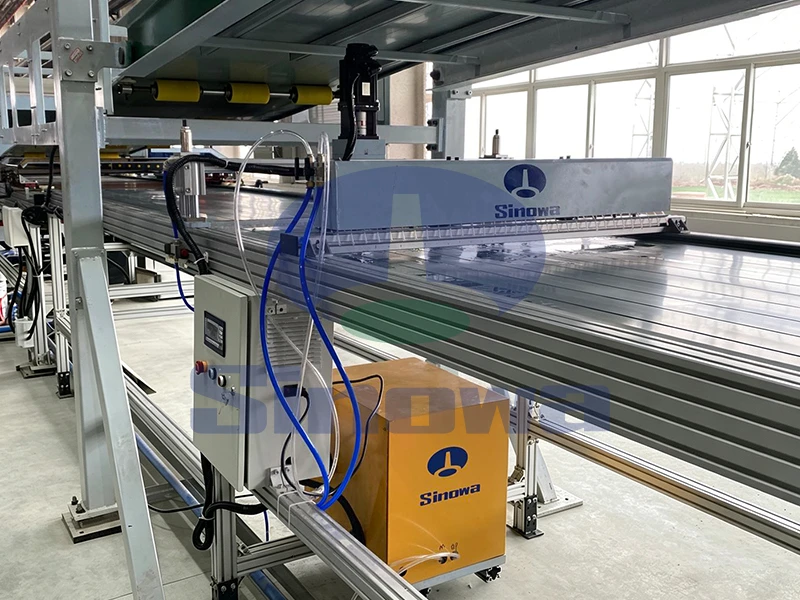
Adjusting the pouring rate on a PUF sandwich panel production line begins with understanding the direct connection between material flow and the core foaming reaction that forms the panel’s insulating layer. The pouring rate refers to the volume of mixed polyol and isocyanate delivered onto the moving face sheet within a set unit of time, and even minor shifts in this value can alter foam density, cell structure, adhesion strength and surface flatness of the finished product. Operators first need to observe the initial foaming state right after the mixed material exits the pouring head, checking whether the liquid spreads evenly before it starts to rise and cure. If the pouring rate is too high, excess mixed material accumulates locally, leading to over-expansion, bulging surfaces and internal voids as trapped gas cannot escape smoothly during foaming. When the rate is too low, insufficient raw material fails to fill the preset cavity between the upper and lower face sheets, creating thin foam sections, hollow spots and weak bonding interfaces that compromise the overall consistency of each panel. Before making any parameter changes, the line must run at a stable continuous speed, as fluctuations in the conveyor speed will mask the real effect of pouring rate adjustments and cause misjudgment of suitable flow values. It is also necessary to confirm that the raw material temperature and mixing ratio stay steady, because changes in material viscosity and reaction speed will change how the foam expands independently of pouring volume. Small incremental adjustments are preferred over large one-time changes, allowing enough time for the foaming system to stabilize and for samples to be taken for visual and tactile inspection after each tweak. Every adjustment should be recorded alongside the corresponding conveyor speed and foaming performance, building practical reference data for different panel thickness specifications. The pouring head position and spreading blade layout should also be inspected, since poor distribution geometry can create uneven material coverage even when the flow reading on the pump remains unchanged. Operators should avoid chasing a single fixed pouring rate for all products, as different panel thicknesses require different total material input to fill the forming space correctly.
The mechanical components responsible for controlling pouring rate mainly include metering pumps, frequency converters, flow sensors and the mixing assembly that combines the two PUF raw streams before discharge. Metering pumps push polyol and isocyanate separately from storage tanks to the mixing chamber, and their rotational speed directly determines the instantaneous output volume of each component. Frequency converters serve as the primary control medium to modify pump speed, enabling continuous fine tuning instead of only discrete on-off operation. Flow sensors installed along the material pipelines provide real-time feedback to the control system, comparing the actual measured flow against the target value and triggering minor automatic corrections when deviation appears. When manually adjusting the pouring rate, operators need to modify the frequency setting for both pumps in a coordinated way rather than adjusting only one pump, because an imbalance between polyol and isocyanate flow will break the chemical stoichiometric relationship required for proper foaming. If one stream runs faster than the other, incomplete reaction occurs, producing sticky, under-cured foam or brittle, crumbly core material that separates easily from the metal face sheets. After adjusting the frequency parameters, there will be a short lag period before the new flow stabilizes, caused by the residual material already inside the pipelines and mixing chamber. During this transition phase, the panels coming off the line are transitional products and should be marked separately to avoid mixing them with qualified finished goods. Regular calibration of flow sensors is essential to maintain adjustment accuracy, as sensor drift over long operating hours can display incorrect flow data and lead operators to set inappropriate pouring rates. The sealing condition of pump joints and pipeline connections also deserves routine checks; tiny leaks reduce the effective pouring volume reaching the pouring head while the instrument still shows a normal flow reading, creating a misleading control state. Wear on pump internal components gradually reduces delivery efficiency, so periodic maintenance ensures that pouring rate adjustments translate reliably into actual material output changes at the discharge point.
Conveyor line speed must be matched closely with pouring rate, and these two parameters form a paired control logic that cannot be optimized independently on the PUF sandwich panel line. The pouring rate defines how much material is released per second, while conveyor speed controls how quickly the face sheet substrate moves under the pouring head. If conveyor speed increases without a corresponding rise in pouring rate, less raw material is deposited over each meter of the sheet, resulting in thin foam cores, incomplete filling and visible gaps along the panel length. Conversely, slowing down the conveyor while keeping pouring rate unchanged piles more mixed liquid onto a shorter section of the substrate, which causes excessive foam rise, lateral overflow beyond the panel edge and heavy flash that requires extra trimming work and wastes raw materials. When switching production to panels of a different target thickness, the first step is usually to recalculate the matched combination of line speed and pouring rate based on the cross-sectional volume that foam needs to occupy in the forming zone. After entering new parameter values, the line runs a short test section so operators can watch the spreading width and thickness build-up of the foaming mass as it enters the double belt laminator. Inside the laminator, the foam expands under controlled pressure and temperature, and mismatched pouring and speed settings will make the foam either resist compression and push the belts apart or fail to fill the confined space fully. Even after finding a suitable combination for one thickness, small environmental shifts can require rebalancing; warmer workshop air accelerates reaction speed and means the foam rises faster, which may demand a slight reduction in pouring rate to prevent overpressure inside the laminator. Operators learn to judge matching quality by observing the foam front position, the point where expansion completes before the panel exits the laminator. A properly matched pair of pouring rate and line speed keeps this foam front within the middle section of the laminator, avoiding early curing before full shaping or delayed curing when the panel leaves the forming zone.
Raw material temperature and pre-mix viscosity exert a notable influence on foaming behavior, which indirectly changes the practical effect of a set pouring rate and often necessitates secondary adjustment after temperature fluctuations. Both polyol and isocyanate change viscosity as temperature rises or falls, and lower viscosity liquid spreads out more quickly and thinly over the face sheet, while higher viscosity material flows more slowly and tends to pile in thicker localized layers. If the storage tanks and pipeline heating systems run too cool, mixed material flows sluggishly from the pouring head, and even a numerically correct pouring rate may fail to spread uniformly across the sheet width, leaving streaks and bare areas. Raising material temperature reduces viscosity and improves spreading, but it also speeds up the chemical reaction cycle, shortening the available time for the liquid to spread before gelation begins. In this scenario, operators often lower the pouring rate slightly or adjust the pouring head travel pattern to ensure material covers the full width before gel sets in. If material temperature drifts upward beyond the preferred working window, the mixed foam rises extremely rapidly, and excess material from an unchanged pouring rate creates internal stress and uneven cell distribution. Temperature stability should be maintained before pouring rate tuning starts, otherwise the foaming outcome changes constantly and consistent benchmarking becomes impossible. The recirculation loops on raw material lines help keep tank and pipeline temperatures uniform, preventing cold pockets of material that deliver inconsistent flow properties when they reach the mixing head. Operators should take temperature readings at multiple points, not only at the tank but also near the metering pumps and mixing chamber, because heat loss along long pipelines creates temperature gradients. When seasonal workshop temperature changes occur, the baseline pouring rate for the same panel specification usually needs a small revision to compensate for altered reaction kinetics and flow characteristics of the PUF blend.
The pouring head structure, movement mode and spreading auxiliary devices determine material distribution across the panel width, and poor distribution can make operators incorrectly believe that pouring rate itself is improperly set. Many production lines use a traversing pouring head that sweeps back and forth across the moving face sheet to spread mixed PUF liquid evenly, and the traverse speed interacts directly with the fixed pouring flow. A slow traverse speed deposits more material along the sweep path, while faster traverse spreads the same flow across a wider area. If the traverse movement is uneven or has pauses at the edges, heavy bands of foam form at those positions even with a calibrated pump pouring rate. Spreading bars, doctor blades and air assist nozzles fitted after the pouring point help stretch the liquid film laterally before foaming starts, smoothing out thick ridges and thin zones. When these auxiliary spreaders are misaligned, bent or coated with cured foam residue, they disrupt uniform distribution and create repeating defects along every panel. Before modifying pouring rate, operators should clean and inspect all contact surfaces of the pouring and spreading assembly, removing built-up cured PUF that blocks flow or distorts the liquid layer. The height of the pouring head above the face sheet is another relevant factor; too great a drop distance can cause splashing and aeration in the mixed material, introducing air bubbles that become permanent voids inside the finished foam core, while a head set too close may scrape the liquid and create drag marks. After cleaning and repositioning the pouring assembly, a short trial run helps confirm whether width-wise unevenness comes from distribution hardware rather than incorrect pouring volume. Once distribution hardware works correctly, pouring rate adjustments will produce predictable, uniform changes in foam thickness and density across the entire panel width. Separating distribution faults from pouring rate faults saves time and prevents unnecessary pump parameter changes that do not fix the root cause of panel defects.
Foam curing status and core physical characteristics serve as the main feedback signals to judge whether the adjusted pouring rate reaches the suitable range for current production conditions. Immediately after panels exit the laminator, operators can check surface texture, edge filling and whether the foam maintains consistent thickness across the full length and width. A pouring rate that is marginally too high produces foam that feels dense and tight, sometimes with faint ripple marks on the panel surface from internal expansion pressure pushing against the face sheet. When the rate is excessively high, flash spills out along the panel edges, and cutting cross-sections reveals large irregular voids formed when trapped gas cannot dissipate during rapid expansion. A pouring rate that is too low creates lighter, softer foam that compresses easily under hand pressure, with visible thin regions and incomplete bonding where foam fails to make full contact with the inner surface of the face sheet. Cross-section sampling is a reliable feedback method; cutting small samples from the middle and edge positions of the cooled panel lets operators compare cell size uniformity and check for separation between foam and facer. After each pouring rate adjustment, sufficient cooling time must pass before sampling, because freshly produced foam continues slow post-curing reactions that temporarily alter its feel and apparent density. Operators should avoid judging results only from hot panels right off the line, as this can lead to premature and wrong parameter corrections. Over multiple test samples, if density stays stable and cell structure remains fine and consistent, the pouring rate is well matched with other line settings. If density drifts up and down continuously, the system still lacks stability, and smaller adjustment steps with longer waiting intervals between changes are required.
When adjusting pouring rate for producing panels of non-standard width or special surface facer materials, extra care is needed to adapt the flow setting to changed spreading and wetting behavior. Some facer surfaces have lower surface energy, causing mixed PUF liquid to bead up instead of spreading into a continuous thin film. On these substrates, even a moderate pouring rate can produce isolated pools of material, and simply increasing flow will worsen pooling rather than improving coverage. In such cases, operators usually keep pouring rate conservative while optimizing pouring head traverse speed and spreading blade pressure to encourage wetting across the surface. Wider panels require the pouring head to travel a longer lateral distance, which means the relationship between traverse speed and fixed pouring flow must be recalculated to avoid under-depositing material at the far edges. Narrow panel production concentrates all pouring material within a smaller width, so the pouring rate often needs reduction to prevent overflow and excess flash along the side trim lines. Flexible thin facer materials deform more easily under the weight and expansion force of fresh foam, so excessively high pouring rates can create indentations or stretching marks on these delicate substrates. Rigid thick facers withstand expansion pressure better and can tolerate a slightly higher pouring rate within a safe window. The surface roughness of the facer also changes liquid spreading; highly textured surfaces hold more liquid in surface crevices, requiring minor upward adjustment of pouring rate to compensate for material trapped in texture gaps and ensure full foam thickness. Running short test lengths for every new facer type establishes a working pouring rate baseline before full batch production begins, reducing scrap and preventing large volumes of non-conforming panels from being manufactured.
Automatic control systems integrated into modern PUF sandwich panel lines simplify continuous pouring rate correction, but operators still need to understand system limits and override logic for abnormal working conditions. The control platform receives signals from flow transmitters, conveyor encoders, temperature probes and position sensors on the pouring head, calculating target pump frequency values automatically according to preloaded formulas for foam volume requirement. When small deviations in measured flow appear, the system sends tiny speed corrections to metering pumps without manual input, stabilizing pouring rate during steady-state production. However, automatic control cannot compensate for mechanical faults such as pump wear, blocked filters, cracked hoses or blocked mixing nozzles, which create a gap between commanded flow and actual delivered material. If the system repeatedly triggers large corrective adjustments and cannot hold a stable pouring rate target, manual inspection of fluid circuits becomes necessary before relying further on auto mode. Operators can switch between automatic and manual control modes when carrying out test adjustments; manual mode allows isolated, precise changes to pouring rate while observing the direct response of foaming behavior, which is valuable when developing parameters for new panel specifications that have no existing recipe stored. After validating a stable pouring rate combination in manual test runs, the parameter set can be saved as a new recipe for future recall. It remains important to monitor alarm messages related to flow difference between polyol and isocyanate streams, because these warnings signal a ratio imbalance that poses greater risk than a simple overall pouring rate error. Training for line staff emphasizes that automatic control is an assistance tool, not a replacement for visual monitoring of the foaming process and finished panel quality.
Maintenance and routine inspection of fluid delivery components help preserve pouring rate accuracy over long production runs and reduce unexpected drift that disrupts panel quality. Filters installed before metering pumps capture solid impurities that can scratch pump gears, block flow paths and cause uneven material delivery. Clogged filters create backpressure inside pipelines, lowering effective pouring output even when pump speed and control readings stay unchanged, so scheduled filter cleaning or replacement prevents hidden flow reduction. The static or dynamic mixing chamber that combines polyol and isocyanate accumulates cured PUF residue gradually, and buildup narrows the mixing cavity, altering mixing efficiency and creating inconsistent reaction that makes pouring rate tuning less predictable. Regular flushing of the mixing head with designated cleaning solvent after production stops removes residual reactive material before it hardens. Pump gear clearances increase slowly with abrasion, and this wear reduces volumetric delivery efficiency, meaning the same frequency setting produces a lower real pouring rate after months of operation. Operators notice this drift when panels that previously ran well with a known pouring rate begin showing thin foam cores and low density, prompting pump service or overhaul. Valve seats and check valves also degrade over time, allowing reverse flow and unstable pressure in the material lines, which introduces pulsation into pouring flow and creates periodic thick and thin bands along panels. Pressure gauges on the supply lines provide supporting data; stable pressure corresponds to steady pouring flow, while fluctuating pressure usually points to blockages, air entrapment or failing pump components. Keeping all fluid system parts in good working condition ensures that every pouring rate adjustment delivers the intended amount of mixed material to the substrate, making quality control more predictable and reducing wasted raw materials.
Developing consistent operating habits and recording adjustment history creates reliable experience for pouring rate control and minimizes repeated mistakes across different production shifts. Every time an operator modifies pouring rate, the accompanying parameters including conveyor speed, raw material temperature, panel thickness, facer type, ambient workshop temperature and observed foam defects should be noted in a simple log. These records build a practical knowledge base showing how much pouring rate change is needed to correct specific defects under similar operating circumstances. Different shift teams may interpret foaming visual cues slightly differently, so shared written standards for judging acceptable foam appearance prevent conflicting adjustment choices when staff rotate. Operators learn to resist the urge to adjust multiple variables at once; changing pouring rate, line speed and material temperature in the same trial run makes it impossible to tell which parameter caused the resulting quality shift. A disciplined approach isolates pouring rate as the only changed variable in each test, holding all other settings fixed until the outcome is assessed. When production resumes after a long shutdown, the first priority is to stabilize material circulation, temperature and pump performance before attempting pouring rate tuning, because stagnant material in lines behaves differently from continuously circulated feedstock. Minor seasonal trends can be documented, such as the consistent small reduction in pouring rate needed in hotter summer workshop conditions to match the same target foam density. Over time, this accumulated operational knowledge lets line teams reach the optimal pouring rate quickly for new jobs, shorten startup waste and maintain steady panel quality throughout long continuous production cycles. Even mature recipes require periodic verification by cross-section sampling, as slow mechanical wear and subtle environmental shifts can slowly move the ideal pouring rate away from the originally recorded value.
Gallery of PUF Sandwich Panel Production Line






Tags: puf sandwich panel production line, puf sandwich panel production line manufacturer, puf sandwich panel production line supplier, china puf sandwich panel production line, puf sandwich panel production line for sale
-

A reliable PU sandwich panel production line serves as the core equipment for manufacturing high-performance building insulation panels. This professional PU sandwich panel line features automated feeding, foaming and molding processes to ensure consistent panel thickness and structural stability. The well-designed polyurethane sandwich panel production line effectively improves production efficiency while reducing material waste in daily operation. Each calibrated polyurethane sandwich panel line can adapt to different panel sizes to meet diverse construction needs. With precise temperature and pressure control, the advanced continuous PU sandwich panel line produces panels with excellent thermal insulation and weather resistance. Meanwhile, the optimized PIR sandwich panel production line upgrades the foaming formula to enhance fire resistance performance. The high-efficiency PIR sandwich panel line maintains stable operation during long-term mass production, delivering durable and high-quality sandwich panels for various architectural and industrial applications.
-

The phenolic panel production line realizes automated and continuous manufacturing of high-performance thermal insulation panels through streamlined and coordinated processing procedures.
-

Modern insulation panel manufacturing relies on professional automated equipment to ensure stable product quality and high production efficiency. The rock wool sandwich panel production line features precise material lamination and forming processes to produce rigid, heat-insulating building panels. Meanwhile, the mineral wool sandwich panel production line adopts optimized assembly procedures to fabricate lightweight, soundproof panels widely used in architectural enclosure and thermal preservation projects.