Can The Automatic Polyurethane Sandwich Panel Line Produce Both PU And PIR Sandwich Panels?
Publication Date: Oct 13, 2026
Yes, advanced automatic polyurethane sandwich panel lines are engineered to manufacture both PU and PIR panels by adjusting chemical formulations and processing parameters.
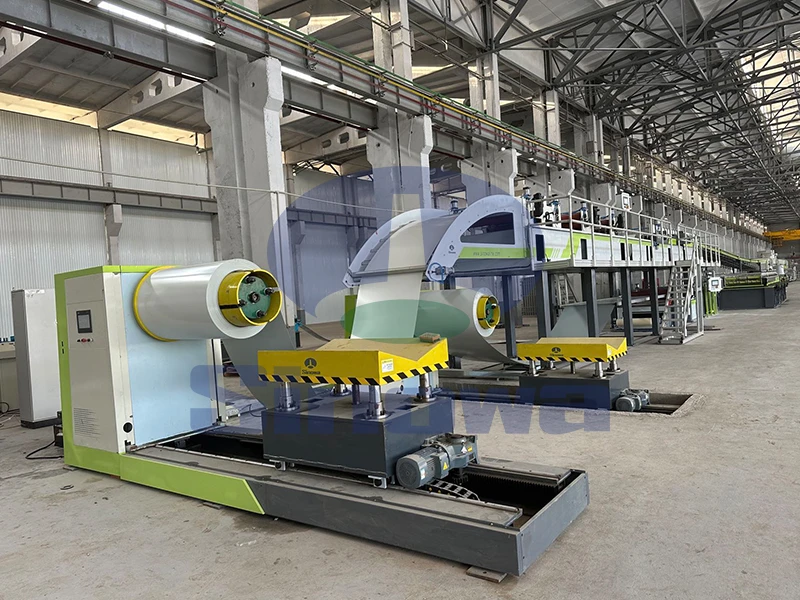
The core functionality of modern automatic sandwich panel production lines lies in their versatility. While Polyurethane (PU) and Polyisocyanurate (PIR) panels share similar physical structures—typically consisting of a foam core sandwiched between two metal facings—the chemical composition of the core differs. A high-quality production line is designed to handle the specific injection and curing requirements of both materials. This means that a single manufacturing setup can switch between producing standard thermal insulation panels (PU) and high-performance fire-resistant panels (PIR) without requiring entirely different machinery. The transition usually involves changes in the raw material supply system rather than mechanical reconstruction.
The primary distinction between producing PU and PIR panels on the same line is the chemical formulation fed into the high-pressure foaming machine. PU foam is created through a specific reaction of polyols and isocyanates, optimized for thermal insulation. PIR, however, requires a different ratio of these components, often with a much higher index of isocyanate, and specific catalysts to promote trimerization. Automatic lines are equipped with precision metering units that can be programmed to deliver these distinct ratios accurately. By adjusting the settings on the foaming machine, operators can switch the chemical output from a PU mix to a PIR mix, allowing the line to produce the desired core density and cellular structure.
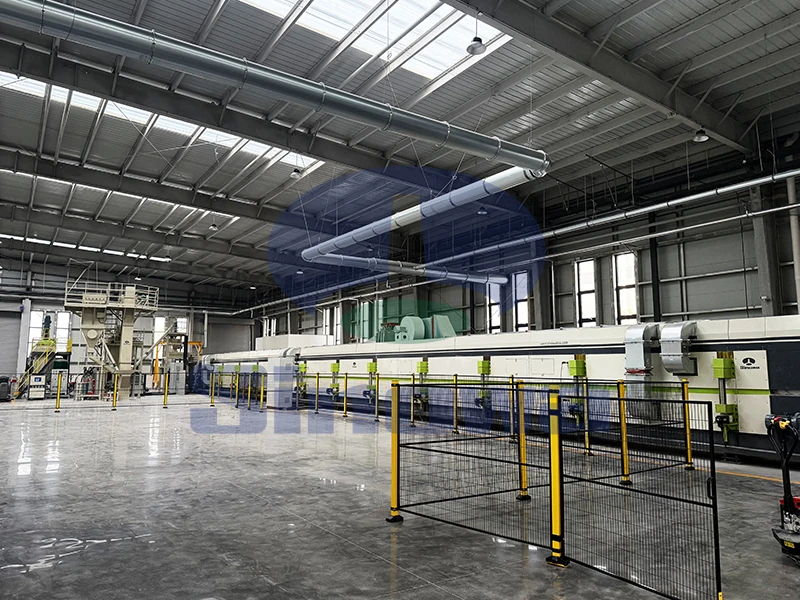
Producing PIR panels often demands more rigorous thermal management compared to standard PU production. The chemical reaction for PIR is highly exothermic, and proper curing is essential to achieve the material's characteristic fire resistance and structural stability. Automatic lines feature double-band laminators with precise temperature controls. When switching to PIR production, the temperature of the laminator platens is adjusted to ensure the foam cures correctly as it travels through the oven. This thermal regulation prevents defects such as shrinkage or delamination, ensuring that the PIR panels maintain their dimensional stability and bond strength with the metal facings.
Beyond chemistry and temperature, the mechanical speed and pressure settings of the line may need fine-tuning. PIR mixtures often have different flow and gel times compared to PU. The production line’s central control system allows operators to adjust the conveyor speed to match the curing time of the specific formulation being used. If the line moves too fast for a slow-curing PIR mix, the panel may remain soft; if it moves too slow for a fast-curing PU mix, it may cure before fully expanding. The flexibility of the automatic control system ensures that these parameters are synchronized, maintaining high production efficiency for both material types.
The ability to produce both panel types allows manufacturers to cater to diverse market needs. PU panels are renowned for their exceptional thermal insulation properties, making them ideal for cold storage and environments where energy efficiency is the priority. PIR panels, while offering good insulation, are primarily selected for their superior fire performance. They form a protective char layer when exposed to flame, resisting combustion and maintaining structural integrity longer than standard PU. An automatic line capable of both allows a factory to supply materials for general industrial roofing (PU) as well as high-safety environments like airports or chemical plants (PIR).
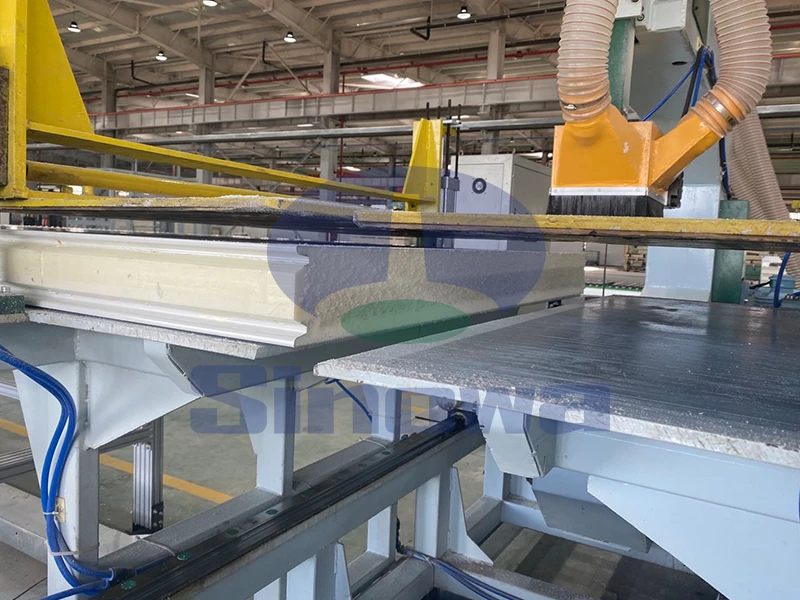
To support dual production, the raw material storage and supply systems are designed for flexibility. This typically involves separate tanks for the different polyols required for PU and PIR formulations, while often sharing a common isocyanate tank. The dosing unit must be capable of handling the viscosity differences between the two polyol types. Advanced lines include flushing or cleaning cycles to prevent cross-contamination when switching from one chemical system to another. This ensures that the purity of the chemical reaction is maintained, guaranteeing that the physical properties of the resulting panels meet the specific requirements of either the PU or PIR standard.
Regardless of whether the core is PU or PIR, the bond between the foam and the metal facing is critical. Automatic lines utilize adhesive application systems (glue rollers) to ensure a strong bond. While the foam itself provides significant adhesion, the glue ensures durability under varying weather conditions. When producing PIR, which can be more rigid and brittle than PU, the lamination pressure must be carefully controlled to ensure a uniform bond without crushing the foam cells. The versatility of the laminator allows for these pressure adjustments, ensuring that both panel types leave the line with excellent peel strength and structural cohesion.
From a business perspective, having a line that produces both PU and PIR is highly advantageous. It maximizes the return on investment by allowing the manufacturer to respond to fluctuating market demands. If a construction project requires high fire ratings, the line can be configured for PIR. If the focus is on cost-effective cold storage, the line switches to PU. This adaptability reduces downtime and eliminates the need for separate, dedicated production lines for each material type. It streamlines inventory management and allows for a broader product portfolio, making the manufacturing operation more resilient to industry trends.
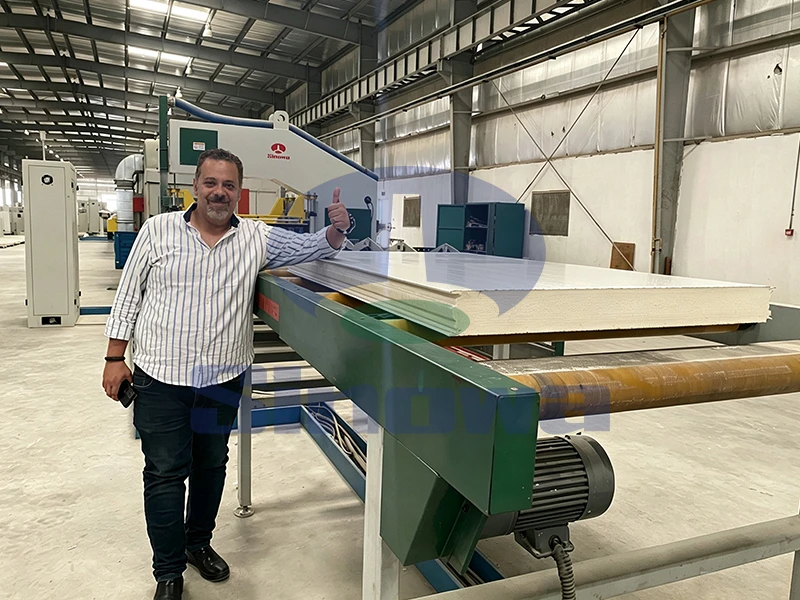
Operating a line for both materials requires strict maintenance protocols. PIR chemicals can sometimes be more abrasive or leave different residues compared to standard PU mixes. Therefore, the mixing heads and dosing pumps require regular cleaning and maintenance to ensure precision. Operators must be trained to understand the nuances of both chemical systems, recognizing the visual and physical differences during the foaming process. Proper maintenance ensures that the changeover between PU and PIR production is smooth and that the quality of the panels remains consistent, regardless of the core material being produced.
In summary, automatic polyurethane sandwich panel lines are sophisticated manufacturing systems capable of producing both PU and PIR sandwich panels. The capability relies on the precise control of chemical dosing, temperature regulation, and line speed. By adjusting these variables, manufacturers can utilize the same hardware to create panels optimized for either thermal efficiency or fire resistance. This dual capability is a standard feature of high-end continuous sandwich panel machinery, offering the flexibility needed to meet the diverse and evolving requirements of the modern construction industry.
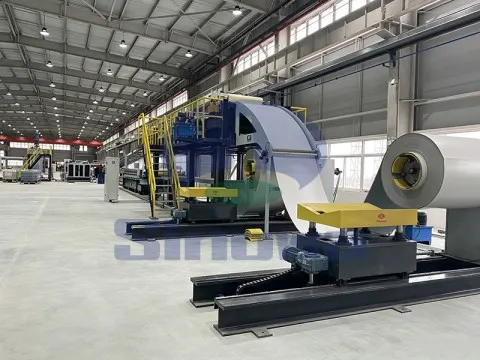
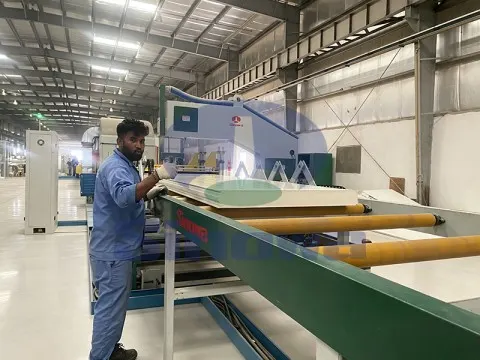
Gallery of Automatic Polyurethane Sandwich Panel Line
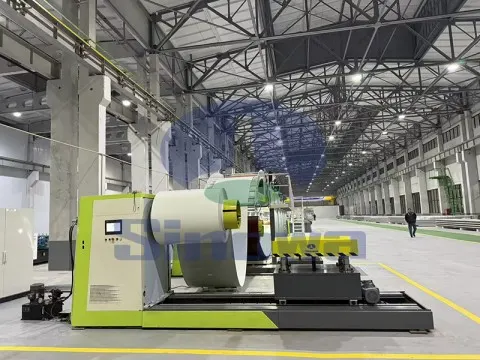
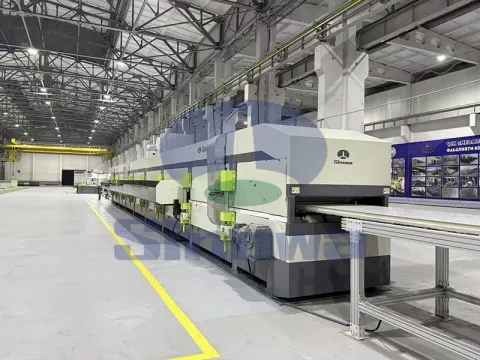
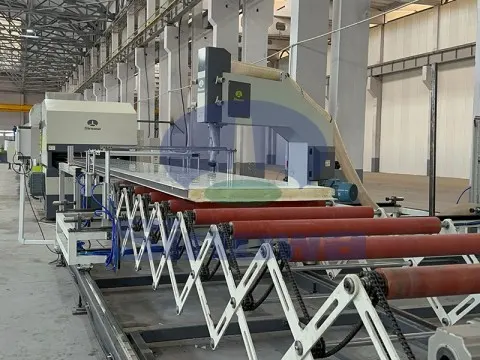
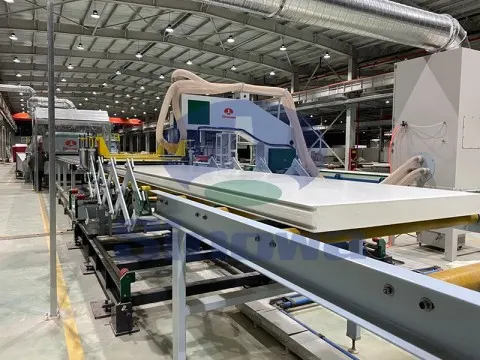
Tags: automatic polyurethane sandwich panel line, automatic polyurethane sandwich panel line manufacturer, automatic polyurethane sandwich panel line supplier, china automatic polyurethane sandwich panel line, automatic polyurethane sandwich panel line for sale
-

A reliable PU sandwich panel production line serves as the core equipment for manufacturing high-performance building insulation panels. This professional PU sandwich panel line features automated feeding, foaming and molding processes to ensure consistent panel thickness and structural stability. The well-designed polyurethane sandwich panel production line effectively improves production efficiency while reducing material waste in daily operation. Each calibrated polyurethane sandwich panel line can adapt to different panel sizes to meet diverse construction needs. With precise temperature and pressure control, the advanced continuous PU sandwich panel line produces panels with excellent thermal insulation and weather resistance. Meanwhile, the optimized PIR sandwich panel production line upgrades the foaming formula to enhance fire resistance performance. The high-efficiency PIR sandwich panel line maintains stable operation during long-term mass production, delivering durable and high-quality sandwich panels for various architectural and industrial applications.
-

The phenolic panel production line realizes automated and continuous manufacturing of high-performance thermal insulation panels through streamlined and coordinated processing procedures.
-

Modern insulation panel manufacturing relies on professional automated equipment to ensure stable product quality and high production efficiency. The rock wool sandwich panel production line features precise material lamination and forming processes to produce rigid, heat-insulating building panels. Meanwhile, the mineral wool sandwich panel production line adopts optimized assembly procedures to fabricate lightweight, soundproof panels widely used in architectural enclosure and thermal preservation projects.