Automated Phenolic Foaming Line
Publication Date: Nov 17, 2026
Automated Phenolic Foaming Line manufactures fireproof phenolic foam insulation boards. Full-process automation, precise foaming control, high output, reliable turnkey machinery for insulation manufacturers.
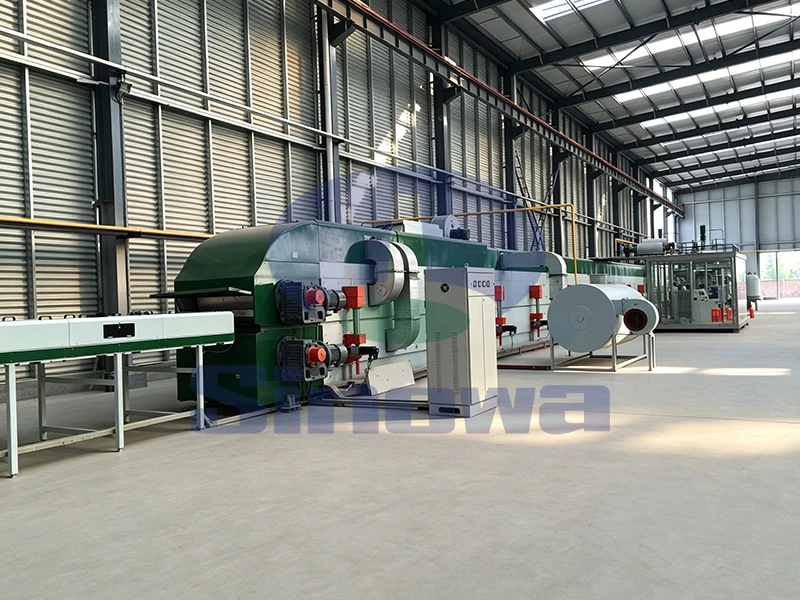
Core Definition and Basic Composition of Automated Phenolic Foaming Line
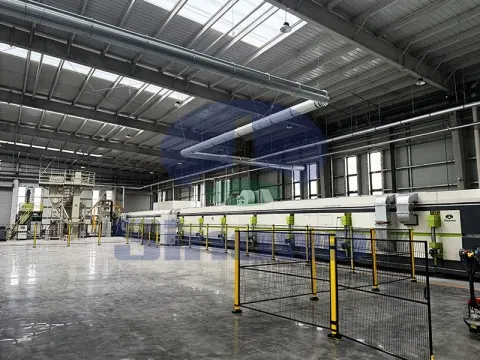
An automated phenolic foaming line represents a continuous, integrated production system built for the fabrication of phenolic foam insulation materials, replacing fragmented manual or semi-manual processing workflows with interconnected mechanical, sensing and control modules. At its heart, the system is designed to handle the whole sequence from raw material dosing to finished product cutting and stacking in a coordinated, uninterrupted manner. The main functional units cover raw material storage and delivery stations, high-precision metering and mixing assemblies, continuous foaming and curing tunnels, surface calibration and trimming mechanisms, longitudinal and transverse cutting devices, finished product conveying units, as well as a central control cabinet that synchronizes all individual segments. Unlike discrete batch equipment, every section of this line is linked by conveying tracks and feedback sensors, so changes in one processing parameter can trigger corresponding adjustments in downstream operations automatically. Raw materials for phenolic foam production, including resin base liquid, curing agents, foaming agents, surfactants and auxiliary modifiers, are separately held in sealed tanks fitted with constant temperature maintaining structures, which prevent premature reaction, component stratification and property degradation before mixing. Each storage tank connects to independent feeding pipelines equipped with filter screens to remove tiny impurities that might block metering pumps or disrupt the uniformity of mixed liquid. The overall layout of the line follows the forward flow logic of production, minimizing the need for manual material transfer between stations and lowering the risk of human interference affecting foam quality. Operators only carry out routine monitoring, parameter modification and exception handling, rather than participating in material blending or foaming forming work. This foundational structural design sets the premise for stable long-run production and consistent physical performance of the phenolic foam boards produced on the line.
Raw Material Metering and Online Mixing Module Functioning Principle
The metering and mixing module acts as the most critical quality control node within the entire automated phenolic foaming line, because the proportion of each raw component directly decides foaming speed, cell structure, dimensional stability and thermal performance of the final foam product. All fluid raw materials are transported from storage tanks to precision metering pumps, which deliver liquid streams at preset flow rates under closed-loop flow monitoring. Pressure sensors and temperature detectors installed on each pipeline continuously send real-time data back to the central control system; if flow deviation exceeds the allowable threshold, the system will instantly adjust pump rotation speed to restore the set mixing ratio without pausing production. After accurate measurement, all material streams converge into a dynamic mixing head, where high-speed rotating mixing blades create intense, homogeneous turbulence to blend different components fully in a very short time window. The mixing chamber maintains a stable internal pressure to avoid air entrapment, which would otherwise form oversized voids and weaken the finished foam. The mixed phenolic liquid flows out of the mixing head onto a continuously moving lower carrier film, while a matching upper covering film is synchronously laid over the liquid mixture immediately afterward. The two flexible films confine the foaming material on both sides, restricting lateral expansion and guiding the foam to form a flat, uniform slab with consistent thickness. The speed matching between the mixing head discharge rate and the carrier film running speed is precisely calibrated, preventing material accumulation or insufficient filling along the width direction. The whole mixing process is isolated from open air, reducing volatile substance escape and stabilizing the reaction progress from the very start of foaming. Even minor shifts in ambient workshop temperature can be compensated through automatic flow and temperature tuning in this module, laying a reliable foundation for uniform foaming reaction.
Continuous Foaming and Initial Curing Tunnel Working Process
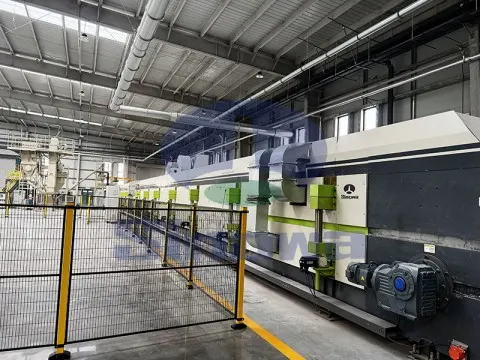
Once the mixed phenolic raw material is sandwiched between upper and lower carrier films, it enters the foaming tunnel, where the core foaming and preliminary curing reactions take place under controlled thermal conditions. The tunnel is divided into several successive temperature zones, each with independent heating and heat preservation assemblies, creating a gradual temperature gradient instead of a single fixed temperature environment. At the front section of the tunnel, moderate heat activates the foaming agent, prompting the generation and expansion of tiny gas bubbles inside the phenolic resin matrix. The resin starts cross-linking slowly at this stage, and the rising viscosity of the resin locks the formed bubble cells in place to stop excessive bubble merging or rupture. As the composite slab moves forward through the tunnel, ambient temperature rises appropriately to accelerate the curing cross-linking reaction of phenolic resin. The conveying speed of the carrier films is matched with the reaction rate, ensuring that foam expansion finishes within the designated zone before the resin network gains enough structural strength to maintain its shape. Internal circulating fans inside the tunnel keep hot air flowing evenly across the top and bottom surfaces of the foam slab, eliminating local hot spots that could cause uneven curing, surface scorching or inconsistent foam density. Pressure balance vents are arranged along the tunnel side walls to discharge the gaseous by-products generated during curing steadily, avoiding pressure buildup that would deform the slab or stretch the covering films. By the time the slab exits the foaming tunnel, the phenolic foam has formed a stable semi-finished slab with basic structural rigidity, and it can retain its overall shape without relying on the constraint of the covering films. This segmented thermal control strategy balances foaming expansion and resin curing, avoiding common defects such as collapsed foam cores, uneven thickness and brittle surface layers.
Surface Calibration and Thickness Stabilization Mechanism
After leaving the foaming and initial curing tunnel, the semi-finished phenolic foam slab proceeds to the surface calibration section, which standardizes slab thickness and flattens surface irregularities formed in the foaming stage. This section consists of a set of upper and lower pressing roller groups, whose gap spacing can be finely adjusted through servo-driven lifting structures according to the target product specification. The rollers rotate synchronously with the slab conveying speed, applying gentle and uniform pressure on both sides of the foam slab to level bulges and depressions, while squeezing the slab to the precise target thickness. The rollers have smooth, non-stick surfaces that will not tear or stick to the foam surface, and constant temperature control is applied on roller surfaces to prevent localized thermal shock to the incompletely cured foam. Multiple laser thickness gauges are installed before and after the roller assembly to scan the slab continuously, feeding thickness data back to the servo control system. If the scanned thickness deviates from the preset value, the system automatically fine-tunes the roller gap in real time, so manual repeated measurement and adjustment are no longer required during continuous operation. Besides thickness correction, this process also improves the compactness consistency of the foam surface layer, reducing loose surface pores that would harm later processing performance. The calibration operation must be controlled within a proper pressure range; excessive compression will crush the internal closed cell structure and degrade thermal insulation performance, while insufficient pressing fails to eliminate surface undulation. After calibration, the slab maintains a steady thickness tolerance along its full length and width, which simplifies subsequent cutting and ensures that finished boards can fit neatly during application. The surface calibration step is indispensable for producing phenolic foam boards that meet consistent dimensional requirements for downstream usage.
Edge Trimming and Waste Recycling Configuration
Following surface calibration, the foam slab moves into the edge trimming station, where irregular, uneven side edges generated during free foaming are cut away to obtain straight, parallel slab edges. This station uses rotating circular cutting saws arranged on both sides of the conveying track, and the horizontal position of each saw can be automatically adjusted based on the real-time detected slab width. Side edge waste strips separated from the main slab are guided through dedicated chutes into a centralized waste collection pipeline, which transports foam scraps to a crushing unit integrated beside the line. Inside the crushing unit, rotary cutters break the foam waste into uniform granular fragments. These crushed phenolic foam particles can be reused as functional fillers in related composite material production processes after screening and impurity removal, which lowers overall raw material consumption and reduces solid waste output from production activities. The trimming speed of the saws is synchronized with the slab conveying speed to avoid jagged cutting edges, chipping or tearing of the foam board. Dust collection hoods cover the cutting area to capture fine foam dust produced in trimming, preventing dust diffusion inside the workshop, protecting the health of on-site operators and avoiding dust accumulation on sensors and mechanical parts that may trigger equipment failure. The control system records the length and weight of trimmed waste automatically during production runs, supporting later data analysis to optimize foaming parameters and reduce the width of edge waste. This trimming and recycling module not only improves the appearance and dimensional accuracy of finished foam boards but also realizes circular utilization of production waste, lifting the economic efficiency and environmental friendliness of the whole production line.
Longitudinal and Transverse Continuous Cutting System
Once edge trimming is completed, the wide continuous foam slab enters the cutting area composed of longitudinal cutting units and transverse cutting units, which divide the wide slab into finished boards of customized width and length. Longitudinal cutters are arranged along the slab travel direction, with multiple cutter heads that can be independently positioned to cut the wide slab into several narrow boards of preset width at the same time. Each cutter head adopts sharp, low-friction cutting blades suitable for porous foam materials, which produce smooth cut surfaces without crushing the cell structure nearby. After longitudinal cutting separates the slab into strips of fixed width, these strips continue moving forward to the transverse cutting station. The transverse cutting mechanism moves synchronously with the running foam strip during the cutting stroke, so the cutting action happens without stopping the main conveying line. After one cutting cycle finishes, the cutter returns rapidly to the starting waiting position to prepare for the next cut. The target length of finished boards can be entered on the central control touchscreen; an encoder tracks the conveying distance of foam material, and the system triggers the transverse cutting action once the preset length is reached. Multiple finished board size schemes can be stored in the control system, allowing operators to switch between different product specifications quickly without mechanical repositioning of all cutters. Cutting speed, blade descent depth and synchronization timing are all automatically managed, which avoids errors caused by manual measuring and marking. The cut finished boards are separated by short gaps on the output conveyor, making it convenient for subsequent inspection and stacking. The continuous non-stop cutting design ensures the overall rhythm of the foaming line is maintained, preventing frequent start-stop cycles that would disrupt the stability of upstream foaming and curing reactions.
Online Visual Inspection and Defect Identification Function
Behind the cutting station, an online visual inspection system is deployed to automatically check the surface and internal appearance of each phenolic foam board before stacking. High-resolution industrial cameras and supplementary uniform light sources are installed above the conveying path, capturing surface images of every passing board continuously. The image analysis module built into the control system compares captured images against preset qualified sample features, identifying typical surface defects such as cracks, large open holes, local discoloration, indentations and uneven surface texture. Some lines also integrate infrared scanning modules that detect abnormal internal temperature response, which indirectly reflects inconsistent density or incomplete curing hidden inside the foam that cannot be seen from the surface. When a defective board is recognized, the system marks its position and sends a signal to the sorting mechanism downstream. The sorting unit uses pneumatic push rods or transfer conveyors to divert defective boards to an independent defective product collection area, separating them automatically from qualified products without halting the main production flow. All defect information including defect type, board serial number and occurrence time is logged and stored in the system database. Production managers can review these records afterward to trace the root cause, such as unstable raw material ratio, abnormal tunnel temperature or cutting parameter drift, and carry out targeted parameter adjustment. This automatic inspection replaces tedious manual visual checking, which is prone to missed judgment under long working hours. It keeps the consistency of outgoing product quality and reduces the probability of defective products entering the packaging process, while the accumulated defect data becomes a valuable basis for continuous production optimization.
Finished Product Conveying, Sorting and Automatic Stacking
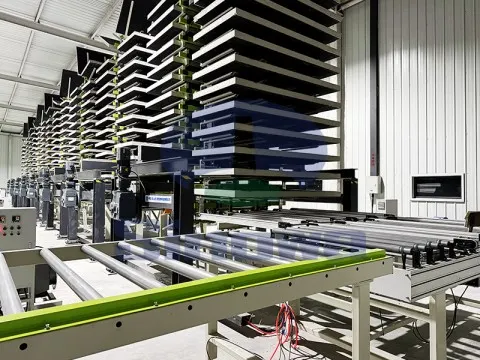
Qualified phenolic foam boards after inspection are delivered to the automatic stacking station through a stable roller conveyor. This station includes board alignment mechanisms, transfer manipulators and stacking platforms. First, positioning baffles adjust the horizontal position of each foam board to align four edges neatly, so boards are stacked in tidy, uniform piles. Servo manipulators equipped with special soft clamping fixtures grab single foam boards from the conveyor gently; the soft contact fixtures prevent clamping marks, surface compression and corner damage on the lightweight foam material. The manipulator moves each board to the stacking platform and places it according to the stacking pattern set in the program. The stacking height can be preset by operators, and once a stack reaches the target quantity, the platform automatically descends or the finished stack is transferred away by an outbound conveyor to make space for a new stack. The stacking speed matches the upstream production rhythm, preventing qualified boards from piling up and blocking the conveying channel. The system can also set interval placement of separating sheets between foam board layers according to customer requirements, to prevent adhesion or friction damage between boards during storage and transportation. Each finished stack is assigned a production batch code linked with the whole batch’s production parameter records, enabling full traceability of every batch of foam products. Compared with manual stacking, the automated stacking unit improves stacking neatness, lowers labor intensity and reduces the risk of board breakage caused by improper manual handling. Neatly stacked boards also simplify the subsequent packaging operation and make warehouse storage and vehicle loading more efficient and orderly.
Centralized Control System and Human-Machine Interaction Interface
The entire automated phenolic foaming line is governed by a unified centralized control system, with a main programmable logic controller as the core and a touchscreen human-machine interface for operator interaction. The interface displays real-time running parameters covering raw material flow rate, mixing head temperature, each zone temperature inside the curing tunnel, conveying line speed, roller gap value, cutting length, production output count and real-time alarm information. Operators can call up saved production formulas on the interface; each formula stores a complete set of parameter combinations for a specific foam product specification. Switching formulas takes only a short operation, and the system will automatically adjust all linked equipment parameters step by step instead of modifying each machine separately. The control system has multi-level access authority management, where ordinary operators can view data and start or stop equipment, while only authorized technical staff can modify core production formulas and adjust threshold values of alarm triggers. A comprehensive alarm function is embedded: once abnormal states including low raw material liquid level, pipeline pressure anomaly, over-temperature in the tunnel, cutter overload or sensor signal loss occur, the interface pops up an alarm prompt with fault location, and the system can trigger graded responses. For minor anomalies, the system tries automatic adjustment; for serious faults that threaten equipment or product quality, it activates safe slow-down or emergency stop to avoid larger losses. Historical production data and fault logs can be exported for production analysis and equipment maintenance planning. This centralized control architecture realizes holistic coordination of dozens of functional units on the line, eliminating the disorder that comes from separately controlled standalone machines and supporting stable, long-period continuous automated production.
Daily Maintenance Strategy and Common Fault Prevention
Sustained stable operation of an automated phenolic foaming line relies on standardized periodic maintenance, as the production environment involves reactive resin liquids, fine foam dust and long-time continuous mechanical movement. Daily maintenance tasks carried out before and after each production shift include cleaning residual resin in the mixing head and feeding pipelines. Cured phenolic resin residue will harden and block pipelines or damage mixing blades if left uncleaned, so designated compatible cleaning fluids are used to flush the mixing chamber after shutdown. Operators also check the tightness of pipeline joints, the liquid level and sealing state of raw material tanks, and the flexibility of movable cutter components and conveying chains. Routine weekly maintenance focuses on inspecting sensor calibration status, checking the wear degree of cutting blades and carrier films, lubricating servo motors and roller bearings, and cleaning dust accumulated on cameras, heating radiators and ventilation channels. Periodic deeper maintenance, arranged after certain production running hours, involves disassembling and inspecting metering pumps, testing the accuracy of temperature and flow sensors, checking the aging condition of sealing gaskets and replacing severely worn consumable parts in advance. A well-recorded maintenance log tracks each inspection and replacement activity. Many common faults such as unstable mixing ratio, poor foaming uniformity and cutting burrs originate from neglected maintenance rather than design defects. Reasonable maintenance plans extend the service life of the whole line, reduce unexpected shutdown frequency, and avoid unplanned production interruptions. In addition, standardized operation training for operators is equally important, as improper parameter adjustment or wrong startup and shutdown sequences can also induce equipment failure and product defects.
Advantages, Application Prospects and Future Optimization Direction
The automated phenolic foaming line brings prominent advantages over traditional semi-automatic or batch production setups, centered on stable product consistency, high continuous output and reduced labor dependence. The closed, synchronized production process minimizes human interference on the foaming reaction, so the thermal insulation performance, density and dimensional stability of phenolic foam boards stay consistent across a large production batch. Continuous running greatly lifts hourly output capacity, which fits large-scale, stable market demand for phenolic foam insulation materials. Meanwhile, the integrated waste recycling structure cuts raw material waste and lessens the environmental burden of production. Phenolic foam produced by this line is widely used in thermal insulation scenarios that require good fire resistance and low thermal conductivity, and the flexible parameter adjustment capability of the line allows it to produce foam boards tailored for different application environments. Looking forward, there are multiple feasible optimization directions for this type of automated foaming line. Intelligent algorithm modules can be further introduced to realize predictive parameter adjustment, which actively optimize production parameters according to real-time detected foam quality data rather than waiting for defects to appear. Upgrading of sensing technology can capture more subtle changes in bubble structure and curing state inside foam materials. New low-volatile raw material matching structures can be developed to adapt to evolving market demands for low-emission foam products. Besides, modular design of each functional unit will make equipment transportation, installation, on-site reconstruction and later expansion more convenient. As the market demand for high-performance thermal insulation materials keeps growing, automated phenolic foaming lines with stronger intelligence, higher flexibility and better environmental performance will keep evolving, becoming the mainstream production equipment for phenolic foam insulation materials.
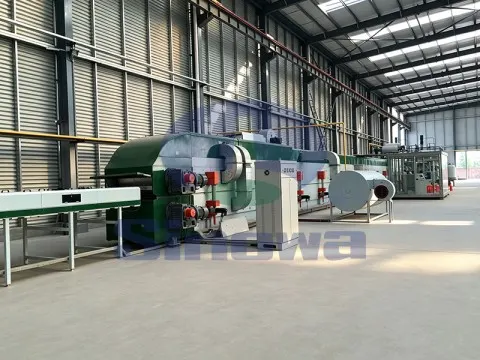
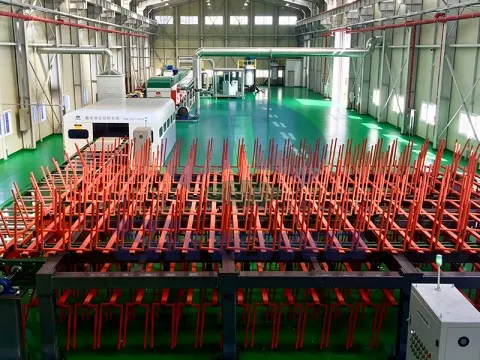
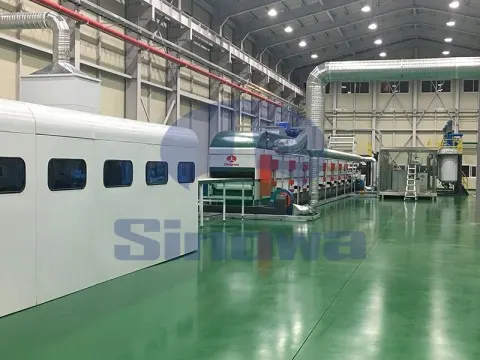
Gallery of Automated Phenolic Foaming Line
Tags: automated phenolic foaming line, automated phenolic foaming line manufacturer, automated phenolic foaming line supplier, china automated phenolic foaming line, automated phenolic foaming line for sale
-
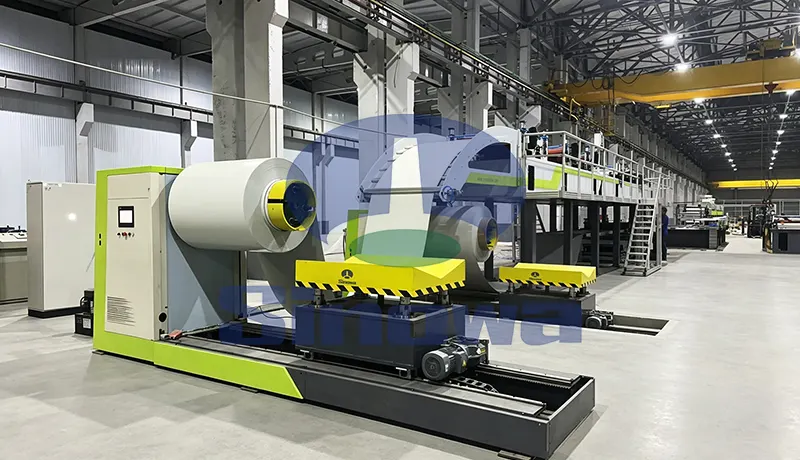
A reliable PU sandwich panel production line serves as the core equipment for manufacturing high-performance building insulation panels. This professional PU sandwich panel line features automated feeding, foaming and molding processes to ensure consistent panel thickness and structural stability. The well-designed polyurethane sandwich panel production line effectively improves production efficiency while reducing material waste in daily operation. Each calibrated polyurethane sandwich panel line can adapt to different panel sizes to meet diverse construction needs. With precise temperature and pressure control, the advanced continuous PU sandwich panel line produces panels with excellent thermal insulation and weather resistance. Meanwhile, the optimized PIR sandwich panel production line upgrades the foaming formula to enhance fire resistance performance. The high-efficiency PIR sandwich panel line maintains stable operation during long-term mass production, delivering durable and high-quality sandwich panels for various architectural and industrial applications.
-
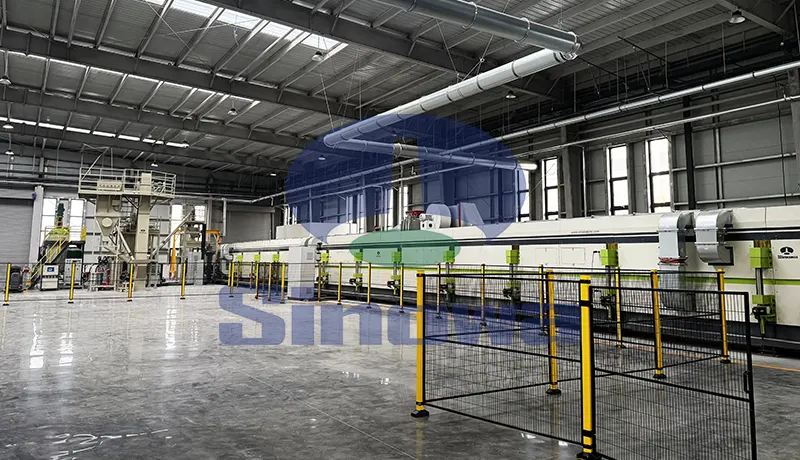
The phenolic panel production line realizes automated and continuous manufacturing of high-performance thermal insulation panels through streamlined and coordinated processing procedures.
-
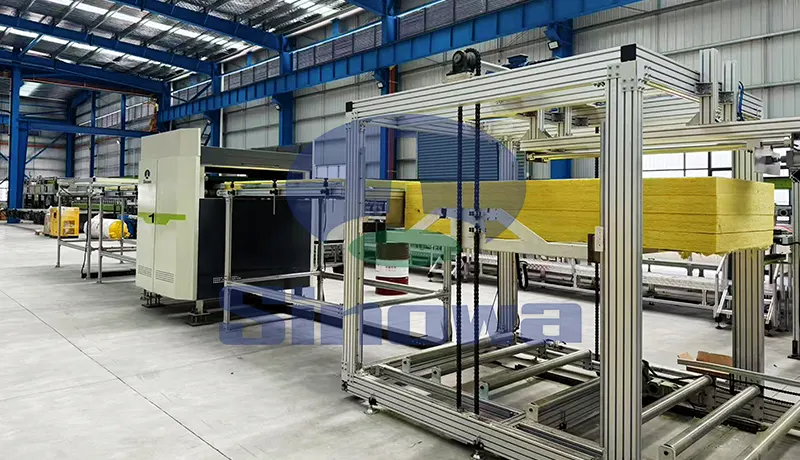
Modern insulation panel manufacturing relies on professional automated equipment to ensure stable product quality and high production efficiency. The rock wool sandwich panel production line features precise material lamination and forming processes to produce rigid, heat-insulating building panels. Meanwhile, the mineral wool sandwich panel production line adopts optimized assembly procedures to fabricate lightweight, soundproof panels widely used in architectural enclosure and thermal preservation projects.