Cold Room Sandwich Panel Line
Publication Date: Nov 17, 2026
Cold Room Sandwich Panel Production Line makes high insulation PU panels for cold storage & freezer rooms. Fully automatic, flexible specification, reliable machine supplier.
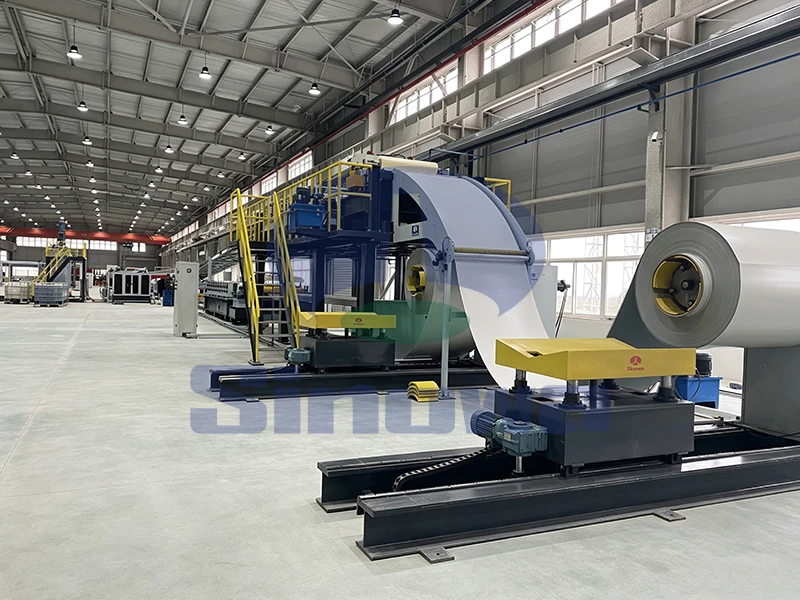
Core Definition and Basic Composition of the Production Line
A cold room sandwich panel line represents a specialized integrated manufacturing system built to produce insulated composite panels that form the primary enclosure structure for cold storage spaces. Unlike general-purpose panel production equipment, this line is engineered around the unique functional requirements of cold room applications, prioritizing consistent thermal insulation performance, structural air tightness, and dimensional stability of finished panels throughout continuous production. The whole system connects multiple functional units in sequence, allowing raw material feeding, surface layer forming, core material filling, continuous lamination, curing, trimming, and stacking to proceed in a coordinated flow without frequent manual transfer of semi-finished products. The basic composition starts with raw material unwinding stations, which hold coiled metal sheets that serve as the outer and inner facing layers of sandwich panels. These stations maintain stable tension control during material release to avoid wrinkling, uneven stretching or deviation of the metal surface, which would directly compromise the flatness and assembly precision of final panels. Following unwinding, surface treatment modules carry out cleaning and coating preparation work to remove oil stains, dust and oxidation residues on the metal surface, laying a reliable foundation for the bonding between facing sheets and insulation core materials. Subsequent units include core material feeding mechanisms, mixing and dispensing equipment for foaming raw materials, a continuous double-belt pressing section, thermal curing channels, edge cutting devices, length cutting saws, and final stacking and conveying platforms. Every single module is synchronized through a unified control logic, adjusting operating speed and working parameters adaptively according to the preset panel specifications. The design of the production line also reserves adjustment space for different panel thicknesses and width ranges, so that the same set of equipment can switch between multiple product specifications after simple parameter modification and partial fixture adjustment. Operators monitor the running status of each section through a central control interface, tracking real-time data such as line speed, pressing pressure, curing temperature and material consumption to keep the production process stable and reduce the occurrence of defective products. The integration of these independent functional units turns discrete raw materials into finished sandwich panels with stable comprehensive performance, which is the fundamental value of this dedicated production line for cold room construction.
Raw Material Selection Matching and Pre-Processing Requirements
The performance of cold room sandwich panels is fundamentally determined by the matching state of facing materials and insulation core materials, and the pre-processing stage is the first key link to avoid hidden quality risks in finished products. Facing materials are mostly rigid sheet materials with good corrosion resistance and surface finish, which need to withstand long-term temperature changes inside and outside cold rooms, periodic humidity fluctuation and minor mechanical impact during installation and service. Before entering the forming section, coiled facing materials go through strict pre-processing procedures beyond simple unwinding. Tension calibration ensures that the sheet advances at a constant linear speed; any sudden tension fluctuation will lead to inconsistent bonding gaps between the facing sheet and core foam, creating voids or delamination inside the panel. Surface cleaning removes pollutants generated during metal rolling and storage. Even tiny particles or residual lubricant can weaken the adhesive force between the facing sheet and foamed core material, causing local separation after long-term use in low-temperature environments. In some production configurations, an additional surface priming process is arranged to enhance interface affinity, especially for working conditions where panels will face high humidity and frequent temperature cycling. The insulation core materials used on this production line are selected for their low thermal conductivity, self-extinguishing property and stable dimensional change rate under low temperature. Liquid foaming raw materials are stored in independent sealed tanks with constant temperature control, because the reaction activity of foaming agents and polyol components is highly sensitive to ambient temperature. Material pipelines are equipped with circulating heat preservation structures to prevent raw material stratification, premature reaction or viscosity drift before mixing. Solid core materials, when adopted, need to be cut into uniform blocks in advance and fed at a stable rate to maintain consistent filling density across the full length of panels. The proportioning of raw materials is precisely controlled by metering pumps, which adjust the flow rate of each component according to production formula. Deviation in material ratio will lead to uneven foam cell structure, excessive shrinkage after curing or decline in thermal insulation capacity. All raw material feeding systems are equipped with filtering structures to block impurities that may block nozzles or form hard impurities inside the core layer. Reasonable raw material matching and standardized pre-processing eliminate most quality defects at the source, creating prerequisites for the production line to continuously output qualified cold room panels with reliable and predictable service performance.
Continuous Foaming and In-Line Mixing Mechanism
Continuous foaming and in-line mixing form the core reaction stage of cold room sandwich panel production, where liquid raw materials undergo rapid chemical reaction to form a closed-cell insulation core tightly bonded with upper and lower facing sheets. After passing through the pre-processing section, the two facing sheets enter the forming guide section, which bends and shapes the edge profiles of the sheets according to the designed panel joint structure. The formed upper and lower sheets form a closed cavity with a fixed thickness gap, and the mixed foaming material is injected into this cavity through evenly arranged spraying nozzles. The mixing unit adopts high-pressure impact mixing technology. Multiple raw material components are delivered to the mixing chamber at accurately controlled pressure and flow speed, colliding and blending fully in an extremely short time before flowing to the spraying manifold. This mixing method avoids uneven component distribution that often appears in low-speed stirring mixing, and ensures that the foaming reaction starts synchronously at every position along the panel width. The arrangement of spraying nozzles is carefully distributed along the transverse direction of the panel, and the spraying amount of each nozzle can be fine-tuned separately, so that the foaming material can fill the entire cavity uniformly without local shortage or overflow. Once sprayed into the cavity, the mixed material begins foaming and expanding rapidly, filling the preset space between the two facing sheets while generating bonding force to combine with the inner surface of the facing materials. The expansion speed of the foam must match the forward running speed of the panel on the production line. If foaming expands too fast, excessive internal pressure will deform the facing sheets and cause surface bulging; if expansion is too slow, the foam cannot fully fill the cavity and will leave hollow areas inside the core layer. Operators adjust mixing pressure, material temperature and line running speed in coordination to match the foaming reaction curve. During the foaming process, the foam generates reaction heat, and the heat release rate will affect cell structure formation. Too fast heat accumulation may cause foam scorching and performance degradation, while insufficient heat will result in incomplete curing and low foam strength. The whole foaming section is enclosed within a relatively independent space to reduce interference from external air flow and temperature change. The continuous foaming mode adopted by this production line realizes uninterrupted panel forming, which is far more efficient than batch foaming processes. Stable control of the mixing and foaming stage directly decides the uniformity of core density, thermal insulation performance and bonding integrity of the finished cold room sandwich panel.
Double-Belt Continuous Pressing and Shaping Process
The double-belt continuous pressing section is the place where the initial foaming mixture is restrained and shaped into panels with stable thickness, flat surface and consistent internal structure, and it works synchronously with the foaming reaction process. After the foaming material is injected into the cavity between the two facing sheets, the semi-finished assembly enters the gap between the upper and lower circulating belts of the pressing machine. The two belts run at the same linear speed as the front conveying section, clamping the panel blank steadily and moving forward together with the foaming reaction. The pressure applied by the pressing system is evenly distributed across the whole width of the panel, restricting the free expansion of the foam and locking the panel to the target thickness. The pressure value needs to be kept within a reasonable range: insufficient pressure cannot suppress uneven expansion and thickness deviation, while excessive pressure will squeeze and break the closed cells inside the foam core, raising thermal conductivity and weakening insulation performance. The belts themselves have high surface flatness, wear resistance and moderate hardness, so they can transfer uniform pressure without leaving indentations or scratches on the surface of facing sheets. The supporting structure behind the belts uses dense roller groups to disperse pressure, preventing local sagging of the belts under long-term load. The clearance between the upper and lower belts can be adjusted as a whole to adapt to different panel thickness specifications for cold rooms. Besides pressure control, temperature control is integrated inside the pressing section. The circulating belts and supporting frames are equipped with temperature regulation channels to maintain a stable thermal environment for foaming and initial curing. Stable ambient temperature in the pressing zone helps the foam form fine and uniform closed cells, avoiding coarse cell structures caused by uneven reaction speed. During the pressing process, the edge guide devices on both sides limit the lateral overflow of foaming materials and guarantee the straightness of panel edges. The whole pressing process runs continuously without stopping, and the semi-finished panel remains under controlled pressure support until the foam completes its primary curing and gains enough self-supporting strength. This continuous pressing method effectively eliminates the warping, bending and thickness inconsistency common in intermittent panel production, ensuring that every section of the long panel maintains consistent geometric parameters and internal structure, meeting the assembly requirements of cold room enclosure systems.
Thermal Curing Channel and Internal Structure Stabilization
After leaving the double-belt pressing section, the semi-finished panel enters an extended thermal curing channel, where the foaming core completes the subsequent cross-linking reaction and internal stress release, achieving stable physical properties. Although the foam has obtained basic shape in the pressing section, the chemical reaction inside the core material is not fully finished at this stage. If the panel is cut and stacked immediately, subsequent slow reaction and residual stress will lead to panel deformation, shrinkage, or even local delamination after being made into cold room walls and roofs. The curing channel is a long insulated tunnel with segmented temperature control. Different temperature zones are set along the advancing direction of the panel to match the different stages of post-foaming curing. The front section maintains a moderate temperature to continue promoting cross-linking of the foam matrix, while the middle section slows down the reaction rate gradually, and the rear section carries out slow cooling to release internal stress gently. Sharp temperature fluctuation inside the channel is strictly avoided. Rapid cooling will lock up internal stress inside the foam, which will release slowly under the alternating temperature conditions of cold rooms and eventually cause panel distortion. The conveying system inside the curing channel supports the whole panel evenly, reducing bending stress on the semi-finished product during movement. The running speed of the entire line determines the residence time of panels inside the curing channel. When producing thicker panels with larger core volume, the line speed needs to be reduced appropriately to extend curing time, ensuring that the foam core at the middle position of the panel thickness can complete sufficient reaction. Operators can check the curing state through sampling tests, observing the cross-section of the foam to judge cell integrity and core hardness. Insufficient curing usually shows as soft core, sticky cross-section and obvious post-shrinkage; over-curing will make the foam brittle and reduce impact resistance. The air circulation system inside the curing channel keeps temperature distribution uniform in the transverse direction of panels, preventing one side of the panel from curing faster than the other and causing lateral bending. By the time panels exit the curing channel, the foaming core has basically finished chemical reaction, the bonding interface between core and facing sheets is solidified, and the dimensional change rate of the panel tends to be stable. This curing process is indispensable for cold room panels, because cold storage structures bear long-term low-temperature load, and only panels with fully stabilized internal structure can maintain insulation and sealing performance for a long time in service.
Edge Trimming, Profile Processing and Continuous Cutting
Once panels exit the curing channel and reach a stable temperature state, they enter the trimming and cutting section, where redundant materials are removed and panels are divided into finished lengths according to customer requirements for cold room assembly. The first step is edge trimming. A small amount of overflow foam and deformed edge material will form along both sides of the panel during foaming and pressing. These irregular edge parts cannot be used for assembly and need to be cut off by rotating trimming saws. Trimming saws run synchronously with the moving panel, and their cutting position can be adjusted horizontally to control the finished width of panels precisely. The cutting tools adopt special blade designs to reduce foam chipping and metal coating peeling at the cut edge. After trimming, the side profile of the panel is processed to form the interlocking tenon and groove structure required for cold room installation. This joint structure is critical for on-site assembly, as well-fitted tenon-groove connections reduce gaps between adjacent panels and help maintain the air tightness of the cold room envelope. Profile processing can be completed by milling units installed on the line. Milling heads shape the edge of the panel according to preset profile templates, and multiple sets of milling tools can be switched for different joint designs. The whole profile machining process runs in line, avoiding secondary handling and repositioning of panels that may bring positioning errors. After edge shaping, the panel moves forward to the flying cutting station. Unlike fixed saws that require the material to stop, flying cutters move synchronously with the continuously running panel during cutting, which keeps the production line running without pause. The cutting length signal is obtained from a high-precision length measuring encoder that tracks the forward distance of the panel in real time. When the set length value is reached, the cutting carriage locks onto the panel speed and the saw blade starts cutting. After cutting is completed, the cutter carriage returns quickly to the starting position to wait for the next cutting trigger. Dust collection hoods are arranged around trimming and cutting stations to collect foam dust and metal chips generated during processing, keeping the working environment clean and preventing debris from adhering to the surface of finished panels. After cutting, each individual panel has accurate width, length and qualified edge joint profile, ready for inspection and stacking. Precise control in this section simplifies on-site installation work for cold room builders, reduces the need for secondary cutting at construction sites, and lowers the risk of damaging panel insulation layers during field processing.
On-Line Inspection, Defect Identification and Quality Screening
The on-line inspection module runs through the later stage of the production line, conducting non-destructive and visual detection on finished panels before stacking, so that abnormal products can be identified and separated in time. Inspection covers multiple dimensions including appearance, dimension, surface integrity and internal bonding state. Visual inspection stations are equipped with lighting frames and image acquisition devices to scan the two sides of panels continuously. The system identifies surface scratches, coating damage, local bulges, pits, discoloration and edge chipping. These appearance defects not only affect the aesthetic effect of cold room walls, but may also become starting points for corrosion and moisture penetration after long-term use in humid cold storage environments. Dimensional inspection units use contact or laser distance sensors to detect panel thickness, width, straightness and diagonal deviation. Data collected by sensors is automatically compared with preset tolerance ranges. If any dimension exceeds the allowable range, the system marks the panel and sends an alarm signal to operators. Bonding inspection focuses on detecting hidden separation between facing sheets and foam core. Delamination defects that cannot be seen from outside are extremely dangerous for cold room panels: separated gaps will form air convection channels inside the panel, greatly increasing heat transfer and weakening insulation effect. Some configurations adopt acoustic detection methods, collecting vibration response signals when tapping the panel surface to distinguish the solid bonding area from hollow delamination areas. Density sampling inspection is also arranged periodically. Operators take small samples from the cut-off leftover materials, test core density and cell condition, and feed the data back to the front foaming and proportioning section for parameter fine-tuning. All inspection data of each panel segment can be recorded and stored, forming production traceability information. When defective products are detected, the automatic sorting mechanism diverts unqualified panels to an independent defective product channel, separating them from qualified finished products to avoid mixing. The inspection standard on the line focuses on the actual service needs of cold rooms. For example, special attention is paid to the sealing performance of panel joints and the continuity of the insulation layer, rather than only pursuing perfect appearance. The cooperation of automatic detection and spot manual recheck balances production efficiency and quality control. Through on-line inspection, most hidden defects are intercepted before panels leave the production line, reducing the failure rate of panels after being installed in cold rooms and lowering maintenance pressure in the later operation stage of cold storage projects.
Automatic Conveying, Stacking and Protective Packaging
Qualified panels after inspection are transported through a segmented conveying system to the stacking and packaging area, where orderly stacking and surface protection are completed to facilitate storage, loading and transportation. The conveying rollers and supporting platforms in this section adopt soft contact structures to avoid scratching the coated surface of panels during transfer. The conveying speed is matched with the rhythm of cutting and inspection, and buffer sections are reserved between stations to prevent panel collision and extrusion when the production line has slight speed fluctuation. The stacking manipulator or gantry stacking device picks up single panels steadily. Suction cup lifting structures are commonly used, which evenly distribute suction force on the panel surface and avoid concentrated pressure that causes local denting of thin facing sheets. The stacking program arranges panels in neat stacks according to preset stacking quantity and placement direction. Spacer protection pieces are placed between every certain number of panels to prevent the tenon and groove parts from being squeezed and deformed under the weight of upper panels. Stack height is controlled within a safe limit to prevent the bottom panels from bearing excessive pressure and permanent deformation. After a full stack is completed, the system sends the stack to the packaging station. Packaging films or protective wrapping materials are wrapped around the panel stack to block dust, rainwater and mechanical friction during transportation. The packaging process is designed to cover the whole stack while exposing the label position for identification. Identification labels carry basic product information such as panel specification, production batch and panel orientation for installation reference. The whole stacking and packaging process reduces heavy manual handling work, which not only improves efficiency but also lowers the damage rate caused by human rough operation. The layout of this area reserves enough space for forklift access, so that finished panel stacks can be directly transported to the finished goods warehouse or loading area after packaging. Reasonable stacking and protection are particularly important for cold room sandwich panels. Even panels with perfect internal quality will lose assembly performance if the edge tenon structure is damaged in transit. Complete protective measures ensure that the quality state of panels remains consistent from the moment they leave the production line until they arrive at the cold room construction site.
Automatic Control System and Production Parameter Adjustment Logic
The whole cold room sandwich panel line is managed by a centralized automatic control system, which connects all driving units, metering devices, temperature sensors, pressure detectors and execution mechanisms into a unified control network. The human-machine interface provides an intuitive operation window for operators, displaying real-time running parameters including line speed, raw material flow rate, mixing pressure, temperature of each curing zone, pressing pressure, cutting length and alarm information. Operators can call up preset parameter recipes corresponding to different panel specifications. Each recipe stores a matched set of parameters for foaming ratio, belt speed, curing temperature curve and cutting size. When switching to another panel specification for cold room production, calling the corresponding recipe can complete most parameter adjustments quickly, reducing the time spent on repeated debugging. The control system has closed-loop adjustment functions. For example, if the temperature of the curing channel deviates from the set value, the heating and air circulation units will adjust output automatically to pull the temperature back to the target range; if the metering pump detects a slight flow drift of foaming raw materials, the compensation algorithm fine-tunes pump frequency to stabilize the mixing ratio. Safety interlock logic is embedded in the control program. When abnormal conditions such as raw material shortage, equipment overload, safety door opening or cutter obstruction appear, the interlock program will trigger graded responses: first sending warning prompts, slowing down the line speed, and stopping related units when the risk rises to avoid equipment damage or safety accidents. Historical operation data and alarm records can be queried on the system, helping maintenance personnel analyze recurring faults and formulate regular maintenance plans. The control system also supports authority management. Ordinary production operators only have permission to start, stop and select recipes, while technicians with higher authority can modify core process parameters and adjust control curves. This design prevents misoperation caused by random parameter modification. Although automation occupies the main body of production control, manual intervention channels are retained for special conditions. When raw material performance changes slightly or unusual ambient conditions occur, skilled technicians can make fine manual adjustments on the basis of automatic operation. The coordination of automatic closed-loop control and reasonable manual intervention keeps the production line running stably for long continuous shifts, maintains consistent product quality batch by batch, and adapts to the diversified specification demands of different cold room construction schemes.
Daily Maintenance, Wear Part Replacement and Long-Term Stable Operation
Long-term stable output of qualified cold room sandwich panels depends on standardized daily maintenance and regular replacement of vulnerable components on the production line. Different functional sections have different wear characteristics and maintenance priorities. The raw material unwinding and conveying rollers are in continuous contact with metal sheets and panel surfaces. Regular cleaning of roller surfaces removes accumulated foam residues and coating chips, which otherwise will transfer stains or indentations to panel surfaces. The tension sensors and encoder components need periodic calibration, because measurement drift will lead to unstable material feeding and inaccurate cutting length. The mixing and spraying section is one of the key maintenance areas. Foaming raw materials are easy to cure and solidify inside nozzles, mixing chambers and pipelines after shutdown. Strict cleaning procedures must be carried out after each production batch to clear residual materials. Blocked nozzles will cause uneven spraying and local lack of foam inside panels. Sealing rings, one-way valves and metering pump diaphragms in the foaming feeding circuit are typical wearing parts, which age gradually under the impact of chemical raw materials and pressure cycling. These parts need to be inspected regularly and replaced before leakage or flow instability occurs. The belts of the double-belt pressing machine bear continuous friction, pressure and temperature changes. Belt surface wear, crack and edge delamination will affect panel surface quality and pressing uniformity. Maintenance personnel check belt tension and surface condition at fixed intervals, adjust tension synchronously on both sides, and arrange replacement when wear reaches the threshold. Cutting saw blades and milling cutters become blunt after long-time cutting of foam and metal facing sheets. Dull tools cause rough cutting edges, foam tearing and increased cutting resistance. Tool sharpening or replacement cycles are arranged according to production output. The sensors, cables and driving motors in the control system need dustproof and heat dissipation maintenance. Excessive dust accumulation in the electrical cabinet may cause poor heat dissipation and signal interference. Besides targeted maintenance for each unit, a daily inspection checklist guides operators to check lubrication points, air pressure, water supply and safety protection devices before starting up every day. Proper maintenance does not merely prevent sudden shutdown failures; it also keeps process parameters stable for a longer time, reducing the fluctuation of panel insulation performance and dimensional precision. A well-maintained production line can maintain consistent product quality during long continuous operation cycles, lowering the comprehensive production cost of cold room sandwich panels and reducing unexpected interruption of manufacturing schedules.
Development Trend and Optimization Direction of the Production Line
The development of cold room sandwich panel lines keeps moving toward higher process flexibility, more precise environmental control and lower material consumption, adapting to the evolving requirements of cold storage construction and low-temperature logistics. One important optimization direction is the improvement of specification switching efficiency. Traditional production lines often need relatively long downtime to replace fixtures, adjust guiding structures and re-debug foaming parameters when switching between different panel thicknesses and joint profiles. New generation designs integrate quick-change structures and self-adaptive parameter algorithms, shortening the conversion time between different panel types. This makes the line more suitable for small-batch and multi-specification orders, which are increasingly common in decentralized cold room projects. Another development focus is the optimization of foaming material utilization. Advanced metering and spraying systems reduce the amount of overflow material during panel forming, cutting down raw material waste. Meanwhile, auxiliary recovery and treatment devices for cutting scraps are matched with the line, realizing classified collection of foam and metal leftover materials for subsequent resource recycling. Environmental adaptability of the production line is also being upgraded. Improved heat preservation and air isolation designs for foaming and curing sections reduce the influence of seasonal ambient temperature changes on foaming reaction, so the production line can maintain stable process performance under wider ambient conditions. Intelligent monitoring capability continues to be enhanced. Expanded sensor networks collect more dimensional and performance data during production, and data analysis models can predict the trend of component aging and parameter drift in advance, transforming maintenance mode from passive breakdown repair to predictive maintenance. In terms of product function expansion, the production line structure is reserved for compatibility with special facing materials and modified core materials, so that the same main line can produce panels suitable for cold rooms with extra requirements such as high humidity resistance and frequent freeze-thaw cycles. Ergonomic optimization of the operation layout reduces the labor intensity of operators and improves the safety of routine sampling, inspection and maintenance work. As cold chain infrastructure continues to expand, the demand for customized cold room enclosure solutions keeps rising. The cold room sandwich panel line will continue to evolve around the core goal of stably producing high-performance insulated panels, balancing production efficiency, product consistency and resource utilization, to provide reliable manufacturing support for various cold storage and low-temperature enclosure projects in the market.
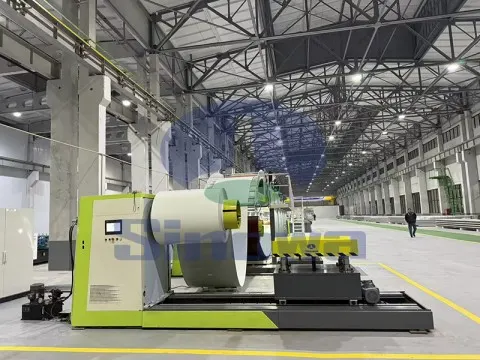
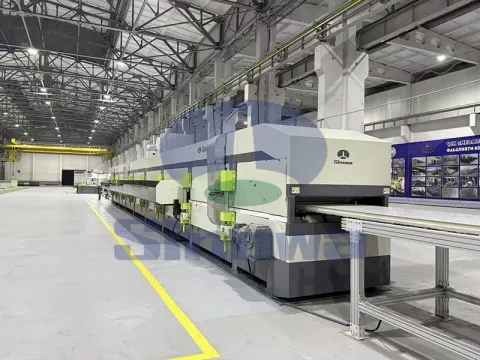
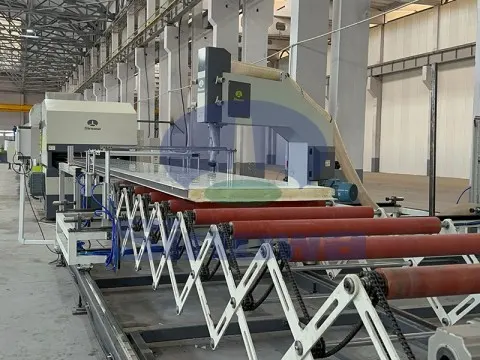
Gallery of Cold Room Sandwich Panel Line
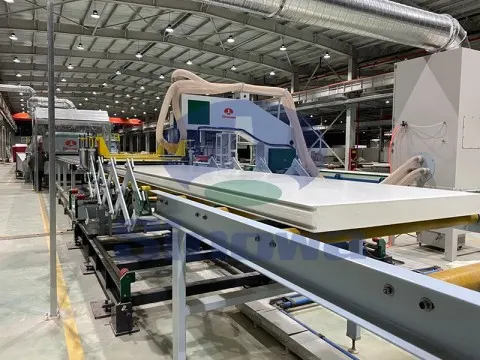
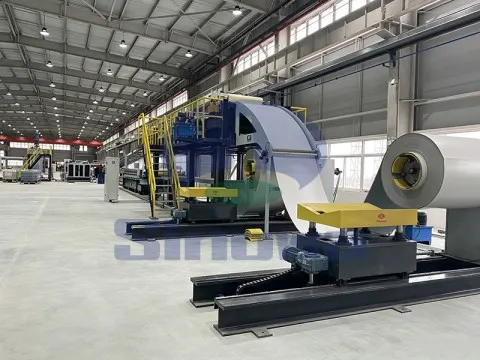
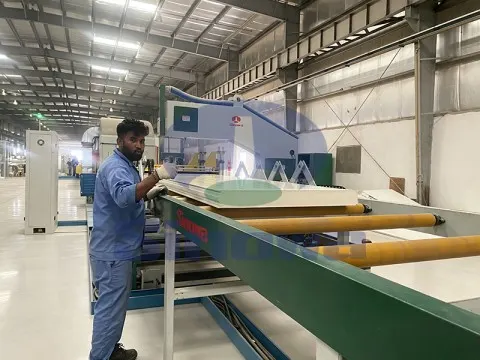
Tags: cold room sandwich panel line, cold room sandwich panel line manufacturer, cold room sandwich panel line supplier, china cold room sandwich panel line, cold room sandwich panel line for sale
-
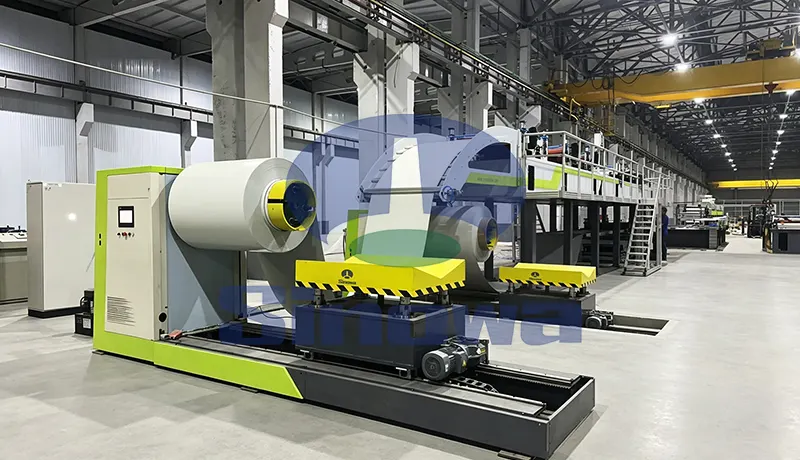
A reliable PU sandwich panel production line serves as the core equipment for manufacturing high-performance building insulation panels. This professional PU sandwich panel line features automated feeding, foaming and molding processes to ensure consistent panel thickness and structural stability. The well-designed polyurethane sandwich panel production line effectively improves production efficiency while reducing material waste in daily operation. Each calibrated polyurethane sandwich panel line can adapt to different panel sizes to meet diverse construction needs. With precise temperature and pressure control, the advanced continuous PU sandwich panel line produces panels with excellent thermal insulation and weather resistance. Meanwhile, the optimized PIR sandwich panel production line upgrades the foaming formula to enhance fire resistance performance. The high-efficiency PIR sandwich panel line maintains stable operation during long-term mass production, delivering durable and high-quality sandwich panels for various architectural and industrial applications.
-
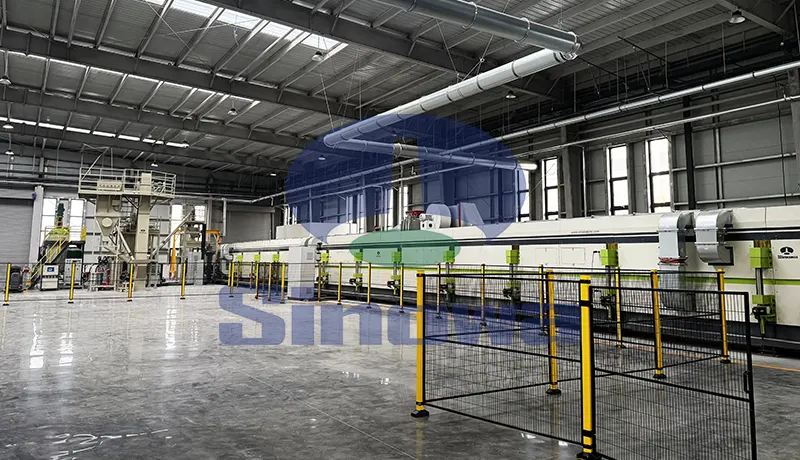
The phenolic panel production line realizes automated and continuous manufacturing of high-performance thermal insulation panels through streamlined and coordinated processing procedures.
-
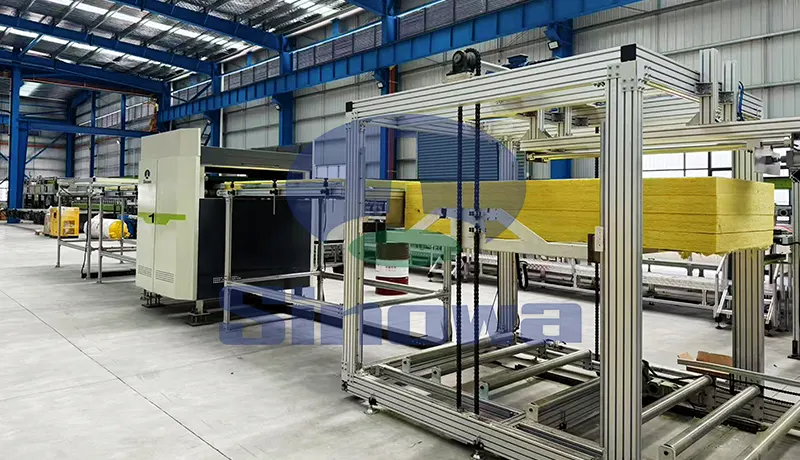
Modern insulation panel manufacturing relies on professional automated equipment to ensure stable product quality and high production efficiency. The rock wool sandwich panel production line features precise material lamination and forming processes to produce rigid, heat-insulating building panels. Meanwhile, the mineral wool sandwich panel production line adopts optimized assembly procedures to fabricate lightweight, soundproof panels widely used in architectural enclosure and thermal preservation projects.