High Temperature Insulated Board Line
Publication Date: Oct 6, 2026
High temperature insulated board lines are professional production systems for manufacturing heat-resistant insulation boards. They integrate multiple processing procedures to produce durable, thermally stable boards widely used in industrial high-temperature thermal insulation and heat preservation scenarios.
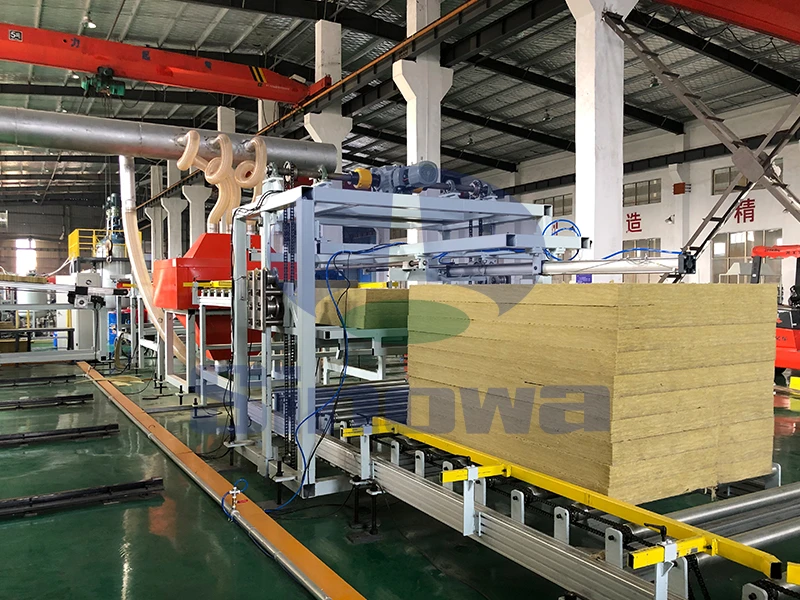
High temperature insulated board line refers to a complete set of automated and semi-automated processing systems dedicated to the mass production of high-performance thermal insulation boards adapted to extreme high-temperature working environments. This production line covers raw material pretreatment, molding, curing, finishing and inspection processes, forming a closed and efficient manufacturing workflow. Unlike ordinary board production equipment, it is specially optimized for high-temperature resistant insulation materials, focusing on maintaining the structural stability and thermal insulation performance of finished products under continuous high-temperature conditions. The core design concept of the production line is to balance product lightweight characteristics and high-temperature resistance, avoiding the common defects of traditional insulation boards such as easy deformation, thermal aging and reduced insulation efficiency after long-term high-temperature operation. It can adapt to the processing requirements of various inorganic insulation raw materials and lay a solid equipment foundation for the industrial application of high-temperature insulation boards.
The core raw materials processed by the high temperature insulated board line are mainly high-purity inorganic thermal insulation materials, including alumina silicate fibers, expanded perlite, mica fragments and inorganic high-temperature binders. These raw materials are selected for their inherent excellent thermal stability and low thermal conductivity, which are the key to the high-temperature resistance of finished boards. The production line is equipped with professional raw material screening and mixing modules, which can evenly proportion different raw materials according to product performance requirements. In the pretreatment stage, the equipment removes impurities and adjusts the fineness of raw materials to ensure the uniformity of the subsequent molding process. Different from organic insulation materials, all raw materials processed by this line have excellent high-temperature aging resistance, and will not decompose, melt or release harmful substances in long-term high-temperature environments. The precise raw material processing technology of the production line effectively improves the compactness and structural uniformity of the board, and further enhances the overall thermal insulation and high-temperature resistance of the product.
The overall structural composition of the high temperature insulated board line is modular and hierarchical, which can be divided into raw material processing unit, integrated molding unit, high-temperature curing unit, surface finishing unit and quality detection unit. Each module operates independently and cooperates efficiently to realize continuous and streamlined production. The raw material processing unit undertakes crushing, screening, stirring and homogenization work to ensure stable raw material quality. The integrated molding unit adopts compression molding or continuous rolling molding technology, which can produce boards with uniform thickness and flat surface. The high-temperature curing unit is the core part of the whole line, providing a stable constant-temperature curing environment to solidify the internal structure of the board and enhance its mechanical strength and high-temperature stability. The surface finishing unit trims and polishes the board edges to optimize product appearance and assembly adaptability, while the detection unit completes conventional performance screening to ensure qualified product output.
The working principle of the high temperature insulated board line is based on physical molding and high-temperature solidification of inorganic insulation materials. In the production process, uniformly mixed inorganic raw materials are transported to the molding equipment, and form a preliminary board blank under precise mechanical pressure. The blank is then sent to the curing equipment, where the internal binder undergoes stable physical and chemical changes under a specific high-temperature environment, tightly bonding the dispersed fiber and granular raw materials into an integral rigid board structure. This molding and curing process avoids the structural defects caused by uneven bonding of traditional processing methods. After curing, the board is cooled and shaped at a constant speed to eliminate internal stress, preventing subsequent deformation and cracking in high-temperature use. The whole production process does not rely on organic volatile adhesives, ensuring that the finished board maintains stable performance and environmental safety in extreme high-temperature working conditions.
High temperature insulated board lines have outstanding production performance advantages compared with traditional insulation board production equipment. First of all, it has high production stability, and the modular processing process can effectively control the thickness, density and structural uniformity of finished products, avoiding performance differences between batches. Secondly, the production line has strong adaptability, which can adjust processing parameters according to different application needs to produce insulation boards with different thicknesses and temperature resistance levels. In addition, the whole production process is highly automated, which reduces manual operation errors and improves production efficiency while stabilizing product quality. The equipment is also designed with energy-saving structures, which optimizes the heating and curing cycle to reduce invalid energy consumption in the production process. Meanwhile, the finished boards produced by this line have the characteristics of light weight, high rigidity and strong thermal shock resistance, which are far superior to ordinary insulation boards in comprehensive service performance.
The finished products produced by high temperature insulated board lines possess multiple superior functional characteristics suitable for high-temperature industrial scenarios. These insulation boards have extremely low thermal conductivity, which can effectively block heat transmission and reduce heat loss in high-temperature equipment operation. They maintain stable structural and functional performance under long-term continuous high-temperature conditions, without shrinkage, deformation or performance attenuation. The products also have good chemical inertness, resisting corrosion from most industrial flue gas, steam and chemical media, adapting to complex industrial operating environments. In addition, the boards feature excellent mechanical toughness, resisting vibration and impact damage during equipment operation and maintenance. Their lightweight and easy-to-cut properties also facilitate on-site installation and construction, improving the convenience of engineering application.
High temperature insulated board lines serve a wide range of industrial application scenarios, covering almost all fields requiring high-temperature thermal insulation and heat preservation. In thermal energy and power industries, the produced boards are used for lining and heat preservation of high-temperature furnaces, boilers and kilns to reduce equipment surface temperature and heat loss. In metallurgical and chemical industries, they are applied to the thermal insulation protection of high-temperature reaction equipment and pipeline systems, stabilizing internal working temperature and improving production efficiency. In mechanical manufacturing fields, the boards are used for heat insulation and heat isolation of high-temperature processing equipment to avoid thermal interference with surrounding components. Besides, they are also widely used in building fire insulation and high-temperature ventilation systems, providing reliable thermal protection for various high-temperature working environments.
The operation and maintenance of high temperature insulated board lines follow standardized industrial processing norms to ensure long-term stable and efficient operation. In daily operation, operators need to monitor the operating parameters of each module in real time, including raw material proportioning, molding pressure and curing temperature, to avoid parameter deviation affecting product quality. Regular cleaning of equipment processing cavities and conveying channels is required to prevent raw material residue from affecting production accuracy and product uniformity. For key components such as curing heating systems and molding pressure devices, regular inspection and calibration are needed to maintain equipment operation accuracy. In addition, regular lubrication and maintenance of transmission parts can reduce equipment wear and failure rate. Scientific daily maintenance can effectively extend the service life of the production line and ensure the long-term stability of product performance.
With the continuous upgrading of industrial high-temperature equipment and the improvement of energy-saving and environmental protection requirements, high temperature insulated board lines are constantly undergoing technological iteration and optimization. The current development trend of the production line is towards higher automation, more precise parameter control and lower energy consumption. New generation equipment integrates intelligent monitoring systems, which can automatically adjust production parameters according to raw material changes and product requirements, realizing intelligent and unmanned production. At the same time, the optimized curing process further improves the high-temperature resistance and durability of finished products. The technological progress of the production line also promotes the expansion of the application scope of high-temperature insulation boards, making them more adaptable to higher temperature and more complex industrial working conditions, and providing stronger support for industrial energy conservation and safe production.
In the field of industrial high-temperature thermal insulation, high temperature insulated board lines occupy an indispensable core position in the industrial chain. As key equipment for the standardized and mass production of high-performance high-temperature insulation boards, it connects raw material processing and terminal industrial application, ensuring the stable supply of high-quality thermal insulation products. The excellent processing performance of the production line guarantees the reliability and durability of finished insulation boards in harsh high-temperature environments, helping various industries reduce energy consumption, improve equipment operation safety and extend the service life of high-temperature equipment. With the continuous development of industrial upgrading and energy-saving technology, high temperature insulated board lines will continue to play an important role and become an important support for the high-quality development of the industrial thermal insulation industry.
Gallery of High Temperature Insulated Board Line






Tags: high temperature insulated board line, high temperature insulated board line manufacturer, high temperature insulated board line supplier, china high temperature insulated board line, high temperature insulated board line for sale
https://www.sandwichpanelmanufacturingline.com/blog/high-temperature-insulated-board-line.html
-

A reliable PU sandwich panel production line serves as the core equipment for manufacturing high-performance building insulation panels. This professional PU sandwich panel line features automated feeding, foaming and molding processes to ensure consistent panel thickness and structural stability. The well-designed polyurethane sandwich panel production line effectively improves production efficiency while reducing material waste in daily operation. Each calibrated polyurethane sandwich panel line can adapt to different panel sizes to meet diverse construction needs. With precise temperature and pressure control, the advanced continuous PU sandwich panel line produces panels with excellent thermal insulation and weather resistance. Meanwhile, the optimized PIR sandwich panel production line upgrades the foaming formula to enhance fire resistance performance. The high-efficiency PIR sandwich panel line maintains stable operation during long-term mass production, delivering durable and high-quality sandwich panels for various architectural and industrial applications.
-

The phenolic panel production line realizes automated and continuous manufacturing of high-performance thermal insulation panels through streamlined and coordinated processing procedures.
-

Modern insulation panel manufacturing relies on professional automated equipment to ensure stable product quality and high production efficiency. The rock wool sandwich panel production line features precise material lamination and forming processes to produce rigid, heat-insulating building panels. Meanwhile, the mineral wool sandwich panel production line adopts optimized assembly procedures to fabricate lightweight, soundproof panels widely used in architectural enclosure and thermal preservation projects.