PU Roof Sandwich Panel Production Line
Publication Date: Sep 28, 2026
PU roof sandwich panel production line is an integrated automated manufacturing system for high-performance building insulation panels. It integrates multiple processing procedures to achieve continuous, stable, and efficient production, meeting diverse architectural insulation and structural enclosure needs.
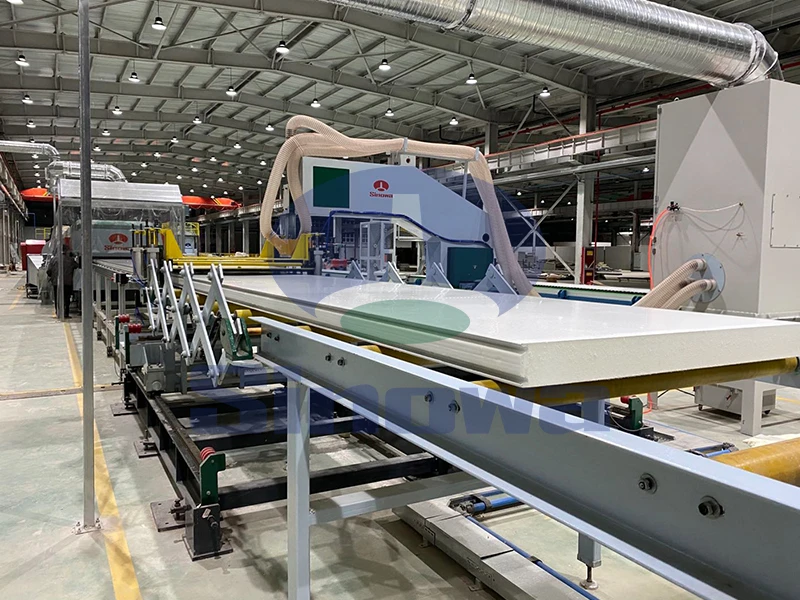
Core Composition and Operational Principles
A complete PU roof sandwich panel production line is a highly integrated mechanical and intelligent system composed of multiple functional modules that work in synchronous coordination to form a seamless manufacturing workflow. The core components cover raw material unwinding units, precision roll forming systems, high-pressure PU foaming and mixing devices, continuous lamination and curing units, fixed-length cutting mechanisms, and automatic conveying and stacking systems. Each module is designed to match the continuous production rhythm, eliminating segmented operation interruptions common in traditional intermittent production equipment. The operational principle centers on one-step composite molding: metal surface materials are shaped into standardized profiles through roll forming, while liquid polyurethane raw materials undergo accurate proportioning, uniform mixing, and even spraying between upper and lower metal layers. Subsequent constant-temperature curing and mechanical lamination enable tight bonding between the PU foam core and metal facings, forming integrated roof sandwich panels with stable structural integrity. The entire production process relies on intelligent parameter regulation to synchronize mechanical movement, chemical reaction, and temperature control, ensuring every batch of products maintains consistent structural and thermal insulation performance. This integrated design greatly reduces manual intervention, optimizes production procedures, and lays a solid foundation for large-scale standardized production of roof panels.
Raw Material Preparation and Unwinding Process
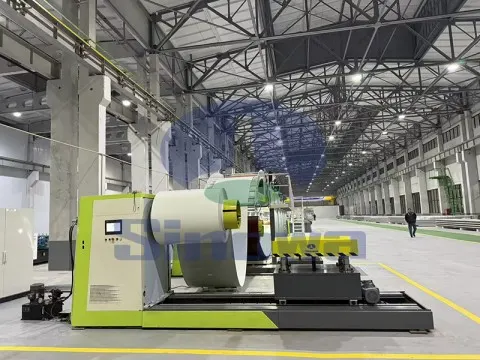
Raw material preparation is the initial and foundational link in PU roof sandwich panel production, directly affecting the flatness, appearance quality, and structural stability of finished panels. The PU sandwich panel line is mainly adapted to metal coil materials used as panel surface layers and liquid polyurethane chemical materials for the core insulation layer. The unwinding system adopts a stable automatic unwinding structure, which can steadily release metal coils without tension fluctuation or material deviation during operation. Equipped with automatic correction devices, the system effectively avoids offset problems in the feeding process, ensuring consistent feeding accuracy of metal sheets. Before formal forming, the production line also completes preliminary leveling and surface cleaning of metal materials, removing surface impurities and uneven stress generated during coil storage and transportation. For PU chemical raw materials, the supporting storage and conveying system maintains stable material activity through constant-temperature storage and sealed pipeline transmission, preventing raw material deterioration or performance changes caused by external temperature and humidity changes. Scientific raw material pretreatment and stable feeding control eliminate quality fluctuations caused by raw material inconsistencies, providing reliable preconditions for subsequent foaming, lamination and molding processes, and improving the overall yield of finished products.
Precision Roll Forming Technology for Surface Materials
Roll forming is a key process that shapes the flat metal sheet into professional roof panel profiles with structural grooves and waterproof ridges, determining the dimensional accuracy and installation adaptability of PU roof sandwich panels. The production line is equipped with multi-group roller forming units arranged in an orderly gradient structure, which gradually bends and shapes flat metal sheets through multi-pass rolling, avoiding structural damage or surface wrinkling caused by one-time forced forming. Each roller group adopts precision machining technology and synchronous transmission design, realizing consistent rolling pressure and feeding speed in the forming process. The system supports flexible adjustment of forming parameters, which can adapt to different thicknesses of metal surface materials and meet the profile shaping requirements of various roof panel specifications. In the forming process, the intelligent monitoring module real-timely tracks the dimensional parameters of the profiled sheet, automatically fine-tuning the roller gap and pressure to ensure the flatness, groove depth and edge straightness of the formed sheet meet production requirements. Reasonable roll forming technology not only endows roof panels with neat appearance and accurate dimensions, but also enhances the overall structural rigidity of the panels. The molded profile structure can effectively improve the waterproof and wind-resistant performance of the roof after installation, making the panels more suitable for various building roof enclosure scenarios.
High-Pressure PU Foaming and Mixing System
The PU foaming and mixing system is the core functional unit that determines the thermal insulation performance and internal structural stability of roof sandwich panels, serving as the most critical link in the entire production line. The system adopts high-pressure automatic metering and mixing technology, which independently conveys different polyurethane raw material components through sealed pipelines, and completes accurate proportioning and high-speed mixing through professional metering pumps and mixing heads. It maintains high proportioning accuracy during continuous operation, ensuring the chemical ratio of raw materials is balanced and stable, which is essential for uniform foam reaction and stable performance. The uniformly mixed liquid PU material is evenly and quantitatively sprayed between the upper and lower formed metal sheets through precise spraying equipment. After spraying, the liquid material undergoes rapid foaming and expansion, fully filling the gap between the two metal layers without hollow gaps or uneven thickness. The foaming process is matched with real-time temperature and pressure regulation to adapt to the optimal reaction conditions of PU materials, ensuring the foam forms a fine and uniform closed-cell structure. This dense closed-cell structure gives the panel excellent thermal insulation, heat preservation and sound insulation effects. Meanwhile, the foaming material can form a strong adhesive force with metal surfaces during the curing reaction, realizing integrated composite connection and avoiding delamination and cracking of the panel core layer in long-term use.
Continuous Lamination and Constant-Temperature Curing Process
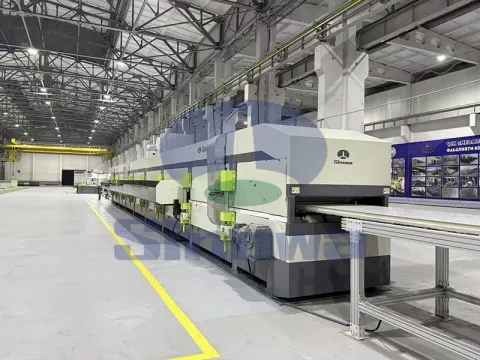
Lamination and curing are key processes for the integral molding and performance stabilization of PU roof sandwich panels, which solidify the composite structure formed by metal surface layers and PU foam core layers. The production line is equipped with a long-distance double-belt lamination and constant-temperature curing unit, which provides a stable closed molding environment for panel forming. After the PU material is sprayed, the composite sheet enters the lamination unit immediately, and the upper and lower conveyor belts apply uniform and stable pressure to the sheet, ensuring the foam core layer is closely bonded to the metal surface without local deformation or uneven thickness. The internal temperature of the curing unit is intelligently and dynamically adjusted according to the production speed and material characteristics, maintaining a constant and balanced curing temperature field. This stable temperature environment enables the PU foam to complete full polymerization and cross-linking reaction, gradually forming a solid and elastic core structure with stable physical and chemical properties. The continuous curing mode avoids the incomplete reaction and unstable performance caused by intermittent curing. With the gradual advancement of the sheet in the curing unit, the foam structure is completely shaped, the adhesive force between layers reaches the optimal state, and the overall hardness, toughness and structural stability of the panel are fully improved. Scientific lamination pressure control and constant-temperature curing technology ensure that each finished panel has consistent internal structure and stable comprehensive performance.
Fixed-Length Cutting and Precision Sizing Processing
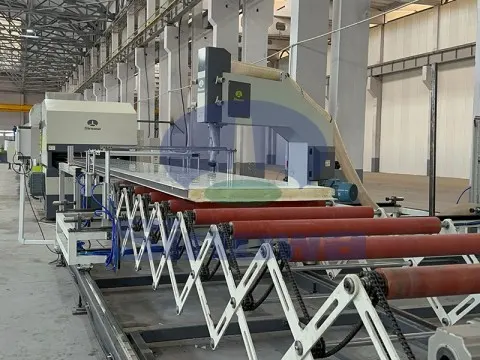
Fixed-length cutting is the finishing process for shaping finished PU roof sandwich panels, which realizes standardized sizing of continuous molded panels to meet diverse application and installation requirements. The production line adopts automatic tracking and fixed-length cutting technology, with the cutting system synchronizing with the production line operation speed in real time to ensure cutting accuracy without production line shutdown or speed reduction. Before cutting, the intelligent positioning system automatically identifies the starting and ending positions of the panel profile and accurately calculates the cutting length according to preset parameter settings. The cutting device uses high-precision mechanical cutting tools, which can complete flat and smooth cutting of composite panels integrating metal and foam structures without burrs, edge warping or core layer crushing. The system supports flexible switching of cutting lengths, enabling flexible production of panels with different specifications to adapt to different building roof design schemes. In addition, the cutting process is equipped with a dust and debris cleaning device, which timely cleans up foam debris and metal scraps generated during cutting to keep the surface of finished panels flat and clean. The efficient and precise fixed-length cutting process not only ensures the dimensional standardization of finished products and improves the installation matching degree of panels, but also effectively improves production efficiency and reduces material waste caused by inaccurate cutting.
Automatic Conveying and Finished Product Stacking
Automatic conveying and stacking systems are important supporting units for the automated operation of the entire production line, realizing efficient output and standardized storage of finished PU roof sandwich panels. The conveying system adopts synchronous variable-frequency speed regulation, which can stably transport the cut finished panels without vibration, sliding or surface scratching, protecting the appearance and structural integrity of the panels. The conveying speed is perfectly matched with the upstream cutting and curing procedures to ensure the continuity and fluency of the entire production rhythm. After the finished panels are transported to the stacking station, the automatic stacking device completes orderly picking, positioning and stacking of the panels through mechanical transmission and intelligent positioning technology. The stacking process maintains consistent spacing and flatness between panels, avoiding extrusion deformation and surface friction damage. The system can automatically count the number of stacked panels and complete regular stacking according to preset specifications, which is convenient for subsequent transportation and storage. The full-automatic conveying and stacking mode completely replaces manual handling, greatly reduces labor investment and labor intensity, effectively avoids product damage caused by manual operation errors, and improves the overall automation level and production efficiency of the production line. At the same time, standardized stacking is conducive to maintaining the neatness of the production site and optimizing production management procedures.
Intelligent Control and Synchronized Operation System
The intelligent control system serves as the brain of the PU sandwich panel production line, realizing unified scheduling and precise control of all functional modules and ensuring the synchronized and stable operation of the entire production process. The system adopts integrated intelligent programming control, with all production parameters including feeding speed, forming pressure, foaming ratio, curing temperature and cutting length adjustable through a unified operating interface. It supports real-time monitoring of the operating status of each equipment unit, automatically collecting and analyzing production data during operation. Once abnormal parameters such as unstable pressure, temperature deviation or speed mismatch are detected, the system will automatically trigger fine adjustment or early warning prompts to avoid batch quality problems and equipment failures. The synchronous linkage design enables upstream and downstream equipment to operate in precise coordination, eliminating production stagnation or quality fluctuation caused by asynchronous operation of individual modules. In addition, the control system has parameter memory and one-key reset functions, which can quickly switch production specifications and greatly improve the flexibility of production line operation. The intelligent control mode simplifies operation procedures, reduces the dependence on professional operating experience, ensures the stability and repeatability of the production process, and provides core technical support for standardized and large-scale production.
Production Line Performance and Product Advantages
The fully automated continuous operation mode of the PU roof sandwich panel production line endows the finished roof panels with outstanding comprehensive performance and significant product advantages compared with traditional building materials. The panels produced by this line feature a lightweight composite structure, which can effectively reduce the self-weight of building roofs, lower the load-bearing pressure of building structures, and save overall construction costs. The dense closed-cell PU foam core layer provides excellent thermal insulation and heat preservation performance, which can effectively block indoor and outdoor heat exchange, reduce building energy consumption, and meet the energy-saving needs of modern buildings. Meanwhile, the integrated composite structure formed by high-pressure foaming and precise lamination has strong structural stability, with good compression resistance, bending resistance and weather resistance. The panels are not easy to delaminate, deform or age in long-term outdoor use, adapting to various complex climatic environments. In terms of construction application, the standardized and integrated panel design simplifies on-site installation procedures, shortens construction cycles, and improves construction efficiency. In addition, the production line’s precise processing technology ensures consistent product appearance and performance, making the panels widely applicable to industrial plants, public buildings, cold storage buildings and various lightweight roof enclosure projects.
Application Prospects and Industry Development Value
With the continuous advancement of modern building energy conservation and lightweight construction concepts, PU roof sandwich panel production lines have shown broad application prospects and important industry development value. Modern construction industries are increasingly demanding energy-saving, efficient, durable and easy-to-install building enclosure materials, and PU roof sandwich panels produced by automated production lines perfectly fit this development trend. The efficient and continuous production capacity of the production line can quickly respond to the market demand for large-scale building material supply, while flexible parameter adjustment capabilities meet the personalized specification requirements of different construction projects. Compared with traditional manual and intermittent production modes, the automated production line effectively improves product consistency and yield, reduces material waste and labor costs, and promotes the standardized and industrialized development of building insulation panel manufacturing. In the field of building energy conservation, the high-performance thermal insulation characteristics of PU roof panels help reduce building operation energy consumption and support green building development goals. With the continuous upgrading of production line intelligence and automation technology, the production efficiency and product performance of PU roof sandwich panels will be further optimized, expanding their application scope in new industrial construction, urban public buildings, low-carbon energy-saving buildings and other fields, and bringing long-term value to the upgrading of the building materials industry.
Gallery of PU Roof Sandwich Panel Production Line
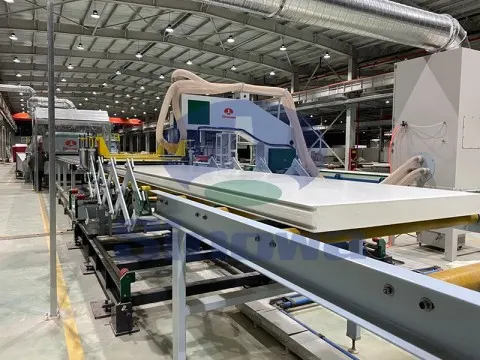
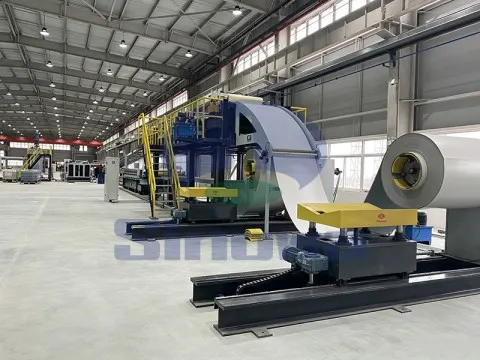
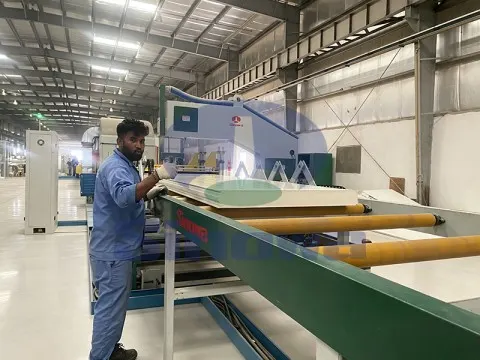
Tags: pu roof sandwich panel production line, pu roof sandwich panel production line manufacturer, pu roof sandwich panel production line supplier, china pu roof sandwich panel production line, pu roof sandwich panel production line for sale
https://www.sandwichpanelmanufacturingline.com/blog/pu-roof-sandwich-panel-production-line.html
-
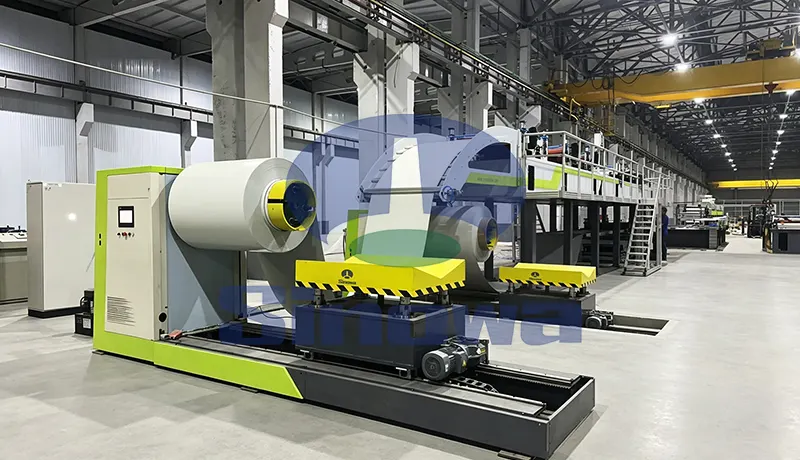
A reliable PU sandwich panel production line serves as the core equipment for manufacturing high-performance building insulation panels. This professional PU sandwich panel line features automated feeding, foaming and molding processes to ensure consistent panel thickness and structural stability. The well-designed polyurethane sandwich panel production line effectively improves production efficiency while reducing material waste in daily operation. Each calibrated polyurethane sandwich panel line can adapt to different panel sizes to meet diverse construction needs. With precise temperature and pressure control, the advanced continuous PU sandwich panel line produces panels with excellent thermal insulation and weather resistance. Meanwhile, the optimized PIR sandwich panel production line upgrades the foaming formula to enhance fire resistance performance. The high-efficiency PIR sandwich panel line maintains stable operation during long-term mass production, delivering durable and high-quality sandwich panels for various architectural and industrial applications.
-
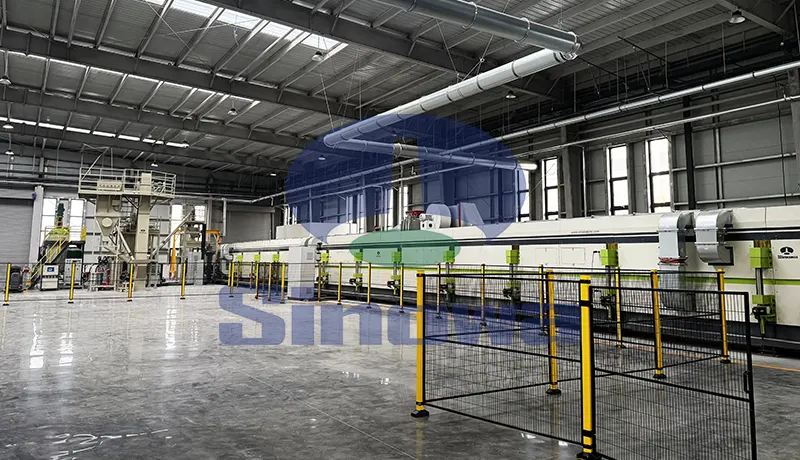
The phenolic panel production line realizes automated and continuous manufacturing of high-performance thermal insulation panels through streamlined and coordinated processing procedures.
-
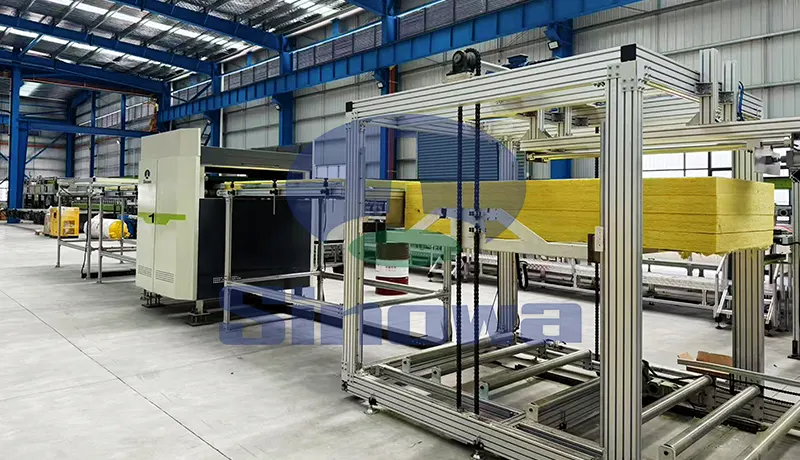
Modern insulation panel manufacturing relies on professional automated equipment to ensure stable product quality and high production efficiency. The rock wool sandwich panel production line features precise material lamination and forming processes to produce rigid, heat-insulating building panels. Meanwhile, the mineral wool sandwich panel production line adopts optimized assembly procedures to fabricate lightweight, soundproof panels widely used in architectural enclosure and thermal preservation projects.