PU Sandwich Panel Production Equipment
Publication Date: Nov 17, 2026
PU Sandwich Panel Production Equipment manufacturer in China. Fully automatic continuous line for insulated PU/PIR sandwich panels, for cold room, warehouse & building wall panels. Stable, high speed, customizable turnkey solution.
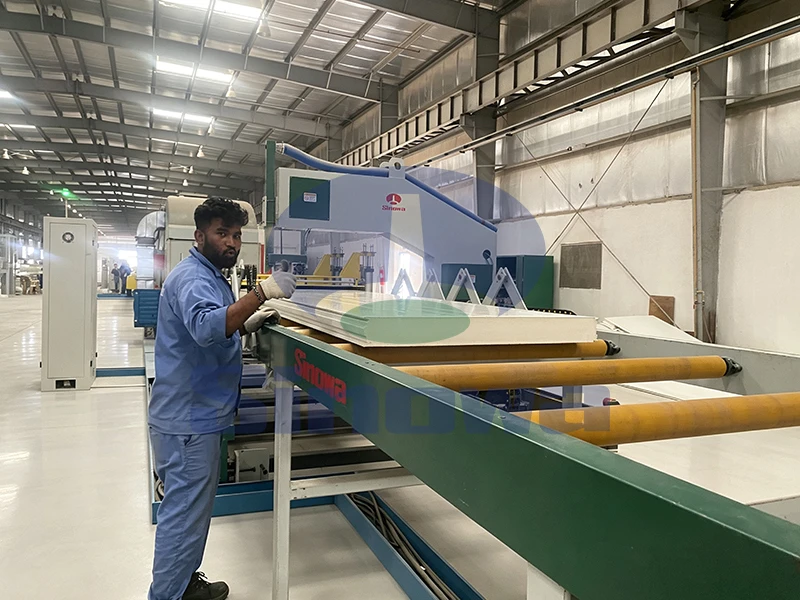
The Basic Composition of PU Sandwich Panel Production Equipment
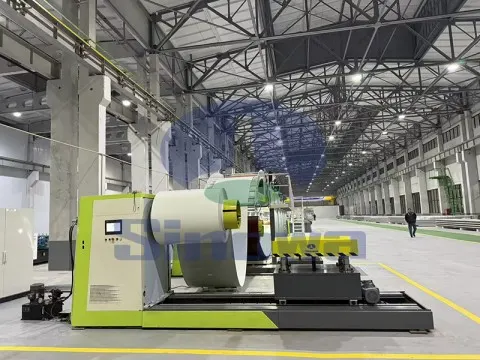
PU sandwich panel production line represents a complete integrated production line designed for continuous forming of composite panels with polyurethane foam core and metal facing sheets. Unlike single standalone processing machines, this set of equipment links multiple functional units together to finish panel manufacturing in one continuous workflow, from raw material feeding to finished product cutting and stacking. The whole system is built to match the foaming characteristics of polyurethane, which cures rapidly after two-component raw materials mix under controlled temperature and pressure. The main material feeding section handles upper and lower surface sheets, which are usually rolled metal coils. The coil unwinding device releases the sheet material steadily, and a leveling mechanism eliminates surface wrinkles and uneven deformation caused by coiling and storage. After leveling, the surface sheets pass through a pre-treatment station, where surface cleaning and coating operations remove oil stains, dust and oxidation layers. This preparation step directly affects the bonding strength between the facing sheet and PU foam core. Next is the metering and mixing unit for polyurethane raw materials. Two separate storage tanks hold polyether polyol and isocyanate, with precision metering pumps delivering the two materials at a fixed ratio into a high-speed mixing head. The mixing head stirs the materials thoroughly before spraying the mixed liquid onto the lower moving sheet. A continuous double-belt conveyor forms the shaping cavity above and below the material layer. As the mixed PU liquid expands and foams inside this closed cavity, the upper sheet is pressed down to form the preset panel thickness. The conveyor runs at a stable speed to match the foaming and curing time of polyurethane. Subsequent units include trimming, cutting, cooling and stacking. Every unit’s running parameters need coordinated adjustment. If the speed of the conveyor fails to match the foaming reaction speed, defects such as uneven core density, voids inside the foam or poor adhesion between foam and surface sheet will appear. Operators need to monitor material pressure, mixing temperature, conveyor speed and cavity clearance in real time during formal production. Reasonable matching of all components is the foundation for stable long-term operation of the whole production line. Even small parameter deviations can lead to large batches of defective panels and increase material waste.
Working Principle of Polyurethane Foaming in the Production Line
The foaming process of polyurethane inside the sandwich panel equipment is a controlled chemical reaction, which determines the thermal insulation performance, mechanical strength and dimensional stability of the final sandwich panel. The two main raw materials do not react before mixing. Once they are combined in the mixing head, polymerization and foaming reactions start simultaneously. The reaction generates heat, and the foaming agent inside the raw material system vaporizes under the heat, forming countless tiny closed cells inside the curing polymer structure. These closed cells are the key reason why PU sandwich panels have outstanding heat insulation performance. The production equipment creates stable external conditions to guide this reaction. Temperature control covers raw material storage tanks, material delivery pipelines and the mixing head. If raw material temperature is too low, the reaction speed slows down, foaming expansion becomes insufficient, and the foam core will be dense and heavy. If the temperature is excessively high, the reaction proceeds too fast. The mixed liquid may finish foaming before entering the shaping cavity, resulting in broken foam structure and large hollow defects. The pressure of the metering pump also plays a vital role. Stable feeding pressure ensures the mixing ratio of the two components stays consistent. A ratio imbalance will cause incomplete reaction, leaving sticky foam that cannot fully cure, or make the foam brittle and easy to crack after curing. The double-belt shaping section provides constant pressure support during the whole foaming and curing period. When the PU mixture expands, upward expansion force pushes against the upper belt. The belt system provides uniform counter pressure to restrict free expansion, so the foam forms a uniform thickness consistent with the set cavity distance. The moving speed of the belt must match the reaction cycle. The material needs enough residence time inside the cavity to complete foaming, cross-linking and preliminary curing before leaving the shaping section. If the line runs too fast, incompletely cured foam will deform after cutting. If the speed is too slow, production efficiency drops significantly. Operators will adjust parameters according to different raw material formulations and target panel thickness. Formulas adjusted for low thermal conductivity require slower reaction speed and longer curing time, while formulas focusing on high rigidity need higher reaction activity. All adjustments are implemented through the control system of the PU sandwich panel production equipment. The control panel records real-time data of each batch, which helps technicians trace abnormal quality problems and optimize the reaction environment continuously.
Functions and Structural Features of the Continuous Double-Belt Conveyor System
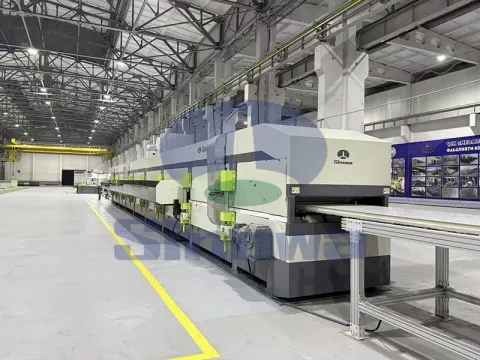
The continuous double-belt conveyor is recognized as the core forming part of PU sandwich panel line. It undertakes multiple tasks including bearing the surface sheets, providing closed forming space, transmitting stable pressure and conveying materials forward continuously. The structure consists of an upper circulating belt, a lower circulating belt, a frame support structure, a tension adjusting mechanism and a hydraulic or pneumatic pressure adjustment assembly. The two belts run synchronously at the same linear speed, maintaining parallel spacing that sets the finished thickness of sandwich panels. The spacing can be adjusted within the equipment’s design range to produce panels of different specifications. The belt material needs to withstand the reaction heat released by polyurethane foaming and maintain smooth surface without adhesion to uncured PU materials. Special anti-stick treatment on the belt surface prevents the foam core from sticking during the foaming process and avoids surface damage when the panel separates from the belt. The tension system keeps the belt flat all the time. Insufficient tension will make the belt sag in the middle section. The forming cavity will be uneven, leading to inconsistent panel thickness across the width. Excessive tension increases friction load on the driving motor and accelerates belt wear. The pressure system applies uniform vertical pressure to the upper belt through a series of pressing modules distributed along the whole forming area. This pressure restricts the free expansion of PU foam and ensures the foam fills the entire cavity evenly without local bulges or depressions. Pressure distribution along the length direction is set according to the foaming stage. The front section near the spraying position adopts relatively low pressure to reserve space for initial expansion of the mixture. The middle section with violent foaming reaction uses higher pressure to shape the foam stably. The rear section reduces pressure appropriately after the foam completes cross-linking and gains self-supporting strength. Synchronization control of the upper and lower belts relies on a servo driving system. The system corrects speed deviation constantly. If one belt slips and runs slower than the other, relative displacement will occur between the upper and lower surface sheets, tearing the newly formed foam core and causing separation between foam and facings. The double-belt system also has heat preservation structures on both sides of the frame. Heat preservation reduces heat loss from the reaction area and stabilizes the internal temperature environment of the cavity. Side sealing strips installed on both sides of the belts prevent uncured PU liquid from overflowing during foaming. Overflowed material will solidify on the side of the belt, scratch the belt surface and generate hard impurities mixed into the edge of panels. Regular maintenance work for this part includes checking belt surface condition, calibrating tension, testing synchronization accuracy and replacing worn sealing strips. Good maintenance extends the service life of the forming section and keeps the dimensional tolerance of finished panels within a stable range for long-term production.
Raw Material Metering, Mixing and Spraying Unit
The metering, mixing and spraying unit is responsible for accurately conveying polyurethane raw materials and distributing the mixed reaction liquid onto the lower facing sheet. Its working accuracy directly determines the consistency of foam quality of every produced panel. This unit includes raw material storage tanks, circulation pipelines, filter assemblies, precision metering pumps, servo drive modules, high-pressure mixing head and moving spraying trolley. The storage tanks are equipped with stirring devices and temperature insulation jackets. Slow stirring prevents raw material sedimentation and component separation. Constant temperature jackets keep the raw material temperature stable before entering the metering pump. Filters at the outlet of each tank block tiny solid impurities. Impurities entering the metering pump or mixing head may block narrow flow channels, cause flow fluctuation and damage the precision matching of material ratio. The metering pumps are driven by independent servo motors. The control system adjusts the rotation speed of each pump separately to change the output flow of polyether polyol and isocyanate. Operators set the material ratio and total output flow according to the raw material formula and production line speed. When the conveyor speed increases, the system automatically raises the spraying flow to ensure the sprayed material amount per unit area remains unchanged. The high-pressure mixing head is the place where two raw materials contact and blend. Inside the mixing chamber, two material streams collide at high speed to achieve micro-level mixing. Sufficient mixing makes the reaction uniform and forms fine and closed foam cells. Poor mixing leads to large cell size, local incomplete reaction and obvious decline of insulation performance. After mixing, the liquid flows out from the nozzle of the mixing head. The spraying trolley drives the mixing head to reciprocate horizontally along the width direction of the lower sheet. The reciprocating movement makes the mixed liquid spread evenly across the whole width of the panel blank. The moving speed of the trolley matches the forward speed of the conveyor to avoid accumulation of liquid in partial areas. When production stops temporarily, the mixing head has an automatic cleaning function. Cleaning fluid flushes the residual PU mixture inside the mixing chamber to prevent residual material from curing and blocking the flow passage. Blockage of the mixing head is a common fault in daily production. Once blockage occurs, the spraying pattern becomes irregular, and the foam core will have longitudinal strip defects. The control interface displays real-time flow data of each material. When the actual flow deviates from the set value, the system sends an early warning signal. Technicians can check pump pressure, filter clogging and pipeline leakage according to the alarm information. Stable operation of this unit reduces raw material waste effectively. Precise feeding avoids excessive raw material consumption, and uniform mixing lowers the reject rate caused by inconsistent foam performance. This unit is usually equipped with safety protection interlock. If the mixing head stops working while the conveyor still runs, the main line will trigger an alarm and stop automatically to prevent producing panels without foam core.
Post-forming Trimming, Cutting and Cooling Equipment
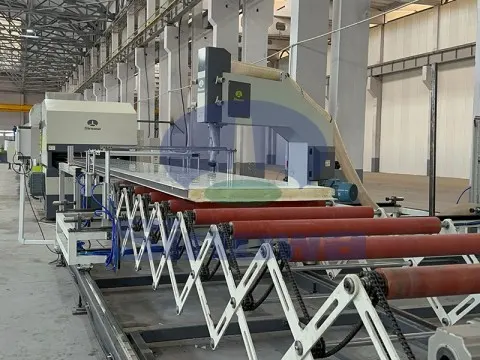
After the composite blank leaves the double-belt forming section, the foam core has completed basic curing, but the whole panel still retains high temperature from the foaming reaction. The post-forming section of PU sandwich panel production equipment carries out trimming, fixed-length cutting, forced cooling and surface inspection. The first procedure is edge trimming. During foaming, a small amount of foam overflows along both sides of the panel blank, and the edge position has uneven thickness and irregular shape. Rotary trimming cutters remove the redundant edge material on both sides, forming straight and neat side edges. Trimming tools adopt high-strength blades, and the cutting speed is synchronized with the moving speed of the panel blank. The trimmed leftover foam fragments are collected by a waste recovery device. Although the waste cannot be reused as foaming raw material, centralized collection keeps the production environment clean and reduces scattered debris interfering with the operation of subsequent equipment. After trimming, the continuous long blank enters the cutting station. The flying saw cutting mechanism moves synchronously with the running panel blank during cutting. The saw carriage follows the blank forward at the same speed while the saw blade cuts vertically through the upper facing sheet, PU core and lower facing sheet at the preset length. After cutting finishes, the carriage returns rapidly to the starting position and waits for the next cutting trigger signal. Fixed-length parameters can be modified on the control system to produce panels of different lengths. The cutting mechanism needs enough cutting power to avoid burrs and deformation on the metal surface sheet. Vibration during cutting will scratch the coating on the facing sheet and damage the anti-corrosion performance of the panel surface. A damping structure is installed on the saw carriage to reduce vibration transmission. The freshly cut panels have high internal temperature. If stacked directly without cooling, heat accumulation will cause slow post-curing deformation of the foam core. The cooling section uses circulating air to take away heat evenly from upper and lower surfaces of panels. Air volume and wind speed are adjusted according to panel thickness and production speed. Thick panels need longer cooling time because heat conducts slowly from the central foam core to the surface. After cooling, workers or visual inspection devices check panel surface for scratches, indentations, bubble marks and cutting defects. Panels that pass inspection are transported to the stacking station. The stacking mechanism arranges panels neatly in layers. Flexible protection pads are placed between panel layers to prevent the hard edge of one panel from scraping the coating surface of another. This whole post-processing segment is closely linked with the front forming section. If the cutting cycle cannot keep up with the forming speed, intermediate buffering accumulation will appear on the production line. Reasonable speed matching ensures continuous production rhythm. Regular maintenance of this part includes sharpening cutting blades, checking the synchronization accuracy of the flying saw, cleaning dust on the cooling fan and calibrating the length measuring encoder. Stable operation of post-forming equipment guarantees the finished panels have regular shape, accurate dimension and qualified appearance quality.
Automatic Control System of the Full Production Line
The automatic control system acts as the brain of PU sandwich panel manufacturing line, coordinating the action sequence, parameter setting, data collection and fault alarm of every functional unit. The system adopts a distributed control framework. A main controller exchanges data with servo drivers of the conveyor, metering pumps, spraying trolley, flying saw and auxiliary devices through signal transmission modules. The human-machine interface provides an intuitive operation window for on-site operators. All core production parameters can be set and modified on the interface, including raw material ratio, spraying flow, conveyor speed, forming cavity thickness, cutting length, spraying reciprocating speed and temperature set points of each temperature control module. The control system supports parameter storage as production formulas. Operators can call stored formulas quickly when switching to another panel specification, instead of adjusting every parameter from scratch. This function shortens the time for product switching and reduces errors caused by repeated manual setting. Real-time data collection covers dozens of monitoring points. The system continuously records raw material pressure, material temperature, pump output flow, belt speed, forming pressure, cutting count and equipment running status. Historical data can be viewed and exported, supporting quality tracing. When abnormal signals appear, the system triggers graded alarms. Minor abnormal conditions such as slight flow deviation trigger light and sound reminders, allowing operators to adjust parameters without stopping the whole line. Serious faults such as mixing head blockage, belt synchronization failure or raw material pipeline leakage activate safety interlock and stop the production line automatically to prevent mass defective products or safety accidents. The control program contains multiple interlock logic relations. For example, the spraying unit cannot start before the conveyor runs and reaches stable speed. The flying saw will not execute cutting action before the length encoder detects that the blank reaches the set length. The raw material heating function stops automatically when the liquid level inside storage tanks is too low to avoid dry burning of heating components. The control system also has manual and automatic switching modes. Automatic mode is used for normal continuous production. Manual mode is adopted during equipment debugging, routine inspection and maintenance. In manual mode, operators can drive each single unit separately to test the movement of parts. Anti-misoperation settings are embedded in the program. Some high-risk actions can only be unlocked after confirming safety conditions. The control hardware is installed inside dust-proof and heat-insulated electrical cabinets. The working environment of the production workshop has dust and certain heat radiation, so the electrical components need good heat dissipation and dust prevention. Regular maintenance work includes checking signal cable connection, cleaning dust inside electrical cabinets, verifying the accuracy of sensors and backing up control programs. A reliable control system reduces dependence on operator experience, stabilizes product quality and improves the overall automation level of the PU sandwich panel production line.
Material Adaptability and Adjustable Range of the Equipment
Well-designed PU sandwich panel production equipment has strong material adaptability, which allows manufacturers to select different surface sheet materials and polyurethane formulas according to different application requirements. For the facing sheets, the equipment can match various coil materials with appropriate tensile strength and surface coating. The unwinding, leveling and guiding mechanism can adapt to different sheet thicknesses. Thinner sheets need lower tension control to avoid stretching and deformation during conveying, while thicker sheets require stronger driving torque from the unwinding unit. The surface pretreatment station can be adjusted to adapt to different coating requirements. Some production only needs simple dust removal, while other production processes require continuous primer coating. The coating roller gap and conveying speed of the pretreatment station can be adjusted to control coating thickness. In terms of PU core raw materials, the equipment can cooperate with different polyether and isocyanate formulations. Formulas with different foaming activity, curing speed and final foam hardness can be produced after corresponding parameter adjustment on the metering and temperature control unit. Formulas developed for high thermal insulation focus on low foam density and fine closed cells, while formulas for high load-bearing panels form higher-density foam core with better compressive strength. The adjustable range of panel thickness depends on the adjustment limit of the double-belt forming cavity. Within the design range, the equipment changes the spacing between upper and lower belts to produce thin panels used for inner partition and thick panels used for building envelope insulation. The adjustable cutting length covers multiple conventional finished sizes. Besides single-layer PU core structure, some modified production lines can realize composite structure production, such as adding middle isolation layers or other functional layers between the PU foam core and surface sheets. When adding extra intermediate layers, additional unwinding and guiding devices are installed to feed the intermediate material synchronously into the forming cavity. The equipment’s adaptability also reflects in the adjustment of production speed. It can run at low speed for small-batch trial production and product trial formulation, and run at high speed for large-scale mass production. But the highest running speed is restricted by the curing characteristic of the selected PU formula. If the reaction curing speed of the raw material is slow, blindly increasing line speed will inevitably lead to incomplete curing of foam core. Operators need to match the maximum feasible speed with the formula test result. It is worth noting that material adaptability does not mean the equipment can adapt to all raw materials without restriction. Raw materials with excessively fast reaction speed may cause solidification inside the mixing head. Raw materials with too high viscosity will bring difficulty to metering and conveying. Before using new raw materials, small-scale trial spraying and line test must be carried out, and parameters of temperature, pressure and flow should be optimized gradually. Making full use of the equipment’s adjustable performance helps manufacturers enrich product categories with one set of production line and improve the utilization rate of equipment investment.
Key Points for Daily Operation and Process Debugging
Standardized daily operation and scientific process debugging are critical to giving full play to the performance of PU sandwich panel production equipment and keeping defective rate at a low level. Before starting up each day, operators need to complete a series of pre-inspection work. They check the liquid level of raw material tanks, confirm whether the temperature of raw materials has risen to the preset range, inspect the tightness of raw material pipelines and check whether filters need to be replaced. The moving parts including belts, guide rollers, saw carriage and spraying trolley are checked for abnormal friction, jamming or abnormal noise. Safety protection covers and emergency stop buttons are verified to ensure normal function. After pre-inspection, the equipment enters the preheating and preparation stage. The metering system runs in circulation mode, so raw materials circulate inside the pipeline and mixing head without spraying out. This step stabilizes material temperature and pressure before formal feeding. Then operators start trial production with a short section of blank. During trial production, they observe the spraying distribution state of PU liquid, the expansion condition inside the forming cavity and the surface state of the blank coming out of the double-belt section. The first trial panel is cut and sampled. Technicians check the appearance, peel strength between foam and facings, foam cell uniformity and hardness of the sample. If defects appear, targeted parameter adjustment is carried out. When separation occurs between foam and surface sheet, possible reasons include insufficient surface pretreatment, low spraying temperature, unstable material ratio or insufficient forming pressure. If many large holes exist inside the foam core, the mixing effect is insufficient, or the raw material contains excessive moisture. Moisture will react with isocyanate and generate carbon dioxide, forming large open holes and destroying the closed cell structure. Adjustments should follow the principle of single variable change. Only one parameter is modified each time during debugging. Multiple simultaneous adjustments make it impossible to judge which change eliminates the defect. After the sample quality meets requirements, the line is switched to continuous formal production. Operators patrol every station periodically during production. They focus on the spraying trajectory of the mixing head, the running flatness of the double belt, the cutting section quality and the temperature of panels after cooling. Regular sampling is arranged at fixed time intervals to track quality stability. When stopping production for a short time, the mixing head performs automatic cleaning. For long-term shutdown, residual raw materials in pipelines and pumps need to be thoroughly cleaned, and the whole line is cleaned of foam scraps and dust. Operators should record the parameter settings and abnormal situations of each shift in detail. The operation record accumulates valuable experience for subsequent debugging of the same product specification. New operators must receive systematic training. They need to understand the reaction characteristics of PU raw materials, the function of each equipment unit and the consequence of wrong parameter adjustment before independent operation. Good operation habits reduce sudden shutdowns and extend the stable operation cycle of the PU sandwich panel production equipment.
Common Equipment Faults, Causes and Maintenance Strategies
Even with high-quality manufacturing and standardized operation, PU sandwich panel production equipment will gradually wear and generate faults after long-time continuous operation. Understanding common faults and adopting hierarchical maintenance strategies can reduce downtime effectively. The metering and mixing unit is one of the high-fault areas. The most frequent fault is mixing head blockage. Residual PU material cures inside the mixing chamber because of incomplete cleaning after shutdown. The direct phenomenon is unstable material flow, distorted spraying shape and sharp increase of pump pressure. When this fault occurs, the line should stop immediately, and the mixing head is disassembled for manual cleaning. Regularly checking the cleaning fluid pressure and cleaning duration can reduce blockage probability. Another common fault is flow fluctuation of metering pumps. It may be caused by blocked front filters, worn pump internal sealing components or unstable raw material viscosity. Filter replacement is the simplest solution. If sealing parts wear, disassembly and replacement are required. The double-belt forming section often encounters belt deviation. Belt deviation is triggered by uneven tension on both sides, asymmetric pressure of pressing modules or accumulation of foam debris on guide rollers. Minor deviation can be corrected by adjusting the tension fine-tuning mechanism. Severe deviation will scratch the belt edge and force shutdown. Operators should clean guide rollers frequently and check belt alignment every week. Belt surface scratches and cracks are cumulative faults. Hard impurities brought into the cavity or sharp leftover edges during trimming may scratch the belt. Minor scratches only affect appearance. Deep cracks will lead to material leakage and need belt replacement. The flying saw cutting system has faults such as inaccurate cutting length and burr on cutting surface. Inaccurate length is usually related to encoder signal drift or synchronization error between the saw carriage and panel blank. Recalibrating the encoder and checking the synchronous servo signal can solve the problem. Blunt saw blade is the main reason for burrs and tearing of the metal facing sheet. Blade sharpening or replacement is needed on schedule. Auxiliary systems also have typical faults. Raw material heating jackets fail to reach the set temperature because of heating element aging or temperature sensor drift. Cooling fan efficiency declines when dust accumulates densely on the radiator. Maintenance is divided into daily maintenance, weekly maintenance and periodic overhaul. Daily maintenance focuses on cleaning, checking liquid level and observing abnormal running state. Weekly maintenance includes tension calibration, filter replacement, lubrication of moving bearings and inspection of sealing strips. Periodic overhaul is carried out after a certain running cycle. Technicians disassemble key components, inspect internal wear, replace aging seals, check electrical circuit aging and test the accuracy of all sensors. Spare parts management should match the equipment. Consumable parts such as sealing rings, filter elements, cutting blades and mixing head accessories are kept in stock. Rapid replacement of spare parts shortens the maintenance time. Timely maintenance not only reduces the frequency of sudden breakdown but also prevents minor faults from evolving into serious damage to expensive core components. Scientific maintenance is an important way to protect the value of PU sandwich panel production equipment.
Energy Consumption Assessment and Optimization Direction of the Production Line
Energy consumption is an important evaluation dimension of PU sandwich panel production equipment during operation. Energy consumption mainly comes from several parts: raw material heating and heat preservation, driving motors for all transmission units, cooling air circulation, hydraulic or pneumatic systems and electrical control components. Raw material heating accounts for a relatively large proportion of energy use. PU raw materials need to stay within a stable temperature range before metering and mixing. Heat loss from storage tanks and pipelines increases energy waste if heat preservation layers are damaged. The first optimization direction is to maintain the integrity of thermal insulation structures. Damaged insulation jackets and pipeline wrapping materials are repaired in time to reduce heat exchange with the external environment. Heating power can also be optimized according to ambient temperature. In high-temperature seasons, the heating system works with lower power output. In low-temperature seasons, the heat preservation power is raised appropriately. The driving motors of the double-belt conveyor, spraying trolley, flying saw and unwinding devices consume electric energy during continuous operation. Most production lines adopt fixed-speed driving schemes in older designs, while newer equipment uses servo motors. Servo motors output power according to actual load demand. They reduce power consumption automatically under light load condition, which brings obvious energy-saving effect compared with constant-speed motors. Reasonable production scheduling also helps cut energy consumption. Concentrating production tasks to realize continuous long-time operation avoids repeated startup and shutdown. Every startup process needs to reheat raw materials and warm up the whole system, which consumes extra energy. Frequent switching between different panel specifications increases the times of parameter adjustment, trial production and material waste, indirectly raising comprehensive energy consumption per unit finished product. The cooling section uses fans to circulate air. Blindly increasing air volume brings extra power consumption. The cooling effect should be matched with the production speed and panel thickness. The cooling air channel can be optimized to make cold air flow contact the panel surface more evenly. Uniform heat exchange can achieve the required cooling effect with lower air volume. Waste heat recovery is a potential optimization direction for some production systems. The heat taken away by cooling air carries part of the reaction heat from PU foaming. Simple heat recovery devices can transfer part of the waste heat to preheat raw materials or heat the workshop space, reducing the load of the raw material heating unit. It should be noted that energy optimization cannot sacrifice product quality. Reducing heating temperature excessively will change the PU reaction state and cause quality defects. Lowering cooling air volume too much leads to insufficient cooling and post-deformation of panels. Energy optimization needs to be carried out on the premise of stable quality, by modifying equipment structures, upgrading control logic and improving production management. Comparing energy consumption data of different shifts and different product formulas helps managers find high-consumption working conditions and formulate targeted optimization plans. Continuous energy optimization reduces the operating cost of the production line and improves the economic benefit of panel manufacturing.
Development Trend and Upgrading Direction of PU Sandwich Panel Production Equipment
The development of PU sandwich panel production equipment keeps advancing along the direction of higher automation, higher production flexibility, better process stability and more friendly operation experience. The first obvious upgrading trend is deeper integration of sensing and real-time detection technology. Traditional equipment relies mainly on post-sampling inspection to judge foam quality. New upgraded lines add in-line detection modules. Sensors arranged in the forming area can detect the thickness of the panel blank continuously during operation. Surface scanning devices capture surface defects such as pits, scratches and uneven coating. The detection data feed back to the control system automatically. When quality deviation appears, the system adjusts related parameters such as spraying flow and forming pressure in real time, realizing closed-loop quality control. This reduces the time lag between defect generation and discovery and lowers the quantity of defective products. The second trend is improvement of production flexibility. Market demand presents diversified characteristics. Customers put forward requirements for customized panel width, thickness, surface pattern and special functional treatment. New generation equipment designs faster switching mechanisms. The adjustment of forming thickness, guide width and spraying range can be completed through electric remote adjustment instead of manual disassembly and mechanical calibration. The time for switching between different product specifications is shortened greatly. Modular design is also widely adopted in equipment upgrading. The whole production line is divided into independent functional modules. Manufacturers can expand functions step by step according to market changes. A basic line can add printing modules, film laminating modules or automatic packaging modules later without replacing the main forming equipment. Modularization reduces the one-time investment threshold for enterprises and improves the reconfigurability of the production system. The third trend is the intelligentization of production data management. Beyond simple data recording, the system can accumulate long-term production data and establish correlation models between parameters and quality indicators. The intelligent system can recommend optimal parameter combinations for new formulas or new specifications, reducing repeated trial and error in process debugging. Remote diagnosis function is gradually popularized. Professional technical personnel can check the running data of the equipment remotely, judge the potential fault risk and guide on-site operators to complete troubleshooting without arriving at the workshop. This improves the response speed of after-sales technical support. In terms of process adaptation, new equipment structures are developed to match improved PU raw material systems. New raw material formulas with low reaction heat, low emission and special environmental characteristics put forward new requirements for temperature control, mixing mode and forming pressure curve. Equipment designers adjust the structure of mixing heads, belt pressure distribution and heat control modules to adapt to these new materials. Meanwhile, the human-machine interaction interface is continuously optimized. The operation logic is simplified, and fault prompts are more intuitive. The system displays the possible reasons and suggested processing steps for each alarm information, lowering the skill requirement for front-line operators. In the long run, PU sandwich panel production equipment will continue to combine mechanical manufacturing, fluid control, chemical reaction control and digital information technology. The upgraded equipment will support panel production with richer performance, more stable quality and lower comprehensive operation cost, adapting to the expanding application demand of PU sandwich panels in many industrial and construction fields.
Gallery of PU Sandwich Panel Production Equipment
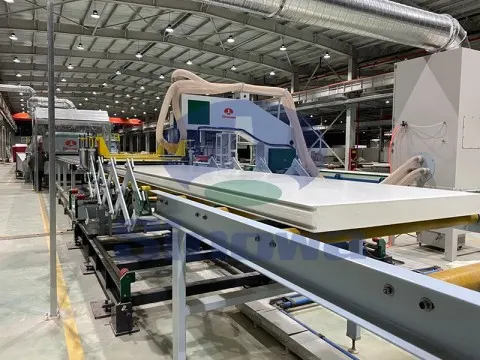
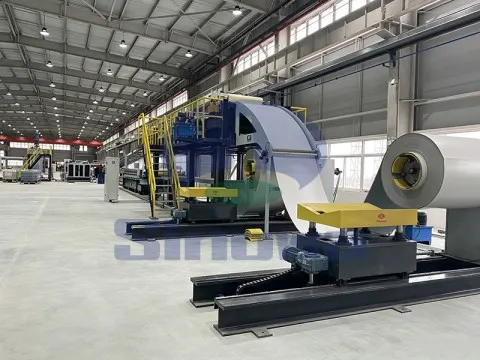
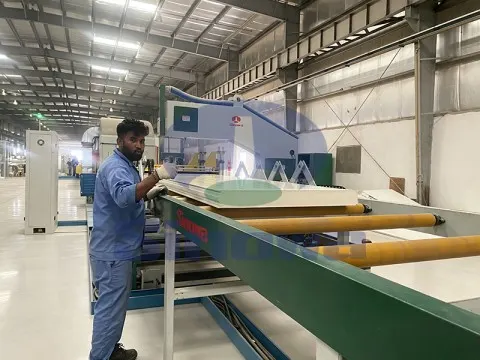
Tags: pu sandwich panel production equipment, pu sandwich panel production equipment manufacturer, pu sandwich panel production equipment supplier, china pu sandwich panel production equipment, pu sandwich panel production equipment for sale
https://www.sandwichpanelmanufacturingline.com/blog/pu-sandwich-panel-production-equipment.html
-
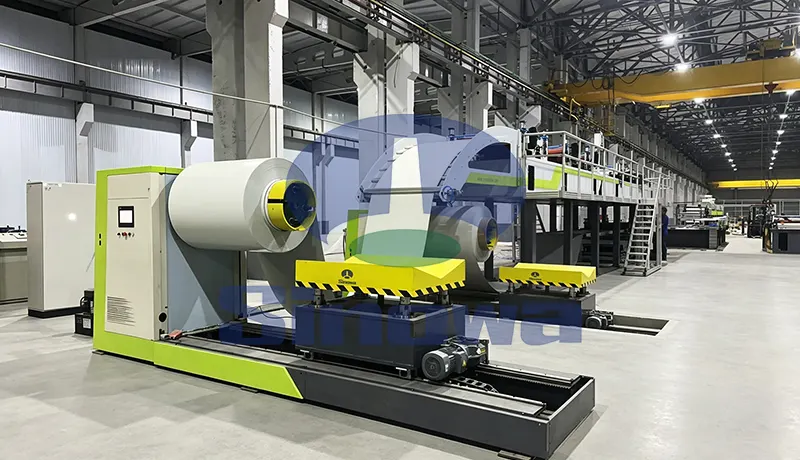
A reliable PU sandwich panel production line serves as the core equipment for manufacturing high-performance building insulation panels. This professional PU sandwich panel line features automated feeding, foaming and molding processes to ensure consistent panel thickness and structural stability. The well-designed polyurethane sandwich panel production line effectively improves production efficiency while reducing material waste in daily operation. Each calibrated polyurethane sandwich panel line can adapt to different panel sizes to meet diverse construction needs. With precise temperature and pressure control, the advanced continuous PU sandwich panel line produces panels with excellent thermal insulation and weather resistance. Meanwhile, the optimized PIR sandwich panel production line upgrades the foaming formula to enhance fire resistance performance. The high-efficiency PIR sandwich panel line maintains stable operation during long-term mass production, delivering durable and high-quality sandwich panels for various architectural and industrial applications.
-
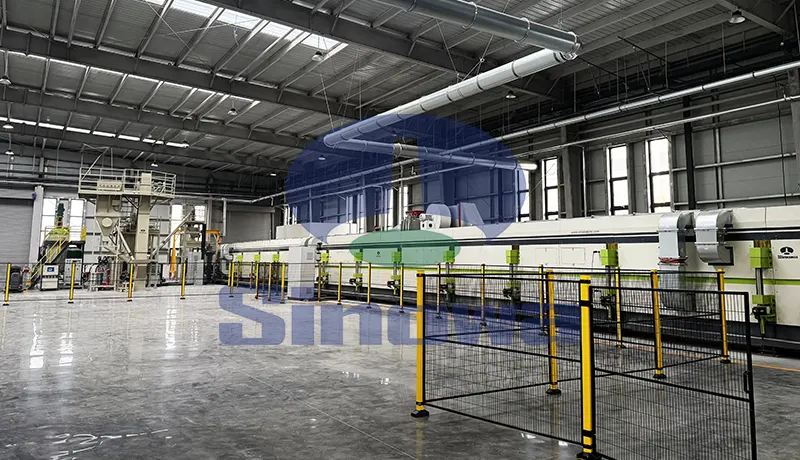
The phenolic panel production line realizes automated and continuous manufacturing of high-performance thermal insulation panels through streamlined and coordinated processing procedures.
-
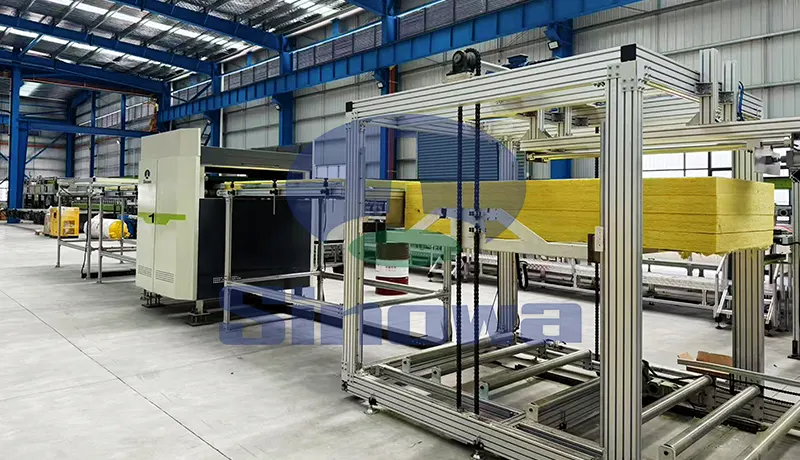
Modern insulation panel manufacturing relies on professional automated equipment to ensure stable product quality and high production efficiency. The rock wool sandwich panel production line features precise material lamination and forming processes to produce rigid, heat-insulating building panels. Meanwhile, the mineral wool sandwich panel production line adopts optimized assembly procedures to fabricate lightweight, soundproof panels widely used in architectural enclosure and thermal preservation projects.