Phenolic Insulation Panel Manufacturing Line
Publication Date: Oct 5, 2026
The phenolic insulation panel manufacturing line is a fully automated integrated system for producing high-performance thermal insulation panels. It covers full production procedures from raw material processing to finished panel shaping, sharing partial equipment logic with the polyurethane sandwich panel production line for flexible insulation material manufacturing.
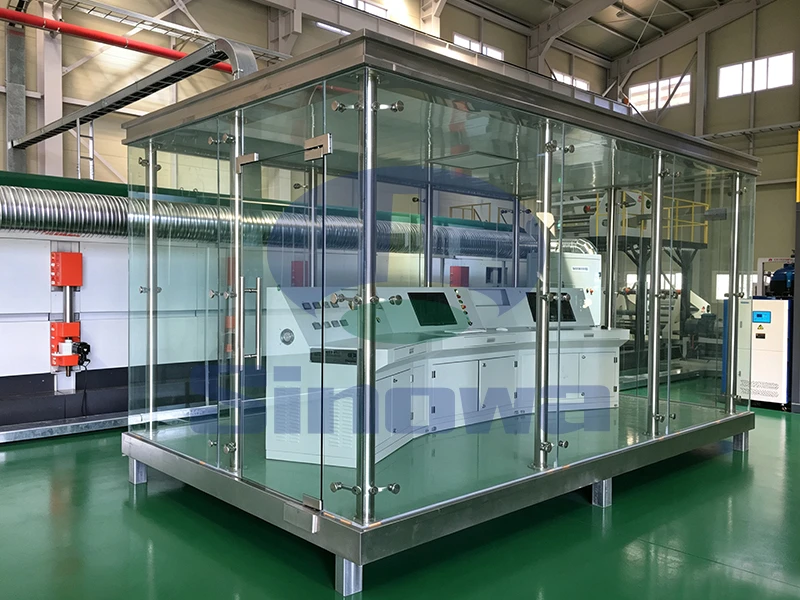
The core operation of a phenolic insulation panel manufacturing line starts with systematic raw material preparation and precise proportioning, which lays a solid foundation for stable panel quality. Different from common insulation production equipment, this line adapts to the unique chemical reaction characteristics of phenolic resin, requiring accurate metering of resin substrates, foaming agents, curing agents and functional additives. Each component’s dosage is finely adjusted through automated dosing modules to ensure uniform foaming density and stable structural performance of finished panels. Meanwhile, the polyurethane sandwich panel production line adopts similar automated batching technology, realizing compatible material proportioning logic for different thermal insulation core materials. This standardized pre-treatment process effectively avoids material reaction deviations caused by manual operation, ensures consistent raw material activity, and creates reliable preconditions for subsequent foaming, laminating and curing processes in formal production.
After raw material preparation, the phenolic panel production line enters the surface material feeding and preheating stage, a key link to enhance panel bonding firmness. The equipment is equipped with automatic uncoiling and leveling devices, which continuously and stably convey different types of surface materials to the production station. Before composite molding, the surface materials undergo uniform constant-temperature preheating to eliminate surface moisture and improve adhesion with phenolic foam core materials. The preheating temperature and conveying speed are intelligently linked with the overall line operating parameters to match different panel thickness and structural requirements. Similar process settings are widely applied in the polyurethane sandwich panel production line, where preheating treatment also serves as a critical step to strengthen the composite integration of core and surface layers. This standardized preprocessing mode greatly improves the overall yield of composite panels and reduces the risk of delamination and hollowing in finished products.
Precise mixing and continuous foaming are the core functional stages of the phenolic insulation panel production line, determining the thermal insulation and structural properties of the panels. The automated mixing system fully stirs the proportioned phenolic raw materials to form a homogeneous liquid mixture, which is then evenly sprayed on the surface of the lower layer material through a high-precision spraying device. Under set temperature and pressure conditions, the liquid material undergoes stable foaming and preliminary curing reactions to form a uniform porous phenolic foam core layer. The line’s foaming parameters are dynamically adjustable to control foam pore uniformity and core layer density flexibly. Compared with the working mode of the polyurethane sandwich panel production line, this process features slower and more stable reaction speed, which is tailored to the flame-retardant and high-temperature resistant characteristics of phenolic materials, avoiding local overheating and uneven foaming problems.
Composite lamination and integrated molding are vital processes to realize the integral structure of phenolic insulation panels. After the preliminary foaming of the core material, the upper surface material is automatically covered, and the whole panel enters the intelligent lamination pressing system. The pressing device adopts segmented pressure regulation technology, which can adjust pressing force in real time according to the hardness of surface materials and designed panel thickness, ensuring tight fitting between the core layer and double-sided surface layers without damaging the surface structure. The lamination speed is synchronized with the foaming and conveying speed to maintain continuous and uninterrupted production. This composite molding principle is consistent with the core technology of the polyurethane sandwich panel production line, both realizing one-piece composite forming of multi-layer structures. Reasonable lamination parameters effectively enhance the overall structural rigidity of the panel and improve its compression resistance and dimensional stability.
Intelligent segmented curing is a unique and essential process of the phenolic insulation board manufacturing line, different from conventional insulation panel production processes. The laminated semi-finished panels enter the constant-temperature curing tunnel, which is divided into preheating transition, high-temperature thermosetting and constant-temperature shaping areas through intelligent zoning control. Each area maintains independent and precise temperature and humidity control to adapt to the staged cross-linking curing reaction of phenolic resin. The preheating stage eliminates internal stress of the panel, the high-temperature stage completes thorough resin curing and molding, and the constant-temperature stage stabilizes the internal structure of the panel. This multi-stage curing mode avoids incomplete curing or excessive aging of materials. While the polyurethane sandwich panel production line uses a relatively simplified curing process, the phenolic line’s refined curing design significantly optimizes the panel’s flame retardancy and aging resistance.
Precision cutting and edge trimming processes ensure the dimensional accuracy and appearance quality of finished phenolic insulation panels. After completing curing and preliminary shaping, the continuous long panel is conveyed to the automatic cutting station, where the intelligent cutting system accurately cuts the panel into specified lengths according to preset parameters. The cutting equipment adopts high-speed and smooth cutting tools to ensure flat and burr-free panel sections, preventing core material fragmentation and surface layer damage. Subsequently, the edge trimming device uniformly polishes and trims the four edges of the panel to standardize the overall size and shape. The cutting and trimming logic of this line shares automated precision control advantages with the polyurethane sandwich panel production line, realizing high-precision fixed-length cutting for different specification panels. This process effectively unifies product dimensions and improves the assembly compatibility of panels in practical application scenarios.
Post-curing shaping and quality inspection are key links to guarantee the qualified rate of finished phenolic insulation panels. The cut panels will go through a period of natural standing and constant-temperature shaping to release residual internal stress and balance the internal material structure, further optimizing dimensional stability and avoiding later deformation and warping. After shaping, the automatic detection system conducts comprehensive inspection on each panel, covering core layer uniformity, bonding firmness, surface flatness and dimensional accuracy. Unqualified products with foaming defects, delamination or dimensional errors will be automatically screened out for reprocessing. The standardized quality control system of the line is optimized based on mature experience of the polyurethane sandwich panel production line, realizing full-process quality monitoring from semi-finished products to finished products and ensuring stable and reliable product performance.
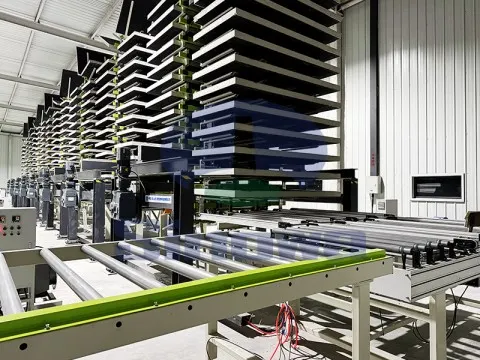
Automated stacking and packaging systems improve the overall operational efficiency of the phenolic board production line. After passing quality inspection, qualified panels are automatically conveyed to the stacking station, where the mechanical arm carries out orderly and standardized stacking according to set specifications, avoiding manual stacking errors and panel surface scratches. The stacked panel groups then enter the automatic packaging process, with waterproof and dustproof packaging materials wrapping the products tightly to protect the panels from moisture, dust and mechanical damage during transportation and storage. The whole stacking and packaging process is fully automated, reducing manual intervention and improving production efficiency. Similar automated post-processing configurations are standard for the polyurethane sandwich panel production line, realizing streamlined production from raw material input to finished product output.
The modular design of the PF insulation panel manufacturing line endows it with strong production flexibility and equipment compatibility. The whole line adopts independent modular structure for each functional unit including batching, foaming, laminating, curing and cutting, which supports independent parameter adjustment and convenient equipment maintenance. According to different product production demands, the line can adjust production speed, panel thickness and core material density in real time, adapting to diversified insulation panel production requirements. Meanwhile, part of the line’s functional modules can be shared and debugged with the polyurethane sandwich panel production line, reducing equipment upgrade and maintenance costs. This flexible modular design greatly extends the application scope of the production line and improves the utilization rate of production equipment.
With continuous upgrading of insulation material production technology, the phenolic insulation panel manufacturing line keeps optimizing intelligent and energy-saving performance. Modern lines are equipped with full-process intelligent monitoring systems, which realize real-time data collection and remote adjustment of production parameters such as temperature, pressure and speed, effectively reducing production errors and energy consumption. The optimized reaction and curing processes not only improve the comprehensive performance of phenolic insulation panels, but also enhance production environmental protection by reducing residual material waste. Combined with the mature technical advantages of the polyurethane sandwich panel production line, the updated phenolic panel production equipment achieves higher production efficiency, better product stability and stronger market adaptability, providing reliable technical support for the large-scale application of high-performance thermal insulation composite panels.
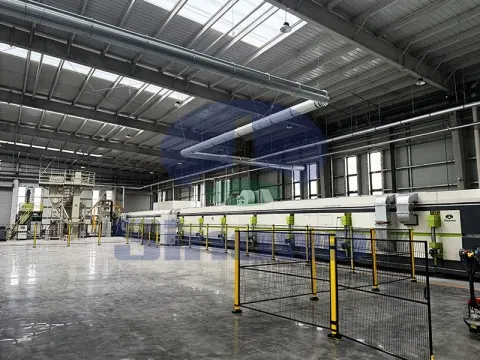
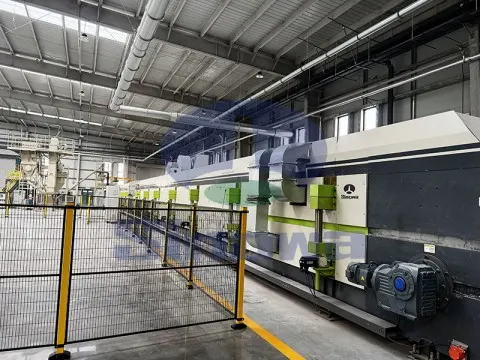
Gallery of Phenolic Insulation Panel Manufacturing Line
Tags: phenolic insulation panel manufacturing line, phenolic insulation panel manufacturing line manufacturer, phenolic insulation panel manufacturing line supplier, china phenolic insulation panel manufacturing line, phenolic insulation panel manufacturing line for sale
-

A reliable PU sandwich panel production line serves as the core equipment for manufacturing high-performance building insulation panels. This professional PU sandwich panel line features automated feeding, foaming and molding processes to ensure consistent panel thickness and structural stability. The well-designed polyurethane sandwich panel production line effectively improves production efficiency while reducing material waste in daily operation. Each calibrated polyurethane sandwich panel line can adapt to different panel sizes to meet diverse construction needs. With precise temperature and pressure control, the advanced continuous PU sandwich panel line produces panels with excellent thermal insulation and weather resistance. Meanwhile, the optimized PIR sandwich panel production line upgrades the foaming formula to enhance fire resistance performance. The high-efficiency PIR sandwich panel line maintains stable operation during long-term mass production, delivering durable and high-quality sandwich panels for various architectural and industrial applications.
-

The phenolic panel production line realizes automated and continuous manufacturing of high-performance thermal insulation panels through streamlined and coordinated processing procedures.
-

Modern insulation panel manufacturing relies on professional automated equipment to ensure stable product quality and high production efficiency. The rock wool sandwich panel production line features precise material lamination and forming processes to produce rigid, heat-insulating building panels. Meanwhile, the mineral wool sandwich panel production line adopts optimized assembly procedures to fabricate lightweight, soundproof panels widely used in architectural enclosure and thermal preservation projects.