Phenolic Foam Insulation Panel Machine
Publication Date: Oct 5, 2026
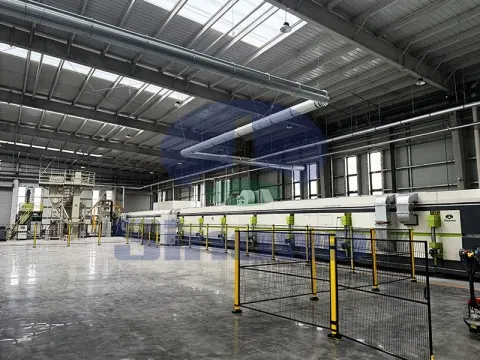
Phenolic foam insulation panel machine is a specialized continuous production device for manufacturing high-performance thermal insulation panels. It integrates raw material mixing, foaming, lamination, curing and cutting processes, delivering uniform, durable foam panels widely used in construction and industrial insulation fields.
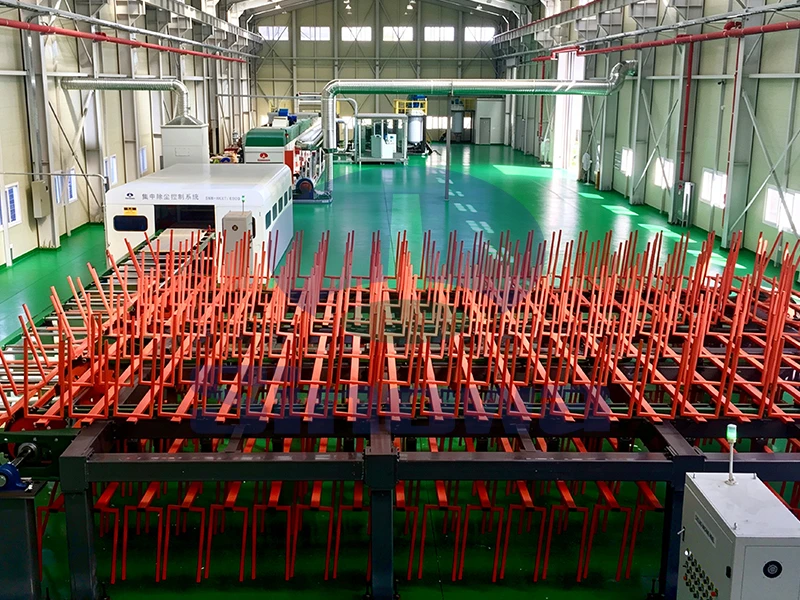
The phenolic foam insulation panel machine serves as a comprehensive automated production system tailored for standardized foam panel manufacturing, focusing on converting liquid chemical raw materials into solid structural insulation panels with stable physical properties. Its core operational logic relies on precise chemical reaction control and mechanical forming integration, which distinguishes it from ordinary foam processing equipment. Unlike intermittent production devices, this machine supports continuous cyclic operation, effectively eliminating production gaps and improving overall manufacturing consistency. Every functional module is scientifically matched to coordinate raw material processing and product forming, ensuring each batch of finished panels maintains uniform pore structure, thickness and surface flatness. This systematic design lays a solid foundation for large-scale, stable and high-quality production of phenolic foam insulation products, meeting the growing market demand for energy-saving insulation materials in various industrial and building scenarios.
Raw material pretreatment and intelligent feeding form the initial and foundational working link of the phenolic insulation panel production line system. The equipment is equipped with independent sealed storage and conveying units for different raw materials, including phenolic resin, curing agents, foaming agents and various functional auxiliary additives. All materials are transported through fully enclosed pipelines to avoid external contamination and material waste. The built-in precision metering modules can automatically adjust the feeding ratio and flow rate according to preset process parameters, realizing quantitative and synchronous feeding of multiple raw materials. This accurate batching mode avoids manual proportioning errors, ensures the chemical composition of each foaming raw material mixture is consistent, and directly optimizes the basic performance of subsequent foam forming. Meanwhile, the feeding system is equipped with anti-blocking and constant-temperature protection structures to maintain raw material activity and stable conveying state during long-term continuous operation.
Precision mixing and controllable foaming technology constitute the core processing section that determines the product quality of phenolic foam insulation panel machine. After accurate proportioning, all raw materials are delivered to the high-speed mixing head for uniform stirring and fusion, forming homogeneous colloidal mixed liquid without particle agglomeration or component stratification. The machine adopts gradient temperature control foaming technology, with distributed temperature sensors inside the molding cavity to monitor and adjust the internal temperature in real time. Under the dual action of constant temperature induction and chemical catalysis, the mixed liquid triggers stable cross-linking polymerization and foaming reactions. A large number of tiny and uniform closed pores are generated inside the material, forming the dense and lightweight core structure of phenolic foam. The whole foaming process is precisely regulated by the system to avoid excessive or insufficient foaming, ensuring the finished foam core has excellent thermal insulation and structural stability.
Continuous surface lamination and composite molding are key procedures to enhance the structural performance of phenolic foam panels, fully realized by the integrated mechanical structure of the machine. Most engineering-grade phenolic insulation panels require single-sided or double-sided composite protective layers, and the equipment can automatically complete the laying and fitting of various surface materials such as inorganic fiber cloth and polymer waterproof layers. The surface materials are continuously and stably conveyed through the roller system, and closely bonded with the newly formed foam core under uniform pressure. The machine’s constant-pressure lamination system ensures no gaps or wrinkling between the surface layer and the core layer, realizing integral composite molding. This one-step composite process effectively improves the surface flatness, mechanical strength and weather resistance of the panels, while simplifying subsequent secondary processing procedures and improving production efficiency.
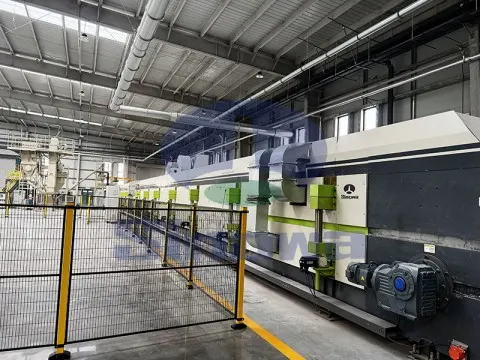
Constant-temperature curing and structural shaping processes further stabilize the comprehensive performance of semi-finished phenolic foam panels in the machine. After composite molding, the preliminary formed panels enter the intelligent curing oven with circulating hot air system. The equipment maintains a stable and uniform temperature environment inside the curing area to promote complete cross-linking and solidification of the phenolic resin molecular structure. Sufficient and balanced curing eliminates residual active components inside the foam material, avoiding later deformation, shrinkage or performance attenuation of the panels. The circulating hot air design ensures no local overheating or under-curing, making the internal pore structure and overall hardness of the panels more uniform. This curing link is crucial for improving the durability, fire resistance and dimensional stability of finished products, enabling the panels to adapt to complex long-term service environments.
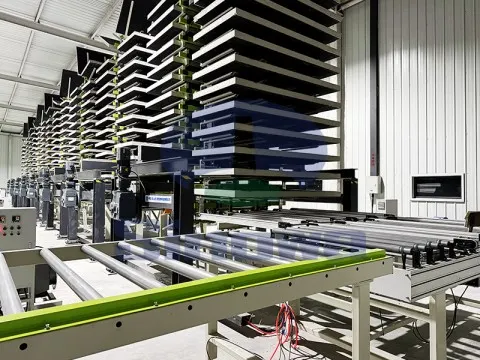
Precision cutting and fixed-size shaping modules endow the phenolic insulation panel manufacturing line with flexible product customization capabilities. After complete curing and shaping, the continuous long strip of composite panels is automatically transported to the cutting unit through the conveyor system. The high-precision cutting mechanism can adjust cutting length and width according to different usage requirements, realizing fixed-size cutting of standard and non-standard panels. The equipment adopts smooth and burr-free cutting technology to ensure neat panel edges without damage to the surface protective layer and internal foam structure. In addition, the system supports fine trimming and edge smoothing processes to optimize the overall appearance and assembly adaptability of finished panels. This automated cutting process replaces traditional manual cutting, greatly improves product dimensional accuracy and production efficiency, and reduces material loss rate.
Intelligent monitoring and automatic adjustment systems are important configurations that ensure the stable and efficient operation of the phenolic foam insulation panel machine. The whole production process is covered by a real-time data monitoring system, which can track key parameters such as raw material ratio, foaming temperature, lamination pressure and curing time in real time. Once parameter deviation is detected, the system will automatically make fine adjustments to restore the production state to the optimal range without stopping the machine. The centralized control panel integrates all operation functions, enabling operators to set production parameters, view operating data and monitor equipment status in real time. Meanwhile, the equipment is equipped with overload protection and fault early warning functions, which can timely identify abnormal operation risks, effectively reduce equipment failure rate and production safety hazards, and ensure long-term stable continuous production.
Energy-saving design and low-consumption operation characteristics make the phenolic foam insulation panel machine economical and environmentally friendly in long-term production. The equipment adopts optimized heating cycle and heat preservation structures, which effectively reduce heat loss during the curing and foaming process and improve energy utilization efficiency. The fully enclosed raw material conveying and processing system avoids volatile gas leakage and raw material waste, complying with environmental protection production requirements. In terms of mechanical operation, the optimized transmission structure reduces friction loss and equipment power consumption during operation. Compared with traditional intermittent production equipment, this continuous machine significantly reduces unit energy consumption and material loss per panel. Its low-noise and low-pollution operation mode not only improves the on-site production environment but also reduces the comprehensive production cost for users.
Simple maintenance and strong operational compatibility improve the practical application value of the phenolic foam insulation panel machine. The equipment adopts modular structural design, with each functional module relatively independent, which facilitates daily inspection, cleaning and component replacement. Key operating parts are made of wear-resistant and corrosion-resistant materials, extending the service life of the equipment and reducing frequent maintenance frequency. The machine has strong compatibility with raw materials and surface layer materials, and can adapt to different formula ratios and composite materials to produce insulation panels with different performance characteristics. In addition, the equipment occupies a reasonable space and is convenient for installation and layout in various production workshops. Its simple and standardized operation logic reduces the technical threshold for operators, making it suitable for large-scale industrial production and small-batch customized production.
The phenolic foam insulation panel machine drives the upgrading of insulation material manufacturing by virtue of its automated, high-precision and high-stability production advantages. The panels produced by this equipment have uniform closed-cell structure, excellent thermal insulation, fire resistance and sound insulation performance, and are widely applicable to building exterior wall insulation, roof energy conservation, cold storage insulation and industrial pipeline insulation scenarios. With the continuous improvement of energy-saving and environmental protection requirements in various industries, the equipment’s efficient and green production characteristics make it an important choice for modern insulation material production. Its continuous and intelligent production mode effectively promotes the standardized development of phenolic foam insulation panel industry, providing reliable equipment support for high-quality energy-saving engineering construction.
Gallery of Phenolic Foam Insulation Panel Machine
Tags: phenolic foam insulation panel machine, phenolic foam insulation panel machine manufacturer, phenolic foam insulation panel machine supplier, china phenolic foam insulation panel machine, phenolic foam insulation panel machine for sale
https://www.sandwichpanelmanufacturingline.com/blog/phenolic-foam-insulation-panel-machine.html
-

A reliable PU sandwich panel production line serves as the core equipment for manufacturing high-performance building insulation panels. This professional PU sandwich panel line features automated feeding, foaming and molding processes to ensure consistent panel thickness and structural stability. The well-designed polyurethane sandwich panel production line effectively improves production efficiency while reducing material waste in daily operation. Each calibrated polyurethane sandwich panel line can adapt to different panel sizes to meet diverse construction needs. With precise temperature and pressure control, the advanced continuous PU sandwich panel line produces panels with excellent thermal insulation and weather resistance. Meanwhile, the optimized PIR sandwich panel production line upgrades the foaming formula to enhance fire resistance performance. The high-efficiency PIR sandwich panel line maintains stable operation during long-term mass production, delivering durable and high-quality sandwich panels for various architectural and industrial applications.
-

The phenolic panel production line realizes automated and continuous manufacturing of high-performance thermal insulation panels through streamlined and coordinated processing procedures.
-

Modern insulation panel manufacturing relies on professional automated equipment to ensure stable product quality and high production efficiency. The rock wool sandwich panel production line features precise material lamination and forming processes to produce rigid, heat-insulating building panels. Meanwhile, the mineral wool sandwich panel production line adopts optimized assembly procedures to fabricate lightweight, soundproof panels widely used in architectural enclosure and thermal preservation projects.