Soundproof Rock Wool Sandwich Panel Line
Publication Date: Sep 30, 2026
The soundproof rock wool sandwich panel line is a fully automated industrial production system designed to manufacture high-performance acoustic insulation panels. It integrates multiple precise processes to produce composite panels with outstanding sound absorption, thermal insulation and structural stability for diverse construction applications.
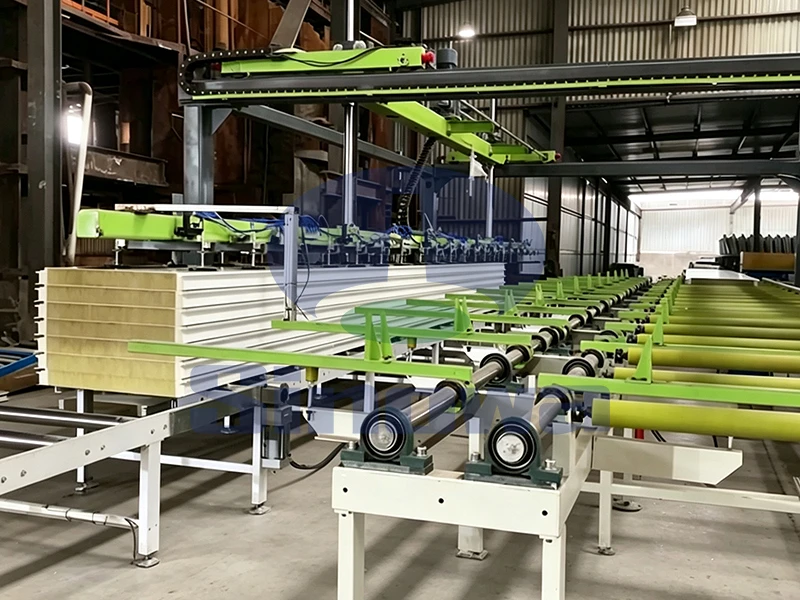
The soundproof rock wool sandwich panel line represents an advanced integrated manufacturing solution dedicated to producing high-quality composite panels centered on sound insulation functionality. Different from ordinary panel production equipment, this production line is specially optimized for the acoustic performance of finished products, focusing on improving the internal structural compactness and fiber arrangement uniformity of rock wool core materials. The entire production process adopts continuous automated operation, which effectively avoids performance fluctuations caused by manual intervention and ensures the consistency of sound insulation effects of each batch of panels. It combines physical molding and composite bonding technologies to endow ordinary building panels with excellent noise reduction capabilities, making them widely applicable in noise-sensitive architectural and industrial scenarios. The systematic process design also balances production efficiency and product quality, realizing large-scale standardized production of soundproof sandwich panels while maintaining stable comprehensive performance.
Raw material pretreatment serves as the foundational procedure of the entire production line and directly lays the groundwork for the final soundproof performance of sandwich panels. The core raw material, rock wool, is an inorganic mineral fiber material with natural porous structures that contribute to sound absorption. In the pretreatment stage, the production line conducts impurity removal, fiber loosening and density homogenization treatment on raw rock wool materials. This process eliminates agglomerated fiber blocks and residual impurities, ensuring that the rock wool core layer forms a uniform and fluffy porous structure. Meanwhile, the metal outer plates used for panel surface protection undergo surface cleaning and preliminary leveling treatments to remove dust, oil stains and surface irregularities. Uniform raw material quality can effectively prevent local sound leakage and performance differences of finished panels, maximizing the sound wave dissipation and absorption effect of rock wool fibers.
Uncoiling and precision forming of surface metal plates are essential pre-production processes in the assembly workflow of the production line. The production line is equipped with automatic uncoiling devices that steadily release continuous metal coil materials at a constant speed, avoiding tension deformation and wrinkling of metal plates during feeding. Subsequent precision roll forming units reshape flat metal plates into standardized plate structures with fixed thickness and flatness through multi-group rolling operations. The whole forming process adopts gradual pressure adjustment to ensure the surface flatness and edge regularity of metal plates. Well-formed outer plates can form a tight fit with the rock wool core layer in the subsequent composite process, reducing interface gaps that may cause sound transmission. This automated forming process also improves the overall flatness and structural uniformity of finished panels, further optimizing the basic conditions for sound insulation performance.
Adhesive coating and interfacial composite treatment are core processes that determine the bonding strength and overall soundproof stability of sandwich panels. The production line adopts a fully automatic quantitative glue spraying system, which evenly sprays high-performance environmentally friendly polymer adhesive on the inner surfaces of upper and lower metal plates and both sides of the rock wool core layer. The microcomputer control system accurately adjusts the glue application amount and spraying range according to the panel specification standards, effectively avoiding glue overflow, local glue shortage or uneven coating problems. The selected adhesive features fast curing speed, strong adhesion and excellent aging resistance. After uniform coating, the adhesive can fill the tiny gaps between metal plates and rock wool fibers, forming a seamless composite interface. This tight bonding structure eliminates tiny sound transmission gaps between layers, ensuring that external noise can be fully absorbed and blocked by the rock wool core layer.
Rock wool core layer directional arrangement and pre-compression molding are key links to enhance the sound insulation performance of panels. Ordinary rock wool materials have disordered fiber arrangement, which limits the full play of sound absorption effect. This professional production line is equipped with a unique fiber orientation adjustment mechanism, which arranges rock wool fibers in a vertical direction perpendicular to the metal outer plates. This directional arrangement optimizes the internal porous structure of the core layer, forming more continuous and uniform sound absorption channels for noise waves. Meanwhile, the intelligent pre-compression device carries out constant-pressure fine compression on the arranged rock wool core layer to control the core layer density within a reasonable and uniform range. Appropriate density not only ensures sufficient porosity for sound absorption, but also avoids excessive looseness causing structural hollowing and sound transmission, greatly improving the medium and low frequency noise reduction capacity of finished panels.
Integrated lamination and constant-temperature curing process further stabilizes the composite structure and acoustic performance of sandwich panels. After the completion of glue coating and core layer arrangement, the production line sends the assembled plate body into the double-belt lamination equipment for integral pressing and compounding. The equipment maintains constant pressure and uniform pressing speed throughout the process to ensure that the upper and lower metal plates and the rock wool core layer are closely bonded without dislocation or deformation. The subsequent constant-temperature curing system provides a stable temperature environment for adhesive curing, promoting the rapid and full reaction of the adhesive to form a high-strength bonding layer. Sufficient curing treatment avoids later degumming, layering and structural deformation of panels caused by incomplete adhesive curing. A stable integrated composite structure can maintain long-term stable sound insulation effect and structural durability in complex application environments.
Precision cutting and edge finishing processes ensure the dimensional accuracy and overall sealing performance of finished soundproof panels. After integral curing and molding, the continuous composite plate body is conveyed to the automatic cutting unit, which performs fixed-length cutting according to customized size parameters. The high-precision cutting device adopts stable blade operation to ensure smooth and flat cutting sections without burrs or fiber tilting. The subsequent edge trimming process polishes and seals the panel edges, trimming irregular edges and filling the tiny gaps at the edge joints. Perfect edge sealing treatment effectively blocks the sound transmission channels at the panel edges, which is crucial for improving the overall sound insulation effect of the panel. Accurate dimensional control and fine edge treatment also enable the panels to achieve tighter assembly and docking in actual construction, reducing the overall noise leakage of the building enclosure structure.
Cooling and structural shaping are indispensable post-molding processes to stabilize panel comprehensive performance. The newly cured composite panels retain certain temperature and internal structural stress, which may cause slight deformation and performance instability after natural placement. The production line is equipped with a circulating air cooling system, which conducts uniform and slow cooling on the surface and interior of the panels to eliminate internal stress generated during high-temperature curing and pressing. The gradual cooling mode avoids rapid temperature change causing plate body cracking, warping or adhesive performance attenuation. After cooling, the panels enter the structural shaping stage to further calibrate flatness and overall thickness consistency. This process ensures that the finished panels maintain stable structural morphology and consistent sound insulation parameters in long-term use, improving product reliability and service life.
Automatic inspection and stacking packaging processes guarantee the qualified rate and storage quality of finished soundproof panels. The production line is equipped with online intelligent detection devices, which conduct real-time inspection on the bonding compactness, surface flatness, dimensional accuracy and internal structural uniformity of finished panels. The system automatically screens out unqualified products with structural defects or performance deviations to ensure that all delivered products meet performance requirements. Qualified panels are automatically conveyed to the stacking unit for orderly layered stacking, with flexible protective materials placed between each panel to avoid surface scratch and extrusion deformation. The final sealed packaging can effectively isolate external dust, moisture and atmospheric erosion during transportation and storage, preventing the attenuation of sound insulation performance caused by rock wool core layer moisture absorption and pollution.
The technological advantages and application value of the soundproof rock wool sandwich panel line are increasingly prominent in modern green construction. Compared with traditional manual or semi-automatic production equipment, this fully automated production line realizes precise control of every production link from raw material processing to finished product packaging. The standardized production mode greatly improves the consistency of panel sound insulation, thermal insulation and structural performance, while significantly boosting production efficiency. The produced soundproof rock wool sandwich panels not only have efficient multi-band noise reduction capability, but also possess good thermal insulation and fire resistance. They are widely used in building exterior walls, roofs, indoor partition walls, industrial plant enclosures and other scenarios, providing reliable acoustic environment optimization solutions for modern buildings and industrial spaces.
Gallery of Soundproof Rock Wool Sandwich Panel Line
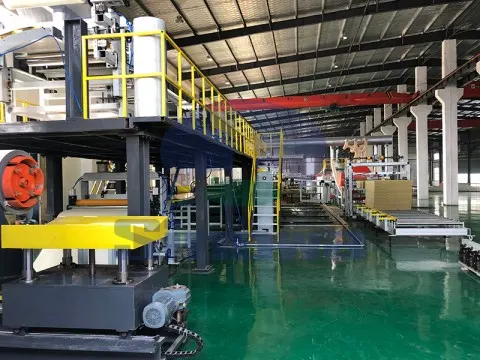
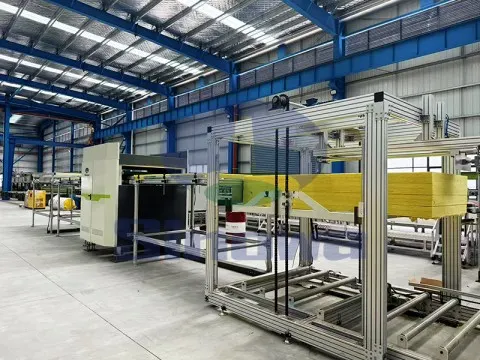
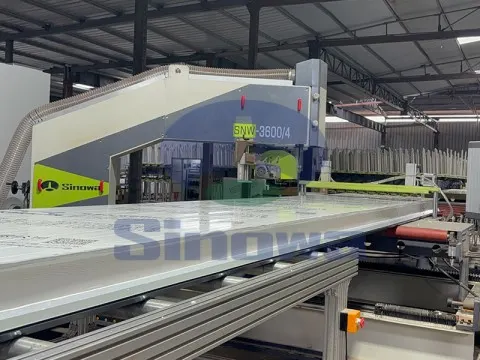
Tags: soundproof rock wool sandwich panel line, soundproof rock wool sandwich panel line manufacturer, soundproof rock wool sandwich panel line supplier, china soundproof rock wool sandwich panel line, soundproof rock wool sandwich panel line for sale
https://www.sandwichpanelmanufacturingline.com/blog/soundproof-rock-wool-sandwich-panel-line.html
-
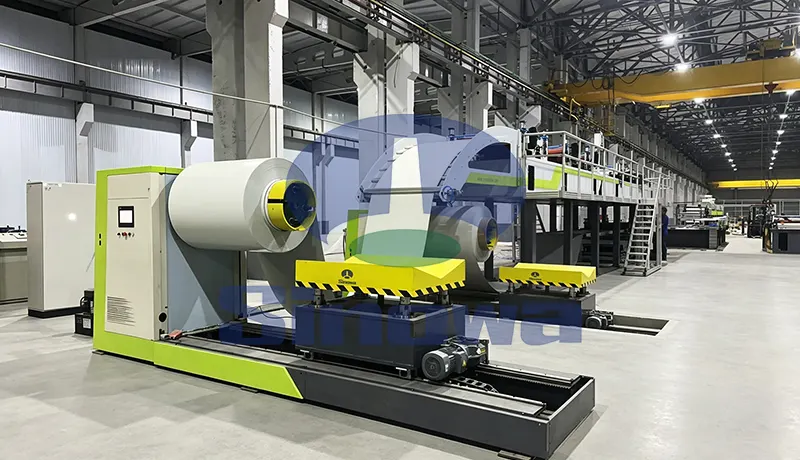
A reliable PU sandwich panel production line serves as the core equipment for manufacturing high-performance building insulation panels. This professional PU sandwich panel line features automated feeding, foaming and molding processes to ensure consistent panel thickness and structural stability. The well-designed polyurethane sandwich panel production line effectively improves production efficiency while reducing material waste in daily operation. Each calibrated polyurethane sandwich panel line can adapt to different panel sizes to meet diverse construction needs. With precise temperature and pressure control, the advanced continuous PU sandwich panel line produces panels with excellent thermal insulation and weather resistance. Meanwhile, the optimized PIR sandwich panel production line upgrades the foaming formula to enhance fire resistance performance. The high-efficiency PIR sandwich panel line maintains stable operation during long-term mass production, delivering durable and high-quality sandwich panels for various architectural and industrial applications.
-
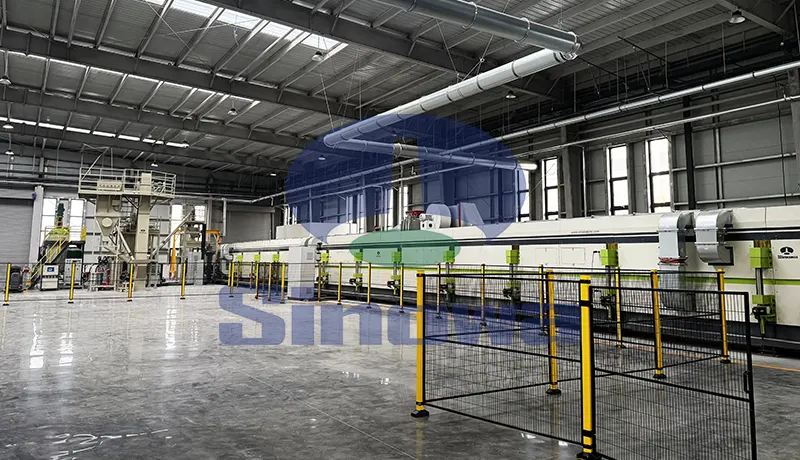
The phenolic panel production line realizes automated and continuous manufacturing of high-performance thermal insulation panels through streamlined and coordinated processing procedures.
-
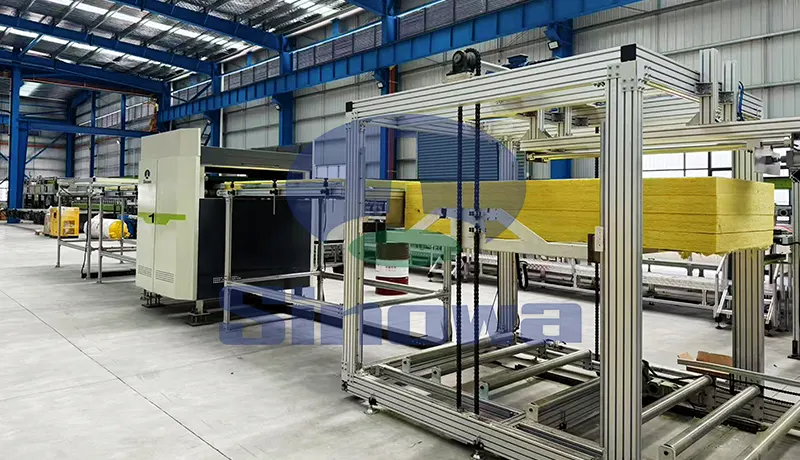
Modern insulation panel manufacturing relies on professional automated equipment to ensure stable product quality and high production efficiency. The rock wool sandwich panel production line features precise material lamination and forming processes to produce rigid, heat-insulating building panels. Meanwhile, the mineral wool sandwich panel production line adopts optimized assembly procedures to fabricate lightweight, soundproof panels widely used in architectural enclosure and thermal preservation projects.