How To Improve The Production Speed Of The Rock Wool Sandwich Panel Line?
Publication Date: Oct 9, 2026
Improving the production speed of rock wool sandwich panel lines relies on equipment optimization, process refinement, operational management and regular maintenance.
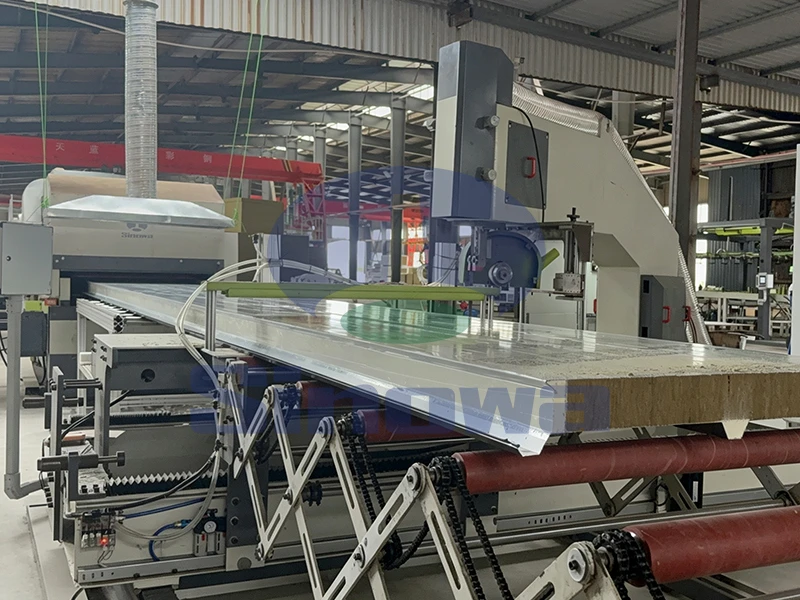
Upgrading core transmission and conveying systems is one of the most fundamental ways to accelerate rock wool sandwich panel production. Many traditional production lines suffer from unstable material transmission, shaft misalignment and intermittent speed fluctuations during long-term operation, which disrupt continuous production and lower overall efficiency. Replacing outdated rigid connecting components with high-performance flexible transmission parts can effectively compensate for shaft position deviations and reduce operational resistance. This optimization eliminates abnormal vibration and speed jitter during high-load continuous operation, ensuring synchronous and stable delivery of rock wool cores and steel surface materials. With a smooth and consistent conveying process, the line avoids frequent minor pauses caused by transmission failures, shortening the single-panel production cycle and laying a solid foundation for sustained speed improvement in mass production.
Optimizing raw material pretreatment processes greatly cuts redundant production time and streamlines subsequent composite processing. Unstandardized raw material pretreatment often leads to uneven rock wool cutting, irregular material shapes and untrimmed steel edge burrs, which cause jams and rework in forming and laminating stages. Establishing a standardized one-step pretreatment workflow integrates material cutting, shaping and surface cleaning into a continuous automated process. This eliminates manual intervention and repeated material handling between separate pretreatment stations. Uniformly processed raw materials fit perfectly with follow-up production equipment parameters, reducing equipment blockages and product defects. Less rework and unplanned stops directly improve the effective operating time of the production line and raise hourly output efficiency.
Enhancing the automation and intelligent control level of the production line effectively reduces human error and operational delays. Semi-automatic production modes rely heavily on manual parameter adjustment and material inspection, which are slow and inconsistent. Upgrading to integrated servo control systems enables precise, automatic adjustment of production parameters such as conveying speed, laminating pressure and bonding allocation. The intelligent system can automatically adapt to different panel thicknesses and structural specifications without manual parameter resetting, which saves valuable switching time between product batches. In addition, real-time data monitoring functions track operational status, helping operators spot minor abnormalities early. Timely pre-adjustment prevents small faults from evolving into large-scale production halts, maximizing continuous production time.
Implementing scientific equipment routine maintenance schedules minimizes unplanned downtime that restricts production speed. Many production lines operate continuously with insufficient maintenance, leading to worn rollers, aging transmission parts and accumulated internal dust, all of which slow down operational speed. Formulating a targeted daily, weekly and monthly maintenance plan covers key components including conveying rollers, laminating devices and bonding systems. Daily simple inspections clean surface dust and check component tightness; regular in-depth maintenance replaces worn parts and calibrates equipment precision. Proactive maintenance avoids sudden equipment failures and long-time shutdown repairs. Stable equipment operation maintains consistent production speed and avoids efficiency drops caused by degraded mechanical performance during long working hours.
Optimizing production line process layout eliminates operational dead zones and improves production continuity. Unreasonable traditional layout often leads to long material transmission distances, cross-operation interference and scattered processing stations, increasing material transit time and operational delays. Rearranging station distribution to form a compact linear continuous production flow connects pretreatment, core material laying, composite pressing, trimming and discharging seamlessly. This integration cancels redundant material transfer links between independent stations and realizes one-piece continuous processing. A streamlined layout also reduces manual material handling and movement, cutting down auxiliary operation time. Every optimized link shortens the overall production cycle and raises the line’s continuous operational efficiency.
Standardizing operator operation specifications reduces human-caused operational delays and production errors. Irregular manual operations, including improper parameter adjustment, unskilled material feeding and non-standard equipment startup and shutdown, often cause temporary production pauses and unqualified products requiring rework. Establishing unified, detailed operational guidelines standardizes every step from equipment startup, material feeding, parameter monitoring to finished product discharging. Regular professional skill training improves operators’ proficiency in equipment operation and abnormal condition handling. Skilled and standardized operation reduces misoperation rates, shortens response time for routine operational steps, and ensures the production line runs at a stable and efficient rated speed without artificial speed limitations.
Optimizing bonding and laminating processes solves core process bottlenecks restricting production speed. The bonding curing and composite pressing stages are key speed-limiting links in rock wool sandwich panel production. Unreasonable pressure settings, uneven glue distribution and improper temperature control often lead to insufficient bonding quality, forcing the line to reduce speed for quality assurance. Fine-tuning laminating pressure and working temperature parameters according to material characteristics ensures uniform bonding and rapid curing without sacrificing product quality. Optimizing the glue spraying system realizes precise and even glue output, avoiding overflow or insufficient coating that causes quality problems. Stable and reliable bonding and laminating processes allow the production line to maintain a higher continuous operating speed while ensuring product qualification rate.
Adopting dual-track synchronous operation mode significantly improves unit time production capacity compared with single-track lines. Traditional single-track production can only complete one set of material processing and molding procedures at a time, with low space and equipment utilization. The dual-track structure enables parallel operation of material pretreatment, core material assembly and composite molding processes. Two groups of production procedures proceed synchronously without mutual interference, making full use of equipment operating time and production space. This parallel working mode greatly improves the line’s hourly production output without extending working hours. Synchronous positioning and conveying systems ensure consistent operation of dual tracks, maintaining stable product quality while realizing efficient batch production.
Strengthening real-time production monitoring and data analysis supports continuous speed optimization. Traditional production management relies on manual statistics and experience judgment, making it hard to identify subtle efficiency bottlenecks. Installing a full-process data monitoring system collects real-time data on conveying speed, operational downtime, product yield and equipment load. Analyzing these operational data accurately locates inefficient links, such as frequent minor pauses in a certain station or low utilization of individual equipment. Targeted adjustments and optimizations can be made for weak links instead of blind overall speed improvement. Data-driven optimization makes production speed upgrade more scientific and effective, achieving steady and long-term efficiency growth.
Reasonable production scheduling and workflow optimization maximize effective production time. Disordered production arrangements, frequent product batch switching and unreasonable working hour allocation lead to low production efficiency and speed waste. Formulating scientific production plans arranges similar specification products for centralized batch production, reducing frequent parameter adjustment and equipment debugging time caused by frequent product switching. Optimizing shift arrangements ensures continuous equipment operation without idle time, avoiding repeated startup and shutdown losses. Reasonable scheduling also reserves short maintenance gaps in production intervals to eliminate potential faults without affecting main production progress. Efficient scheduling fully releases the operational potential of the production line and maintains high-speed continuous production status.
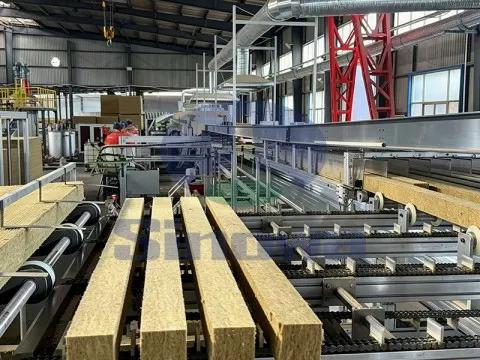
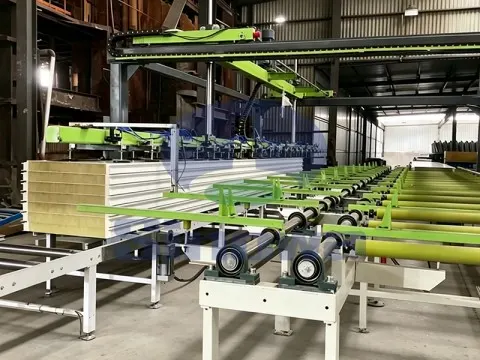
Gallery of Rock Wool Sandwich Panel Line
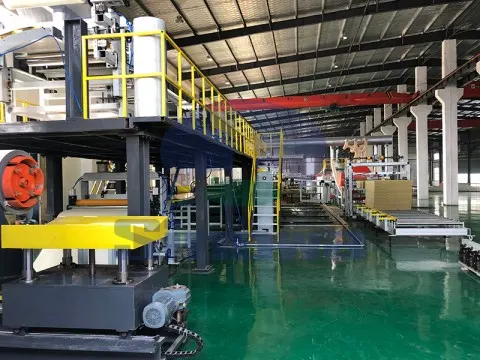
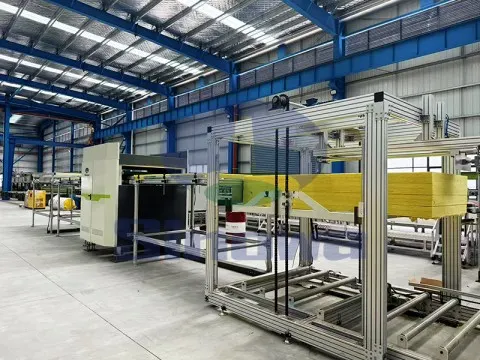
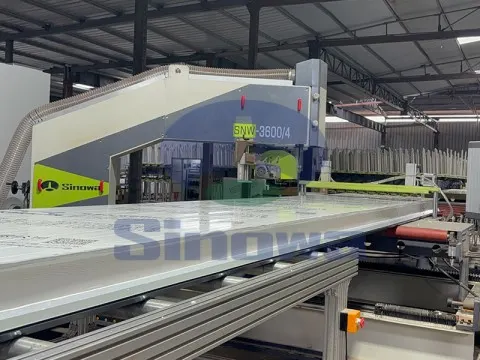
Tags: rock wool sandwich panel line, rock wool sandwich panel line manufacturer, rock wool sandwich panel line supplier, china rock wool sandwich panel line, rock wool sandwich panel line for sale
-
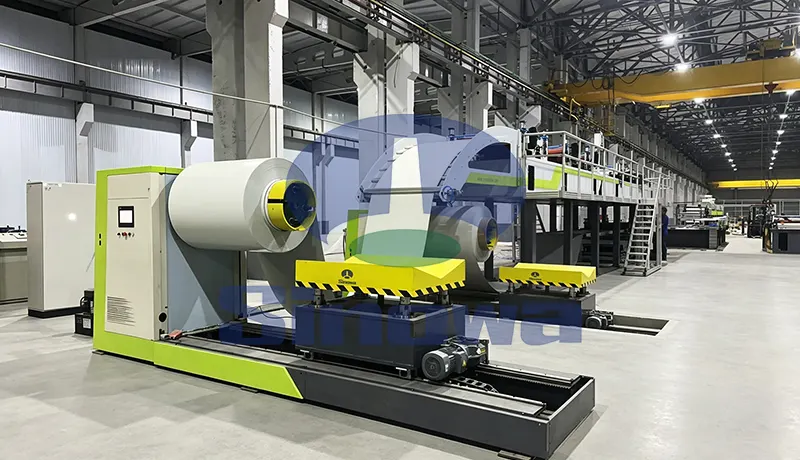
A reliable PU sandwich panel production line serves as the core equipment for manufacturing high-performance building insulation panels. This professional PU sandwich panel line features automated feeding, foaming and molding processes to ensure consistent panel thickness and structural stability. The well-designed polyurethane sandwich panel production line effectively improves production efficiency while reducing material waste in daily operation. Each calibrated polyurethane sandwich panel line can adapt to different panel sizes to meet diverse construction needs. With precise temperature and pressure control, the advanced continuous PU sandwich panel line produces panels with excellent thermal insulation and weather resistance. Meanwhile, the optimized PIR sandwich panel production line upgrades the foaming formula to enhance fire resistance performance. The high-efficiency PIR sandwich panel line maintains stable operation during long-term mass production, delivering durable and high-quality sandwich panels for various architectural and industrial applications.
-
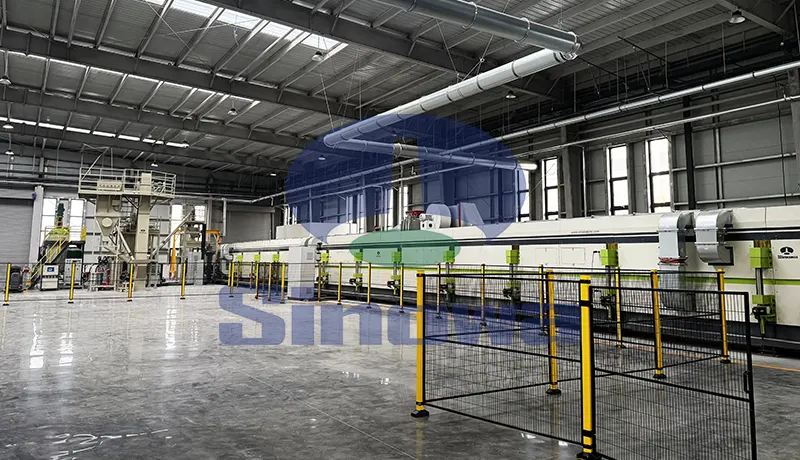
The phenolic panel production line realizes automated and continuous manufacturing of high-performance thermal insulation panels through streamlined and coordinated processing procedures.
-
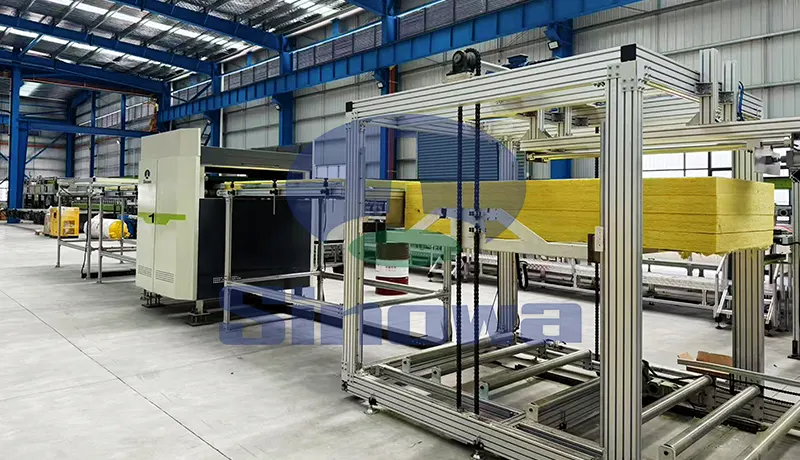
Modern insulation panel manufacturing relies on professional automated equipment to ensure stable product quality and high production efficiency. The rock wool sandwich panel production line features precise material lamination and forming processes to produce rigid, heat-insulating building panels. Meanwhile, the mineral wool sandwich panel production line adopts optimized assembly procedures to fabricate lightweight, soundproof panels widely used in architectural enclosure and thermal preservation projects.