What Causes Uneven Foam Filling On The PUF Sandwich Panel Manufacturing Line?
Publication Date: Oct 8, 2026
Uneven foam filling is a prevalent quality defect in PUF sandwich panel production, leading to inconsistent core density, voids, and structural flaws.
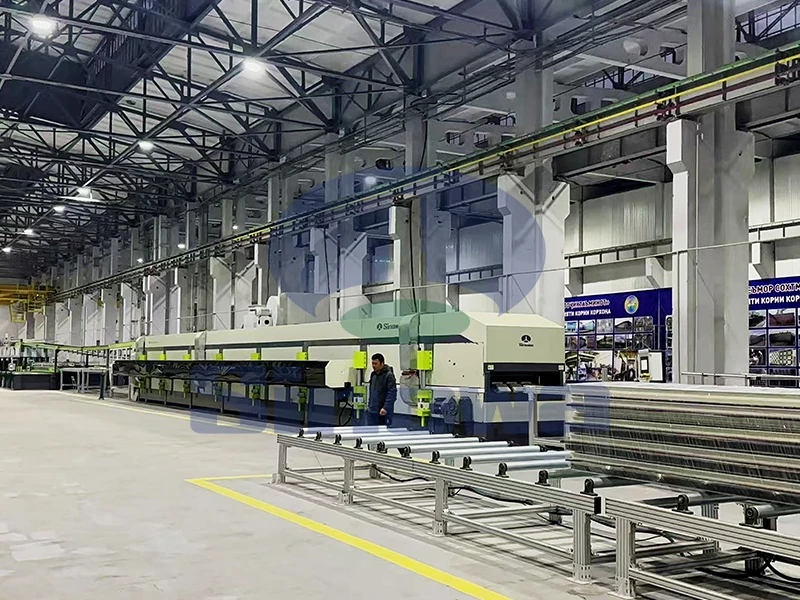
Imbalanced proportion of polyol and isocyanate raw materials stands as one of the most fundamental triggers for uneven PUF foam filling during production. PUF foam formation relies on a precise chemical reaction between these two core components, and even minor deviations in their mixing ratio can disrupt the foaming process thoroughly. When the isocyanate content is excessively high, the foam cures too quickly, forming rigid cell structures that fail to spread evenly across the panel cavity, leaving unfilled gaps and dense foam clusters in localized areas. Conversely, insufficient isocyanate leads to slow and incomplete curing, resulting in soft, low-density foam regions that sag unevenly before full molding. Long-term operation of metering pumps often causes slight calibration drift, while inconsistent manual feeding or blocked material pipelines can also disrupt stable component proportioning. This ratio imbalance does not only cause uneven filling but also undermines the overall structural stability and thermal insulation performance of finished panels.
Unstable raw material temperature is another critical factor that induces irregular foam filling in PUF sandwich panel manufacturing. The viscosity and reaction activity of polyol and isocyanate are highly temperature-dependent, and fluctuating material temperatures directly alter foaming fluidity and curing speed. Low material temperature increases fluid viscosity significantly, making the mixed foam solution difficult to flow freely into every corner of the panel mold or conveyor cavity. The thickened material tends to accumulate near the pouring point and cannot spread uniformly, creating sparse foam areas at panel edges and distant sections. In contrast, overly high temperatures accelerate the chemical reaction rate sharply, shortening the foam’s flowable cream time. The foam cures rapidly before completing full cavity filling, resulting in random voids and uneven thickness distribution. Additionally, inconsistent temperatures between polyol and isocyanate disrupt synchronous reaction progress, further exacerbating filling irregularities across the panel core.
Defective mixing performance of the foaming machine’s mixing head directly leads to non-uniform PUF foam filling in continuous production lines. The mixing head undertakes the core task of blending polyol, isocyanate, and auxiliary additives into a homogeneous solution before foaming. Long-term operational wear often causes internal abrasion of mixing blades or nozzle blockage by residual cured foam, which destroys the original uniform mixing state. Inadequate mixing leaves partial raw material components unreacted or unevenly distributed, forming foam mixtures with inconsistent viscosity and reactivity in different regions. When such heterogeneous mixtures are poured into the panel cavity, some areas foam rapidly with dense cell structures while others foam weakly with loose pores. Moreover, unstable mixing pressure inside the mixing head during operation causes intermittent material ejection, leading to fluctuating pouring volume per unit area and resulting in alternating thick and thin foam layers throughout the panel core.
Mismatched coordination between conveyor line speed and foam reaction characteristics frequently causes uneven foam filling in automated PUF sandwich panel production. Each PUF foam formulation has a fixed cream time, rise time, and curing cycle that determines its flow and molding timeline. If the conveyor speed is excessively fast, the foam cannot fully spread and expand within the effective flowable period before being carried forward by the belt. The incomplete spread leaves unfilled gaps at panel edges and middle sections, with uneven foam thickness along the production direction. On the other hand, an overly slow conveyor speed allows the foam to expand excessively in local areas, causing foam accumulation, bulges, and overflow in certain positions while other sections suffer from insufficient filling. Additionally, inconsistent conveyor speed caused by mechanical wear or unstable drive operation creates intermittent advancing speeds, disrupting the continuous and uniform spreading of foam and forming irregular filling defects on panel surfaces and interiors.
Improper mold and conveyor gap settings are common mechanical causes of uneven PUF foam filling in panel production. The upper and lower belt gaps and side baffle spacings of the production line determine the molding space for PUF foam, and unreasonable gap parameters directly affect foam expansion and filling effects. Uneven gap widths across different positions of the conveyor—such as narrower gaps at the inlet and wider gaps at the outlet—lead to inconsistent foam compression and expansion degrees during molding. Foam in wider gap areas expands excessively to form thick layers, while foam in narrower gaps is compressed thin or fails to fill the space fully. Loose or misaligned side baffles cause local foam leakage, resulting in edge insufficient filling and irregular foam edges. Meanwhile, residual debris or uneven wear on the conveyor belt surface creates tiny gaps and height differences, preventing the foam from adhering and spreading evenly, thus triggering partial filling voids and density inconsistencies.
Fluctuations in pouring trajectory and swing speed of the foaming pendulum system contribute greatly to uneven PUF foam filling in continuous production. The pendulum pouring device is designed to uniformly distribute foam materials across the width of the moving panel substrate through regular reciprocating swings. Mechanical faults such as loose pendulum bearings, unstable motor operation, or worn transmission parts cause irregular swing speeds and offset trajectories. Some areas receive excessive foam material due to slow pendulum movement or repeated pouring, forming dense, thick foam regions, while areas with fast or missing pendulum swings suffer from material shortage and sparse filling. In addition, inappropriate pendulum swing range that fails to cover the entire panel width leads to consistent insufficient filling at both panel edges. Uncalibrated pendulum stroke and asymmetric swing rhythm further amplify lateral filling differences, making the foam core density and thickness uneven across the entire panel width.
Irregular ambient working environment conditions interfere with PUF foam foaming uniformity and cause filling defects. Workshop temperature, humidity, and air flow all impact the foam’s reaction and molding process significantly. Low ambient temperature slows the overall foaming reaction, reducing foam fluidity and limiting its ability to fill narrow mold corners and edge spaces, easily producing voids and incomplete filling areas. High ambient humidity enables moisture in the air to react with isocyanate, generating extra gas bubbles that disrupt the uniform cell structure of the foam, forming porous loose areas and uneven density distribution. Strong indoor air flow blows the uncured liquid foam, causing local material displacement and uneven thickness. Moreover, unstable ambient conditions with frequent temperature and humidity changes make the foaming state inconsistent in different production periods, resulting in random uneven filling defects in batch-produced panels.
Improper addition and uneven dispersion of foam auxiliary additives induce PUF foam filling irregularities in panel manufacturing. Catalysts, blowing agents, and stabilizers are essential to regulate foam reaction speed, cell structure, and fluidity. Insufficient or excessive catalyst dosage disrupts the balanced foaming reaction: inadequate catalyst slows partial reaction and causes incomplete expansion, while excessive catalyst leads to rapid local curing and premature foam shaping before full cavity filling. Uneven dispersion of blowing agents creates inconsistent gas generation in different foam areas, resulting in non-uniform expansion volume and dense-sparse alternating foam structures. Foam stabilizer distribution anomalies fail to maintain uniform bubble stability, causing partial bubble rupture and foam collapse. These unbalanced additive effects directly lead to inconsistent foam fluidity and molding performance, producing widespread uneven filling and internal void defects in panel cores.
Accumulated equipment dirt and inadequate daily maintenance exacerbate uneven PUF foam filling in long-term production lines. Residual cured foam, material precipitates, and dust often adhere to mixing head nozzles, material pipelines, conveyor belts, and mold inner walls after prolonged operation. Blocked nozzles cause unsmooth material ejection and unstable pouring volume, leading to insufficient foam supply in local panel areas. Residual dirt on conveyor belts and molds creates uneven surface flatness and tiny gaps, hindering the uniform spreading and attachment of liquid foam. In addition, unmaintained metering devices suffer from reduced measurement accuracy, causing continuous subtle deviations in raw material ratio. These accumulated minor equipment problems gradually evolve into obvious filling defects, including uneven foam thickness, inconsistent density, and frequent voids, severely affecting product batch stability.
Abnormal foam curing pressure and lamination stability are key post-pouring factors causing uneven PUF foam filling. After foam pouring, stable lamination pressure is required to ensure uniform foam expansion and full cavity filling. Fluctuating pressure from the laminating machine leads to inconsistent compression force on different panel sections: areas with excessive pressure have overly compressed thin foam layers, while low-pressure areas have over-expanded loose foam. Unbalanced pressure on both sides of the laminating belt causes unilateral insufficient compression, resulting in inclined uneven foam thickness. Meanwhile, delayed or uneven curing pressure application allows partial foam to expand freely and irregularly before full pressure shaping, forming random bulges and unfilled gaps. Poor lamination belt alignment and uneven belt tension also disrupt uniform pressure transmission, further worsening foam filling irregularities and reducing the flatness and structural uniformity of finished sandwich panels.
Gallery of PUF Sandwich Panel Manufacturing Line






Tags: puf sandwich panel manufacturing line, puf sandwich panel manufacturing line manufacturer, puf sandwich panel manufacturing line supplier, china puf sandwich panel manufacturing line, puf sandwich panel manufacturing line for sale
-

A reliable PU sandwich panel production line serves as the core equipment for manufacturing high-performance building insulation panels. This professional PU sandwich panel line features automated feeding, foaming and molding processes to ensure consistent panel thickness and structural stability. The well-designed polyurethane sandwich panel production line effectively improves production efficiency while reducing material waste in daily operation. Each calibrated polyurethane sandwich panel line can adapt to different panel sizes to meet diverse construction needs. With precise temperature and pressure control, the advanced continuous PU sandwich panel line produces panels with excellent thermal insulation and weather resistance. Meanwhile, the optimized PIR sandwich panel production line upgrades the foaming formula to enhance fire resistance performance. The high-efficiency PIR sandwich panel line maintains stable operation during long-term mass production, delivering durable and high-quality sandwich panels for various architectural and industrial applications.
-

The phenolic panel production line realizes automated and continuous manufacturing of high-performance thermal insulation panels through streamlined and coordinated processing procedures.
-

Modern insulation panel manufacturing relies on professional automated equipment to ensure stable product quality and high production efficiency. The rock wool sandwich panel production line features precise material lamination and forming processes to produce rigid, heat-insulating building panels. Meanwhile, the mineral wool sandwich panel production line adopts optimized assembly procedures to fabricate lightweight, soundproof panels widely used in architectural enclosure and thermal preservation projects.