High Density PU Foam Sandwich Panel Line
Publication Date: Oct 26, 2026
High Density PU Foam Sandwich Panel Line: continuous automatic production line for high-density PU foam sandwich panels. Features precise foaming, stable lamination and even core density. Produce rigid insulated panels with strong bonding for wall, roof and cold enclosure applications.
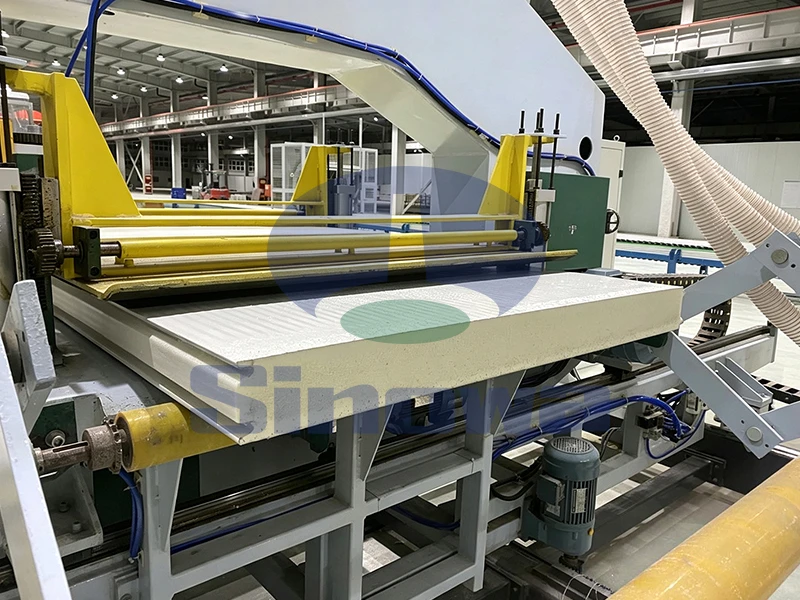
The production system built around high density PU foam sandwich panel line represents a sophisticated integrated manufacturing setup designed to turn raw polymer materials into rigid composite panels with consistent structural and thermal performance. At the core of this line lies the continuous foaming and lamination process, which differs substantially from batch production methods that produce panels one piece at a time. Raw liquid polyol and isocyanate components are delivered through precision metering units that regulate flow rates, mixing ratios and injection pressure with tight accuracy before the blended liquid mixture enters the space between two facing sheets. As the chemical reaction begins, the PU blend expands rapidly and cures under controlled temperature and pressure inside a double belt conveyor section. This expansion fills the cavity completely and bonds firmly to the inner surface of the top and bottom facings, eliminating gaps, voids or weak bonding points that could compromise the finished panel over time. The density of the foam core is carefully shaped by adjusting chemical formulations, reaction speed and the confinement space within the conveyor, allowing operators to achieve the high density characteristic that sets these panels apart from lighter, conventional PU sandwich alternatives. Higher foam density brings improved compressive strength, greater resistance to deformation under static and dynamic loads, and better dimensional stability when exposed to shifts in ambient temperature and humidity. Every segment of the line works in synchronized sequence, from material feeding and mixing, through foaming, pressing, curing and final cutting, so that output maintains uniform thickness, flatness and core density across the full run of production. Operators monitor real-time process parameters through centralized control interfaces, making minor adjustments to maintain stability rather than relying on post-production inspection alone to catch defects. This continuous workflow also reduces material waste compared to discontinuous production, as material application matches the speed of panel movement and excess trimming is limited to the final sizing stage. While the line is engineered for steady long-run operation, it also supports controlled changes to panel thickness and facing material types by reconfiguring guide settings and spacing between the upper and lower belts, giving manufacturers flexibility to produce panels tailored to different application requirements without full disassembly of major components.
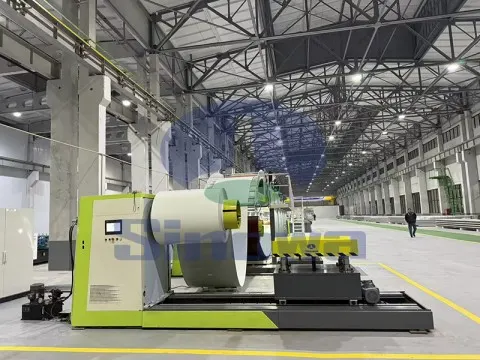
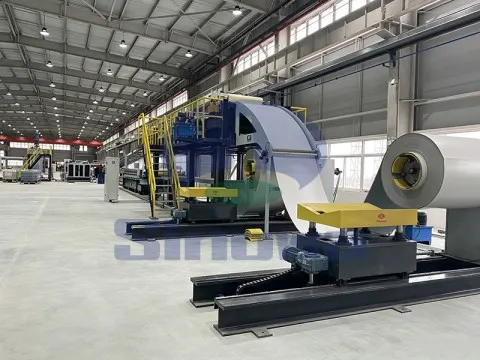
The selection of facing materials paired with high density PU foam core defines much of the panel’s surface properties and end-use suitability, and the sandwich panel line is constructed to accommodate a wide spectrum of facing options without fundamental modification to the foaming system. Common facings include metal sheets with treated surfaces, fiber reinforced sheets and other rigid substrate rolls supplied from unwinding stations positioned at the front of the line. These unwinding stations maintain constant tension as the facings feed forward, preventing wrinkling, stretching or uneven alignment that would create crooked panels or inconsistent foam coverage. Before reaching the foaming zone, the inner sides of the facings can go through optional surface preparation stages that remove contaminants and improve adhesive compatibility with the curing PU foam. This preparatory step is especially valuable for surfaces with low inherent bonding affinity, as the mechanical interlock formed during foam expansion relies on clean, receptive substrate surfaces. Once the two facings move into the forming zone, they are separated by adjustable side dams that define the panel width and contain the expanding foam mixture to prevent overflow along the edges. The liquid PU mixture is distributed evenly across the width of the lower facing, and the controlled upward expansion of the foam presses against the upper facing while the double belt system applies consistent clamping pressure. Unlike low density foam formulations that expand quickly and require less confinement, high density mixtures react and solidify over a slightly adjusted timeline, so the length of the curing tunnel is calibrated to ensure full polymerization before the panel exits the pressure zone. If curing is incomplete at this stage, the foam core may continue to expand after leaving the conveyor, leading to warping, surface bulging or separation between foam and facings. Operators balance line travel speed with reaction timing to match the foam cure profile, and visual and sensor checks track surface flatness as the semi-finished composite advances. The compatibility between facings and foam also affects long-term performance, as mismatched thermal expansion rates can create internal stress cycles when panels experience temperature swings. By matching facing selection to the intended service environment and tuning the foaming parameters accordingly, the line delivers finished panels that preserve the bond between core and skins for extended service life.
Chemical formulation management stands as one of the most critical operational aspects for stable production of high density PU foam within the sandwich panel line, because small variations in component balance directly alter foam cell structure, density, hardness and reaction kinetics. The two primary liquid components are stored in insulated tanks that maintain a stable temperature range, since viscosity changes with heat or cold can disrupt metering precision and mixing quality. Circulation loops keep the materials moving within the storage and delivery piping to prevent settling, phase separation or localized thickening that would disrupt the blend ratio at the mixing head. The high-pressure mixing head combines the polyol blend and isocyanate stream under intense turbulence to create a homogenous liquid mixture in a fraction of a second; poor mixing results in irregular cell structures, soft spots and inconsistent density across the foam core. Additives integrated into the polyol side serve distinct roles, including catalysts that regulate reaction speed, surfactants that stabilize foam cells during expansion, flame retardant components, and modifiers that adjust foam rigidity and toughness. For high density grades, the overall formulation contains lower volumes of blowing agents relative to the solid polymer fraction, which restricts the degree of expansion and creates a tighter, more compact cellular network. Each adjustment to the additive package requires corresponding changes to line speed, mixing pressure and curing temperature, as a faster catalyst system will shorten the available working time before the foam solidifies. Operators conduct periodic sampling of freshly mixed material to observe rise time and cure behavior at the start of each production batch, establishing a baseline before full-speed production commences. Over time, raw material batches can display minor natural variation, so the control system allows gradual, proportional tweaks to flow rates rather than large abrupt shifts that risk creating a large quantity of out-of-specification panels. Proper filtration of feed streams also protects the precision metering pumps and mixing head from solid particles that could block narrow passages or wear internal components, reducing unplanned downtime and extending the working life of key line assemblies.
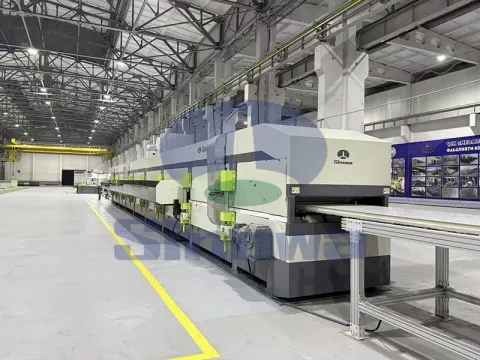
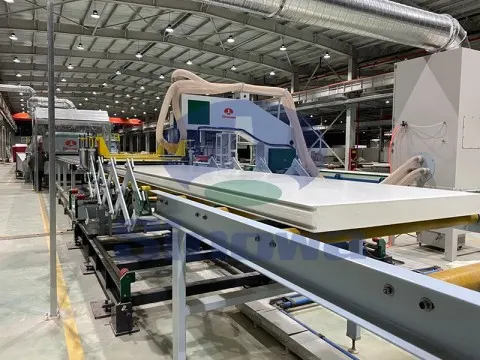
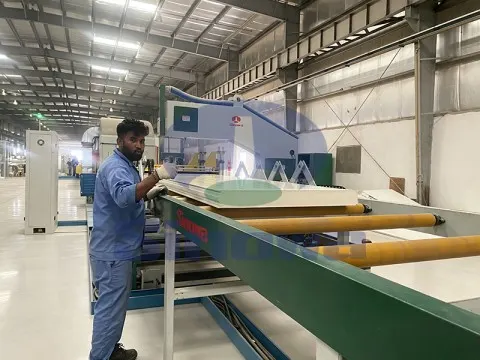
The double belt conveyor and continuous pressing section form the mechanical backbone of the high density PU foam sandwich panel line, delivering the stable confinement and pressure required as the foam undergoes expansion and cross-linking. Two endless, heavy-duty belts run synchronously, one above and one below the moving panel assembly, with the gap between them set precisely to match the target finished panel thickness. These belts are built to resist adhesion from uncured PU material and maintain smooth surface contact, transferring uniform pressure across the entire width and length of the panel as the foam expands and hardens. Support frames beneath and above the belts incorporate adjustable roller arrays that distribute load evenly, avoiding localized high pressure points that would compress the foam unevenly and create thickness deviations. Side guide systems run parallel to the direction of travel, containing the foam at the panel edges and defining the finished width while resisting outward pressure from the expanding core. The length of the pressing and curing tunnel is engineered to provide sufficient residence time for high density foam to complete its chemical reaction; compared to lighter foam cores that cure rapidly, denser formulations need a longer period under controlled pressure to lock in their cellular structure without post-cure deformation. Temperature control channels run through the belt support structure, maintaining a steady thermal environment inside the tunnel. Too low a temperature slows the reaction and leaves the foam under-cured, while excessive heat can accelerate reactions too quickly, trapping internal stress and creating brittle foam cells. The entire belt assembly moves at a steady, synchronized speed linked to the output of the PU metering system, so the volume of foam dispensed matches the advancing panel area. Speed synchronization prevents under-filling that creates thin, weak core sections or over-filling that causes edge blowout and material waste. Sensors embedded along the tunnel track belt tension, gap spacing and surface temperature, feeding real-time data back to the main control system to flag drift from the set operating window. Regular maintenance of the belt surfaces, edge seals and roller bearings is essential, as wear or damage can introduce marks, edge defects or uneven pressure that degrade panel quality in continuous production runs.
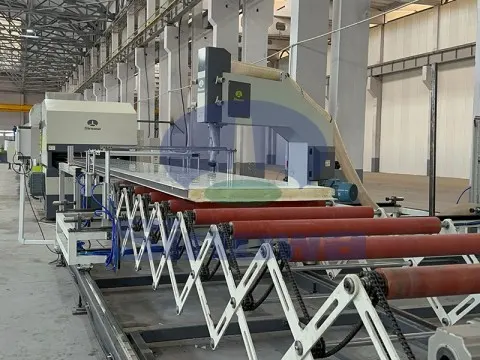
Cutting, trimming and post-processing stations positioned downstream of the curing tunnel transform the continuous endless panel web into individual finished panels of specified lengths, while also handling edge finishing and quality sorting tasks within the high density PU foam sandwich panel line. Immediately after the composite exits the pressing zone, the foam core has achieved full cure and stable dimensions, making it suitable for cutting without risk of shape change. Flying cut-off saw units move in tandem with the forward speed of the panel web during the cut cycle, so the production line does not need to stop or slow down for separation. This on-the-fly cutting preserves continuous production efficiency and avoids the throughput losses associated with static cutting systems. The cutting tools are designed to slice cleanly through both the facing skins and the dense PU foam core, with blade geometry selected to minimize fraying of facing materials and prevent crumbling or chipping of the compact foam edge. Secondary edge trimming stations remove irregular border sections where foam may have contacted the side dams or where alignment produced uneven edges, producing straight, square edges for easier installation and tighter joints when panels are assembled together. Some line configurations include slitting attachments to divide the wide continuous web into narrower panel widths according to order requirements. After cutting and trimming, panels transfer along outfeed conveyors toward inspection and stacking areas. Automated counting and positioning systems arrange panels in neat stacks, with protective separators placed between layers when the facing surfaces are susceptible to scratching or surface damage. The outfeed speed is coordinated with upstream cutting speed to prevent panel collision and jamming. This downstream section also creates space for manual or automated visual inspection, where operators or vision systems check for surface blemishes, edge damage, bonding defects and flatness issues. Panels that do not meet visual criteria are diverted from the main flow for separate handling, while acceptable panels proceed to stacking. The design of the post-processing zone prioritizes gentle handling, because while high density PU foam has good compressive strength, sharp impact or concentrated point loads can still indent the core or damage the facing surface. Well-designed outfeed rollers and transfer mechanisms spread panel weight across wide contact areas to preserve finished appearance and structural integrity.
Control and automation architecture integrated into the high density PU foam sandwich panel line ties every discrete production stage into a single coordinated system, reducing human error and enabling consistent repeatability across long production campaigns. The central control interface displays all key operating parameters on a unified screen, including material flow rates, mixing head pressure, belt speed, tunnel temperature, panel thickness setpoints and cutting length values. Operators can save established parameter profiles for different panel specifications, so switching from one product variant to another relies on recalling a stored profile rather than manually resetting dozens of individual values each time. The automation system maintains interlocks between connected units, halting upstream material feed automatically if downstream stations experience jams or stoppages, which prevents uncured foam from accumulating and creating blockages inside the tunnel. Closed-loop feedback circuits adjust metering pump output based on pressure readings at the mixing head, and adjust belt gap positioning based on thickness measurements taken from the moving panel. This ongoing correction compensates for minor drift in equipment performance and raw material characteristics before defects accumulate. Data logging functions record process conditions for every production run, creating a traceable record of operating settings associated with each batch of panels. This recorded information supports troubleshooting when quality issues emerge, allowing technicians to review how parameters deviated from the target profile during the affected period. The control system also incorporates safety interlocks that disable high-pressure material pumps and moving components when access panels are opened or safety barriers are breached, protecting personnel working near the moving machinery and reactive chemical streams. While automation handles routine regulation of process variables, skilled operators still play a vital role in interpreting trends, responding to unusual readings and performing condition checks that sensors cannot replicate. Training for line operators focuses on understanding the links between formulation, temperature, speed and foam density, so they can recognize the early signs of unstable foaming behavior before large amounts of material are wasted. The balance between automated regulation and informed human oversight creates a robust operating environment that delivers stable output while remaining adaptable to changing production needs.
Maintenance and preventive care routines are essential to sustain reliable operation of a high density PU foam sandwich panel line, as the equipment handles reactive polymer chemicals, continuous mechanical motion and high-pressure fluid streams that can degrade components over time. The mixing head is among the highest priority maintenance points; residual PU material can harden inside internal passages if not flushed properly after production stops, and cured foam buildup will disrupt mixing patterns and eventually block flow paths. Flushing procedures use compatible cleaning fluids to remove leftover reactive components immediately at the end of each run, reducing the need for abrasive cleaning that can scratch precision internal surfaces. Metering pumps and seal assemblies also receive scheduled attention, because worn seals cause material leakage and alter the critical mixing ratio between the polyol and isocyanate streams. Even small leaks not only waste expensive raw materials but can create hazardous buildup of uncured reactants and lead to inconsistent foam density in the panels. The double belt surfaces and edge sealing strips wear gradually from friction and contact with hot foam, so scheduled inspections check for cracking, surface fouling and loss of sealing performance. Damaged edge seals allow foam to escape along panel sides, creating ragged edges and reducing yield. Bearings, drive chains and gear units across the conveyor system require periodic lubrication following defined schedules to reduce friction and heat buildup. Overheating drive components can cause speed fluctuations that disrupt synchronization between foaming and panel travel. Filter elements in the material feed lines are replaced at set intervals to keep particulate contaminants away from precision valves and pumps. Electrical cabinets, sensor housings and control wiring are kept clean and dry, because dust and chemical vapors can corrode connectors and interfere with signal transmission from measurement sensors. Maintenance work is generally scheduled during planned downtime windows rather than mid-run, minimizing disruption to production flow. Technicians also perform regular calibration of thickness sensors, pressure transducers and temperature probes to ensure the readings guiding automatic adjustments remain accurate. A structured maintenance program extends the usable service life of the line, reduces sudden unplanned shutdowns and preserves the consistent quality expected from high density PU sandwich panels through thousands of operating hours.
The functional advantages of panels produced on a high density PU foam sandwich panel line stem directly from the compact cellular structure of the cured foam core and the strong composite bond formed between foam and facings. Compared to panels built with lower density PU foam, these products deliver substantially higher resistance to compressive loading, making them suitable for situations where the panel must support weight or resist crushing forces. The tight cell structure also delivers stable thermal insulation performance, with consistent thermal resistance maintained across the full panel area. The continuous lamination process creates a monolithic core without internal seams, eliminating thermal bridging paths that can appear when smaller foam blocks are assembled manually inside a panel shell. Dimensional stability represents another key benefit; the high density foam resists swelling or shrinking when exposed to cycles of changing humidity and temperature, so panels remain flat and joints stay aligned over long periods. The bond between foam core and facing skins distributes stress across the composite structure, meaning loads applied to the outer surface transfer into the foam core rather than concentrating at isolated points. This composite action improves bending stiffness without requiring excessively thick facing materials. The finished panels also exhibit good sound dampening characteristics relative to many solid materials, as the closed-cell foam structure absorbs and attenuates sound energy passing through the assembly. Surface characteristics are determined by the selected facing materials, and the finished panels can be manufactured with surfaces that are easy to clean, resistant to surface impact or suitable for direct finishing treatments. The combination of insulation, structural rigidity and stable dimensions makes these panels versatile across many different application environments. They can be fabricated in large continuous lengths and cut to custom sizes, which simplifies installation and reduces the total number of joints needed to cover a given surface area. While the material and processing cost for high density foam is higher than lighter PU alternatives, the improved mechanical performance and long-term stability offer value in applications where structural reliability and consistent performance are central requirements.
Understanding the operational limits and handling considerations for panels from a high density PU foam sandwich panel line helps users set realistic expectations and avoid damage during transport, storage and installation. Even with elevated core density, the foam core remains a polymer cellular material, and prolonged exposure to intense direct heat sources can degrade the polymer matrix, breaking down cell structure and reducing mechanical and thermal performance. Direct contact with certain strong solvent chemicals can also attack the foam or facing bonding layer, so exposure to aggressive solvents must be avoided in service environments. When stored, panels should be stacked on level, flat support bases to prevent long-term bending stress; uneven stacking can introduce permanent deformation even though the foam has good rigidity. Covering stacked panels protects facing surfaces from abrasion, ultraviolet exposure and weathering that may degrade surface coatings over time. Lifting and moving large panels should use distributed support points rather than narrow edge lifting that creates high bending stress and may separate the foam core from the facings at the panel ends. Cutting and on-site modification of finished panels requires suitable cutting tools matched to the facing and foam combination, and freshly cut foam edges can be sealed as needed based on service conditions. Joint design when installing the panels accounts for minor thermal movement, allowing controlled expansion and contraction without creating buckling or pulling forces at connection points. Fastener selection must distribute clamping pressure to avoid localized crushing of the foam core beneath fastener heads. While the panels offer excellent compressive strength, concentrated sharp point loads can still create indentations and localized core damage, so protective measures are used where such impacts are likely. Recognizing these practical boundaries does not diminish the capability of the panels, but ensures that the benefits engineered into the material through the continuous sandwich panel line process are preserved through the full service life. Proper handling complements the careful manufacturing process, ensuring that the uniform density, strong bonding and dimensional stability achieved during production are retained after the panels leave the production facility.
Looking ahead, the evolution of high density PU foam sandwich panel line technology continues to focus on refining process control, expanding formulation options and improving overall resource efficiency without sacrificing the core mechanical properties of the finished panels. Equipment developers keep refining metering and mixing hardware to achieve finer control over foam cell morphology, enabling manufacturers to tailor hardness, rigidity and insulation performance within the high density range to match more specialized application needs. Advances in sensor technology add more measurement points along the production path, capturing real-time data on foam rise behavior, internal temperature within the curing core and bond quality between foam and facings. These richer data streams support predictive process adjustment, reducing the need for manual trial runs when introducing new raw material blends or new facing substrates. Line designs also incorporate improved recovery and collection systems for trim waste generated during cutting and edge finishing stages. While PU foam waste cannot simply be fed back into the foaming process directly, improved capture and sorting supports downstream waste handling pathways that reduce overall material loss from production operations. Modular line layouts become more common, allowing manufacturers to add or reposition stations such as surface treatment units, double-sided marking systems or automated packaging modules without rebuilding the entire core foaming and pressing section. This modular approach lets production facilities adapt their output range gradually as market demand shifts. At the formulation level, ongoing development explores alternative raw material feedstocks that can form stable high density closed-cell foam structures while maintaining the critical reaction characteristics required for continuous sandwich panel production. These developments aim to expand the available material choices while keeping the continuous lamination process compatible with existing line infrastructure. Through all these developments, the fundamental operating principle remains unchanged: accurately mixing reactive PU components, expanding and curing the mixture under controlled pressure between facing sheets in a continuous sequence to create a composite panel with a uniformly dense, well-bonded foam core. The enduring appeal of this production method lies in its ability to combine insulation performance and structural strength in a single prefabricated panel, delivered efficiently in continuous lengths that support streamlined fabrication and installation workflows across many different sectors of construction and industrial enclosure building.
Gallery of High Density PU Foam Sandwich Panel Line
Tags: high density pu foam sandwich panel line, high density pu foam sandwich panel line manufacturer, high density pu foam sandwich panel line supplier, china high density pu foam sandwich panel line, high density pu foam sandwich panel line for sale
https://www.sandwichpanelmanufacturingline.com/blog/high-density-pu-foam-sandwich-panel-line.html
-

A reliable PU sandwich panel production line serves as the core equipment for manufacturing high-performance building insulation panels. This professional PU sandwich panel line features automated feeding, foaming and molding processes to ensure consistent panel thickness and structural stability. The well-designed polyurethane sandwich panel production line effectively improves production efficiency while reducing material waste in daily operation. Each calibrated polyurethane sandwich panel line can adapt to different panel sizes to meet diverse construction needs. With precise temperature and pressure control, the advanced continuous PU sandwich panel line produces panels with excellent thermal insulation and weather resistance. Meanwhile, the optimized PIR sandwich panel production line upgrades the foaming formula to enhance fire resistance performance. The high-efficiency PIR sandwich panel line maintains stable operation during long-term mass production, delivering durable and high-quality sandwich panels for various architectural and industrial applications.
-

The phenolic panel production line realizes automated and continuous manufacturing of high-performance thermal insulation panels through streamlined and coordinated processing procedures.
-

Modern insulation panel manufacturing relies on professional automated equipment to ensure stable product quality and high production efficiency. The rock wool sandwich panel production line features precise material lamination and forming processes to produce rigid, heat-insulating building panels. Meanwhile, the mineral wool sandwich panel production line adopts optimized assembly procedures to fabricate lightweight, soundproof panels widely used in architectural enclosure and thermal preservation projects.