Aluminum Foil Phenolic Panel Production Line
Publication Date: Oct 7, 2026
The aluminum foil phenolic panel production line is a specialized automated manufacturing system for producing high-performance composite insulation panels. It integrates multiple core processes to realize continuous, stable production of panels with excellent thermal insulation, corrosion resistance and structural stability for building and industrial applications.
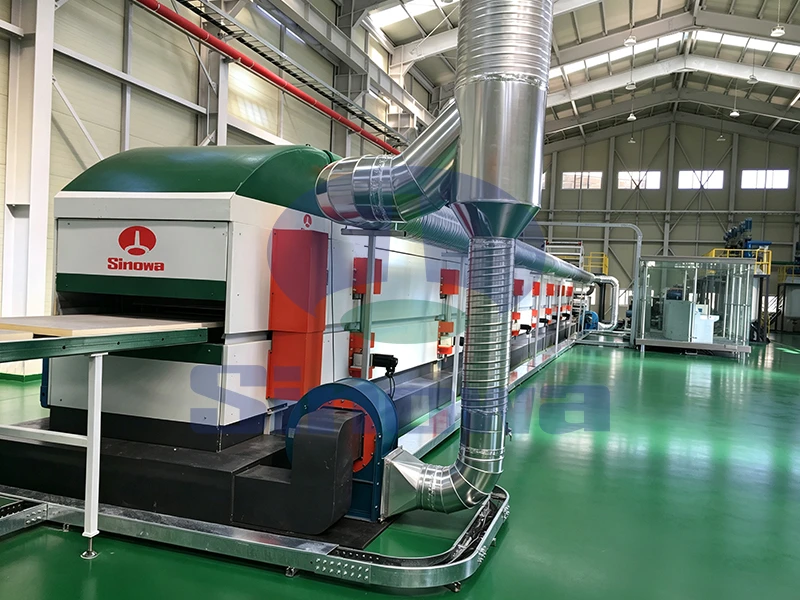
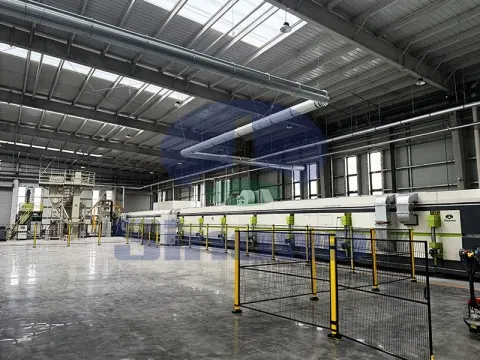
The overall design of the aluminum foil phenolic panel production line focuses on integrated automation and process continuity, which fundamentally improves the production efficiency and product consistency of composite panels. This production system is tailored for the layered composite structure of aluminum foil and phenolic foam core, covering all links from raw material pretreatment to finished product shaping. Unlike traditional intermittent production equipment, it adopts a streamlined layout to connect each production module seamlessly, avoiding manual intervention errors and process discontinuity. The whole system is equipped with intelligent parameter adjustment components, which can adapt to different panel thicknesses and structural specifications, ensuring that each batch of products maintains stable physical properties. Meanwhile, the modular design of the production line simplifies daily maintenance and later upgrading, making it highly adaptable to diversified market production demands in the insulation material industry.
Raw material pretreatment serves as the foundational and crucial procedure in the entire production workflow, directly determining the bonding quality and service life of finished panels. The production line is equipped with professional pretreatment units for both aluminum foil and phenolic core materials. For aluminum foil raw materials, the system completes automatic unwinding, surface degreasing and impurity removal through precision roller sets, eliminating residual oil stains and oxide layers generated during foil processing. This treatment roughens the aluminum foil surface moderately, enhancing the adhesion between the foil layer and adhesive. For phenolic foam core materials, the equipment realizes fixed-size cutting and surface flattening, removing burrs and uneven parts on the core material surface to ensure the flatness of subsequent composite lamination. Strict raw material pretreatment effectively prevents interlayer delamination, bubbling and other quality defects in finished panels.
Adhesive coating is a core process that guarantees the structural integrity of aluminum foil phenolic panels, and the production line adopts precise automatic gluing technology to ensure uniform and efficient coating. The system uses environment-friendly composite adhesives specially matched with aluminum foil and phenolic materials, with an intelligent spraying and rolling integration structure. During operation, the equipment accurately controls the coating thickness and coverage of the adhesive, avoiding local excessive or insufficient gluing which affects bonding strength. The closed gluing environment also prevents adhesive volatilization loss and external dust pollution, ensuring the purity and stability of the bonding interface. After coating, a short constant-temperature standing process is set to activate the adhesive activity, enabling it to form a tight molecular combination with both the aluminum foil surface and phenolic foam core, laying a solid foundation for the overall structural firmness of the panel.
Layered lamination and assembly is the key link to form the composite structure of the panel, and the production line realizes precise automatic stacking of multilayer materials. According to the structural design of aluminum foil phenolic panels, the equipment completes the orderly stacking of single or double-sided aluminum foil and phenolic foam core materials through servo positioning systems. High-precision positioning sensors ensure the alignment accuracy of each material layer, avoiding offset and warping of the panel edge. The lamination process adopts gradual stacking and pre-pressing molding, which can fully discharge the air between material layers and effectively eliminate internal bubbles. This automated assembly method replaces traditional manual stacking, greatly improves production speed, and ensures that the overall structure of each panel is neat and consistent, with uniform stress distribution inside the material and no local structural defects.
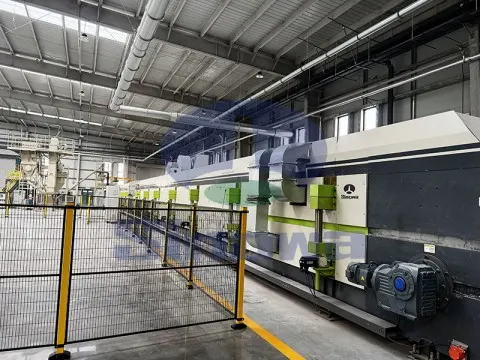
Constant-temperature hot pressing curing is the core molding process of the production line, which solidifies the composite structure and stabilizes the physical properties of the panel. The hot pressing unit is equipped with a multi-section constant-temperature heating system and a uniform pressure control mechanism, which can maintain stable temperature and pressure environments during the curing process. In the hot pressing zone, the stacked composite materials are subjected to continuous and uniform pressure and fixed-temperature heating, promoting the full curing reaction of the adhesive and realizing permanent tight bonding between layers. The segmented temperature control design meets the curing requirements of different parts of the panel, preventing core material deformation and aluminum foil wrinkling caused by uneven heating. After hot pressing, the primary composite panel initially forms a stable integrated structure with excellent interlayer bonding performance and overall rigidity.
Gradual cooling and shaping processes follow hot pressing curing to lock the structural stability of finished panels effectively. The production line is equipped with a multi-stage circulating cooling system, which adopts gradual cooling instead of rapid cooling to avoid internal stress concentration of the panel. The newly cured high-temperature panel passes through groups of precision cooling rollers with constant temperature control, realizing uniform heat dissipation on the upper and lower surfaces. This process can effectively fix the flat shape of the panel, eliminate warping, bending and other deformation problems caused by temperature difference changes. Meanwhile, the slow cooling process helps the internal molecular structure of the adhesive and phenolic material to stabilize further, improving the toughness and durability of the panel. After cooling and shaping, the panel has regular appearance and stable basic dimensional accuracy, meeting the subsequent finishing processing standards.
Precision cutting and edge trimming processes realize the dimensional standardization of finished panels, adapting to diverse application specifications. The production line is equipped with automatic numerical control cutting and trimming units, which can set arbitrary cutting sizes according to production demands. The high-speed precision cutting tool ensures smooth and neat panel sections without burrs, cracks or material collapse. The edge trimming mechanism automatically polishes and repairs the four edges of the panel, optimizing the edge flatness and sealing performance. This automated processing mode achieves one-time molding of panel size, with high dimensional accuracy and good batch consistency. In addition, the equipment supports flexible switching of different specification parameters, which can efficiently complete the production and processing of panels of various sizes and meet the personalized needs of different application scenarios.
Surface finishing and protection treatment further optimizes the comprehensive performance and appearance quality of aluminum foil phenolic panels. The production line’s post-processing unit conducts fine cleaning on the aluminum foil surface of the cooled and shaped panels to remove residual dust and processing impurities. For panels used in complex environments, the system can complete auxiliary surface protection treatment, enhancing the weather resistance, moisture resistance and corrosion resistance of the aluminum foil layer. This treatment can effectively isolate external moisture, air and corrosive media, prevent the internal phenolic core material from damp aging, and significantly extend the service life of the panel. Meanwhile, the surface finishing process improves the flatness and gloss of the panel appearance, making the product more adaptable to high-standard engineering decoration and industrial insulation applications.
Online quality inspection and real-time monitoring systems run through the entire production line to strictly control product quality. The equipment is equipped with multiple intelligent detection sensors, which conduct real-time monitoring of key indicators such as panel thickness, flatness, interlayer bonding compactness and surface defects during operation. The system can automatically identify unqualified products with bubbles, delamination, deformation and dimensional deviation, and mark and screen them in real time. All production data and detection results are recorded synchronously, realizing traceable production quality management. The real-time monitoring mechanism can also timely discover abnormal operation of production equipment, facilitating staff to adjust process parameters and maintain equipment status, ensuring the long-term stable operation of the production line and the high qualification rate of products.
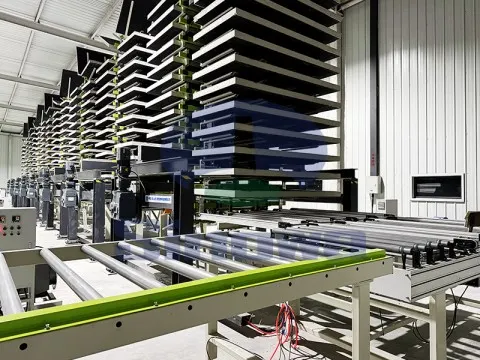
Automatic stacking and packaging is the final link of the production line, realizing standardized finished product storage and transportation. After passing quality inspection, qualified panels are automatically transported to the stacking station through the conveying system. The intelligent stacking equipment carries out orderly layered stacking according to fixed specifications, ensuring neat and stable panel placement without extrusion deformation. Subsequently, the automatic packaging unit completes integral sealing and protective packaging of stacked panels, which can effectively prevent surface scratch, dust pollution and moisture erosion during transportation and storage. The whole process is fully automated without manual operation, which not only improves packaging efficiency and standardization, but also reduces product loss caused by manual handling errors, realizing seamless docking of the entire production process from raw material input to finished product output.
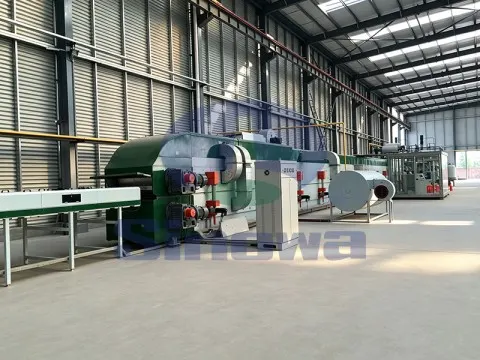
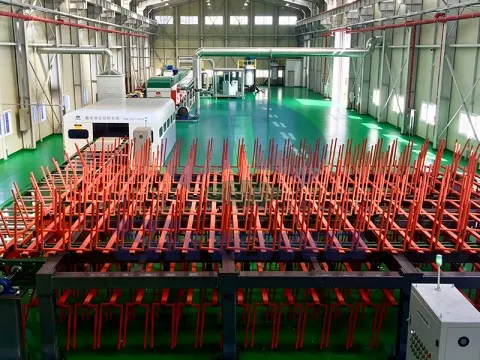
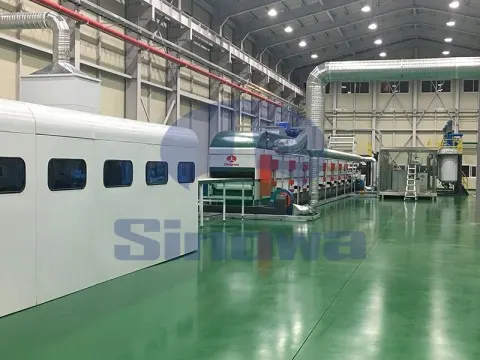
Gallery of Aluminum Foil Phenolic Panel Production Line
Tags: aluminum foil phenolic panel production line, aluminum foil phenolic panel production line manufacturer, aluminum foil phenolic panel production line supplier, china aluminum foil phenolic panel production line, aluminum foil phenolic panel production line for sale
-
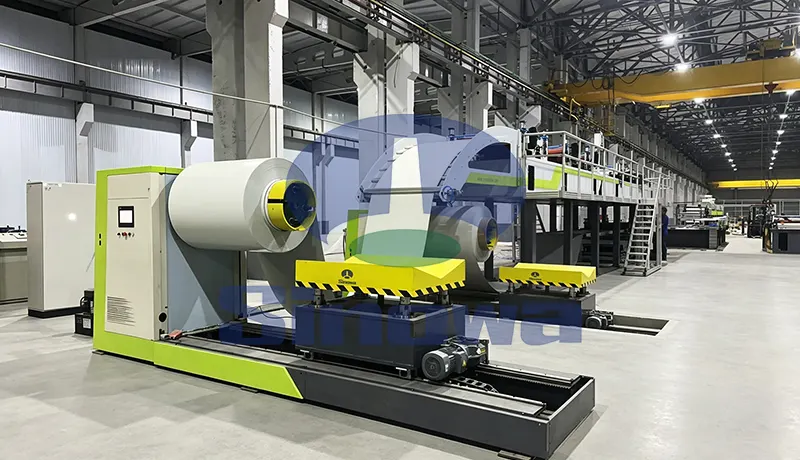
A reliable PU sandwich panel production line serves as the core equipment for manufacturing high-performance building insulation panels. This professional PU sandwich panel line features automated feeding, foaming and molding processes to ensure consistent panel thickness and structural stability. The well-designed polyurethane sandwich panel production line effectively improves production efficiency while reducing material waste in daily operation. Each calibrated polyurethane sandwich panel line can adapt to different panel sizes to meet diverse construction needs. With precise temperature and pressure control, the advanced continuous PU sandwich panel line produces panels with excellent thermal insulation and weather resistance. Meanwhile, the optimized PIR sandwich panel production line upgrades the foaming formula to enhance fire resistance performance. The high-efficiency PIR sandwich panel line maintains stable operation during long-term mass production, delivering durable and high-quality sandwich panels for various architectural and industrial applications.
-
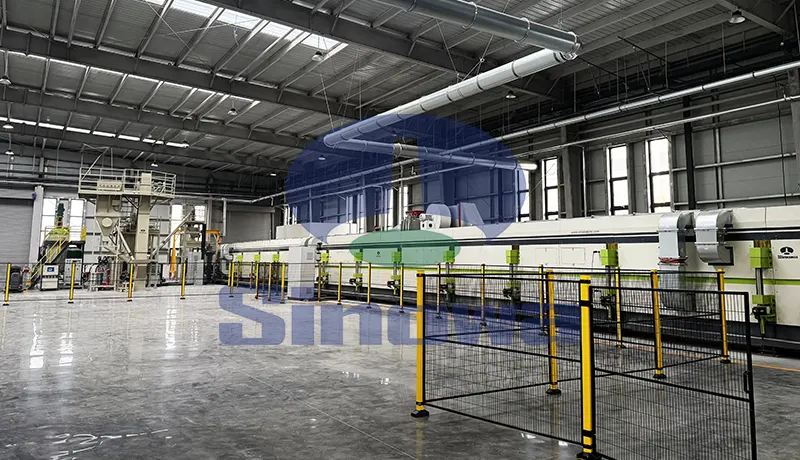
The phenolic panel production line realizes automated and continuous manufacturing of high-performance thermal insulation panels through streamlined and coordinated processing procedures.
-
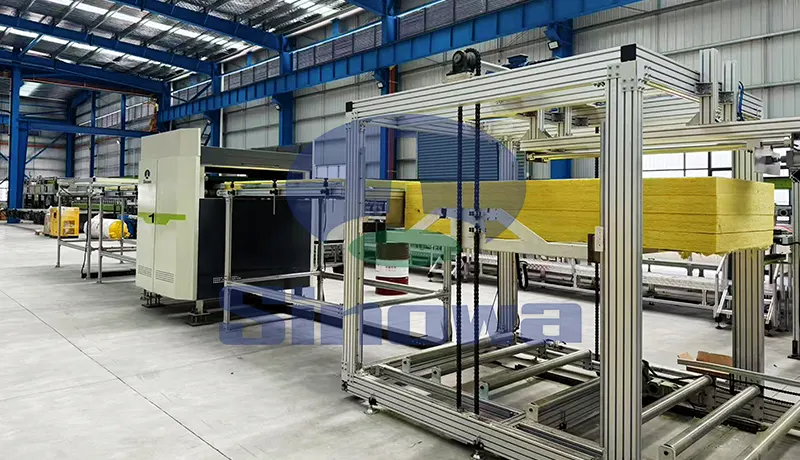
Modern insulation panel manufacturing relies on professional automated equipment to ensure stable product quality and high production efficiency. The rock wool sandwich panel production line features precise material lamination and forming processes to produce rigid, heat-insulating building panels. Meanwhile, the mineral wool sandwich panel production line adopts optimized assembly procedures to fabricate lightweight, soundproof panels widely used in architectural enclosure and thermal preservation projects.