How To Maintain The PUF Sandwich Panel Manufacturing Line Daily?
Publication Date: Oct 7, 2026
Daily maintenance of PUF sandwich panel manufacturing lines is vital for stable operation, consistent product quality and extended equipment service life. Scientific daily routines eliminate minor faults, reduce unplanned downtime and maintain continuous, efficient production of qualified panels.
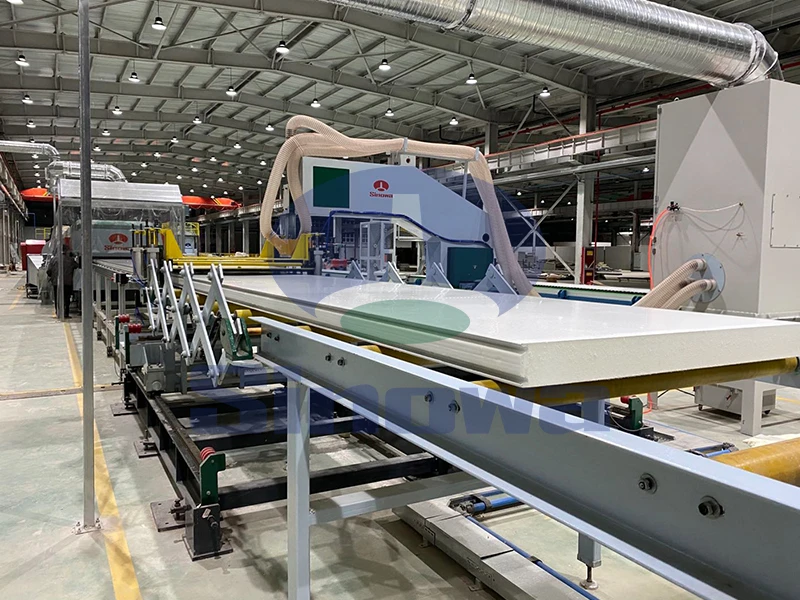
Daily visual inspection of core mechanical components serves as the foundation of reliable PUF sandwich panel line operation and should be carried out systematically before each production shift. Operators need to carefully check key running parts including conveying chains, traction rollers, pressing components and cutting blades to spot obvious structural abnormalities in advance. It is necessary to verify the tightness of various fasteners such as bolts and screws, as loose connectors can cause component deviation and operational vibration during high-speed production. Meanwhile, workers should observe the surface status of rolling and conveying parts to identify abnormal wear, scratches or deformation that may affect panel forming accuracy. Any minor abnormal signs found during inspection need to be recorded timely and handled properly before starting production, so as to prevent small problems evolving into major equipment failures that disrupt the whole production process.
Thorough daily cleaning of the entire production line is indispensable to avoid residual material interference with PUF panel production precision. After finishing daily production tasks, operators must clean residual foaming raw materials, dust and debris attached to mixing heads, injection nozzles and pipeline inner walls. Uncleaned polyurethane residues will cure and harden over time, causing nozzle blockage, uneven material mixing and inconsistent foaming effects in subsequent production. In addition, the surface of forming rollers, conveyor platforms and auxiliary equipment should be wiped clean with soft tools and neutral cleaning supplies to avoid hard scratches on equipment surfaces. It is also essential to keep the equipment operating environment dry and tidy, as accumulated dust and damp conditions may affect the sensitivity of electronic components and the stability of mechanical operation.
Timely and standardized daily lubrication of transmission and rotating parts effectively reduces mechanical friction and prolongs component service life in PUF panel production lines. Key lubrication targets include bearing sets, transmission chains, sprockets and rotating shafts that operate continuously during production. Operators should select high-temperature resistant and wear-resistant lubricating materials suitable for long-term mechanical operation, and supplement lubricating oil or grease according to the actual operating frequency of each component. During the lubrication process, old and deteriorated lubricants mixed with dust and impurities need to be cleaned first to ensure the new lubricant can fully adhere to component surfaces and form a complete protective film. Proper daily lubrication can significantly reduce operational noise and equipment heating, avoid dry friction damage, and ensure the transmission system runs smoothly and stably throughout the production process every day.
Daily inspection and debugging of the foaming and mixing system is critical to guarantee uniform PUF panel core density and stable product quality. Operators need to check the working status of the material metering pump, mixing cavity and feeding pipeline before daily production to ensure smooth material delivery without blockage or leakage. They should observe the material mixing state in real time during the production process to confirm that different raw materials are fully blended in a balanced proportion, which directly determines the heat preservation and structural performance of finished panels. In addition, the sealing performance of the foaming system’s connecting parts needs daily inspection, as loose seals will lead to material leakage and waste, and affect the stability of foaming pressure. Timely adjustment of minor parameter deviations of the mixing system each day can effectively avoid batch quality problems of unqualified panels.
Daily calibration and function testing of sensing and control systems ensure precise automatic operation of the PUF sandwich panel manufacturing line. The production line is equipped with multiple precision sensors responsible for monitoring production speed, panel thickness, operating temperature and material pressure, all of which require daily functional checks. Operators need to verify the sensitivity and response accuracy of thickness sensors, temperature probes and pressure sensors to prevent data deviation caused by sensor drift or surface contamination. Meanwhile, it is necessary to check the normal operation of the programmable control system, confirm that parameter setting, data display and automatic adjustment functions are effective, and clear abnormal operation records in a timely manner. Daily fine calibration of the control system eliminates subtle operational errors and maintains consistent production accuracy of each batch of panels.
Daily maintenance of hydraulic and pneumatic systems helps maintain stable power output for the PUF panel production line’s pressing and forming processes. Operators should check the liquid level and cleanliness of hydraulic oil daily to ensure the hydraulic system has sufficient power support, and observe whether there is oil leakage at hydraulic pipeline joints and valve parts. For the pneumatic system, it is necessary to check air pressure stability and exhaust device status, and remove condensed water and impurities in the air circuit in time to avoid air pressure fluctuation affecting the pressing tightness of panels. Abnormal noise or slow response during hydraulic and pneumatic operation should be checked immediately to find potential faults. Standard daily maintenance of these systems ensures stable pressure output during panel lamination and forming, avoiding panel delamination, uneven thickness and other quality defects.
Daily inspection of electrical systems and circuit safety is a key measure to eliminate potential safety hazards and ensure continuous production. Operators need to check the operation status of the electrical cabinet every day, clean floating dust on the surface of electrical components and circuit terminals to prevent dust accumulation from causing poor contact or short circuit. It is necessary to confirm the firmness of circuit connections and check whether power lines and signal lines are worn, aged or damaged. In addition, the start-stop response, emergency stop function and alarm device of the production line should be tested before daily production to ensure all safety protection devices work normally. Standard daily electrical maintenance not only avoids equipment shutdown caused by electrical faults, but also effectively guarantees the personal safety of on-site operating personnel.
Daily inspection and maintenance of cutting and finishing components ensures neat appearance and accurate size of finished PUF sandwich panels. The cutting blade, trimming device and finishing rollers of the production line need daily inspection for wear, gap deviation and surface adhesion of residual foam materials. Slightly worn blade edges will cause rough panel cuts and burrs, so timely cleaning and fine polishing are required daily. Operators also need to check the operating gap of the cutting mechanism to ensure the cutting size meets production requirements and adjust minor deviations in time. In addition, the recovery device of cutting waste materials should be checked daily to ensure smooth waste discharge and avoid waste accumulation affecting the normal operation of cutting equipment. Stable daily maintenance of finishing components effectively improves the yield and appearance quality of finished panels.
Daily operational parameter recording and data sorting provides reliable basis for long-term stable operation and regular maintenance of the production line. Operators need to accurately record key operational data every day, including production operating speed, equipment operating temperature, material consumption parameters and minor fault conditions and adjustment measures. These daily data can intuitively reflect the operating state of the production line, helping maintenance personnel judge the aging degree of components and potential fault trends. Timely sorting and archiving of daily operation records can avoid repeated faults caused by unadjusted parameter problems. At the same time, daily data accumulation helps formulate more targeted regular maintenance plans and optimize production line operation parameters to improve overall production efficiency.
Standardized daily maintenance operation and standardized personnel management are fundamental to sustaining the long-term efficient operation of the PUF sandwich panel manufacturing line. Enterprises should require on-site operators to strictly abide by daily maintenance specifications, complete inspection, cleaning, lubrication and debugging work in accordance with fixed procedures, and avoid omitted or non-standard maintenance operations. Daily maintenance training and post operation supervision should be strengthened to ensure each operator masters professional maintenance skills and fault judgment methods. For minor faults found in daily maintenance, timely disposal is required, while complex faults need to be reported and recorded for professional maintenance. Scientific daily management integrates maintenance and production organically, minimizes equipment failure rates, and maintains stable and high-quality production of PUF sandwich panels for a long time.
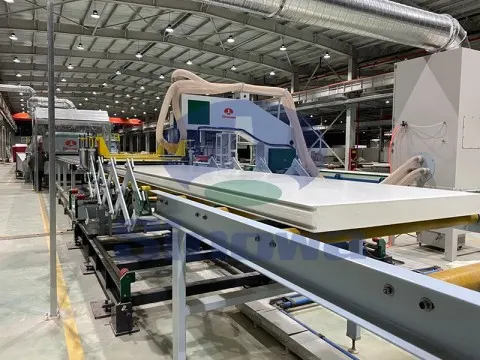
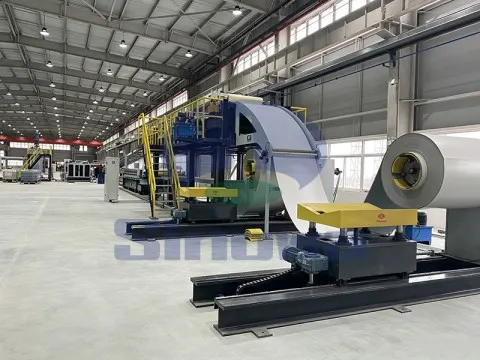
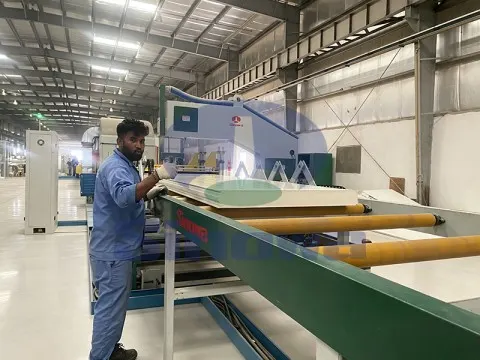
Gallery of PUF Sandwich Panel Manufacturing Line
Tags: puf sandwich panel manufacturing line, puf sandwich panel manufacturing line manufacturer, puf sandwich panel manufacturing line supplier, china puf sandwich panel manufacturing line, puf sandwich panel manufacturing line for sale
-
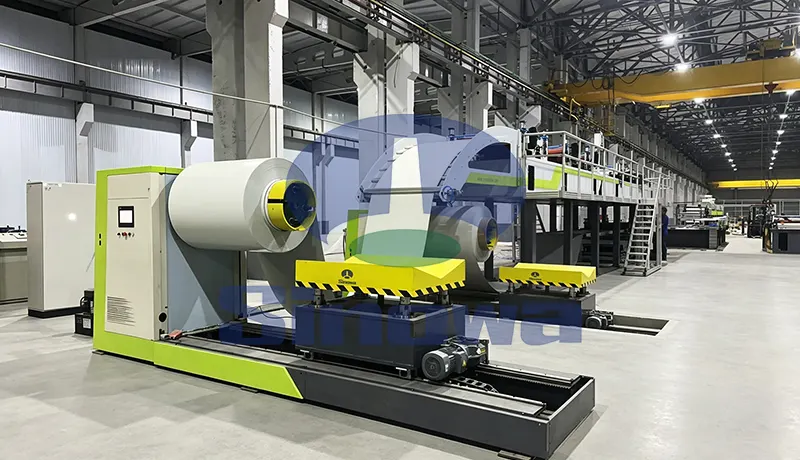
A reliable PU sandwich panel production line serves as the core equipment for manufacturing high-performance building insulation panels. This professional PU sandwich panel line features automated feeding, foaming and molding processes to ensure consistent panel thickness and structural stability. The well-designed polyurethane sandwich panel production line effectively improves production efficiency while reducing material waste in daily operation. Each calibrated polyurethane sandwich panel line can adapt to different panel sizes to meet diverse construction needs. With precise temperature and pressure control, the advanced continuous PU sandwich panel line produces panels with excellent thermal insulation and weather resistance. Meanwhile, the optimized PIR sandwich panel production line upgrades the foaming formula to enhance fire resistance performance. The high-efficiency PIR sandwich panel line maintains stable operation during long-term mass production, delivering durable and high-quality sandwich panels for various architectural and industrial applications.
-
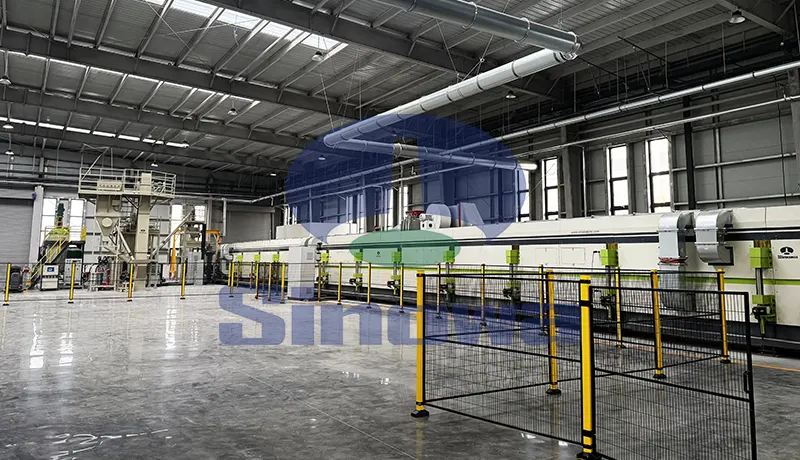
The phenolic panel production line realizes automated and continuous manufacturing of high-performance thermal insulation panels through streamlined and coordinated processing procedures.
-
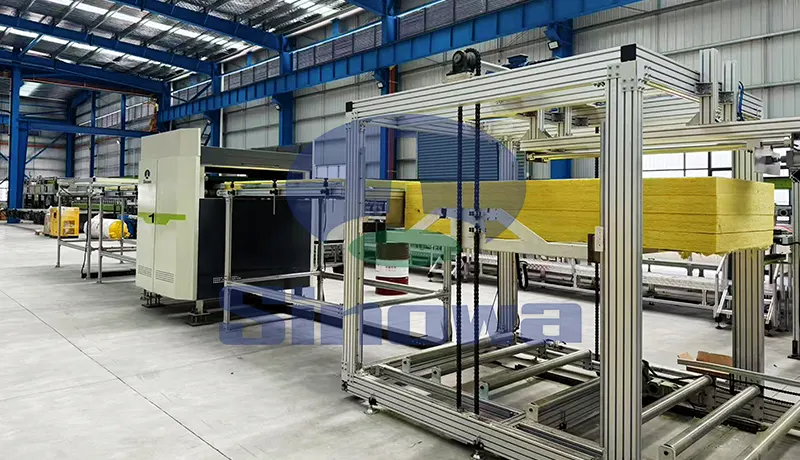
Modern insulation panel manufacturing relies on professional automated equipment to ensure stable product quality and high production efficiency. The rock wool sandwich panel production line features precise material lamination and forming processes to produce rigid, heat-insulating building panels. Meanwhile, the mineral wool sandwich panel production line adopts optimized assembly procedures to fabricate lightweight, soundproof panels widely used in architectural enclosure and thermal preservation projects.